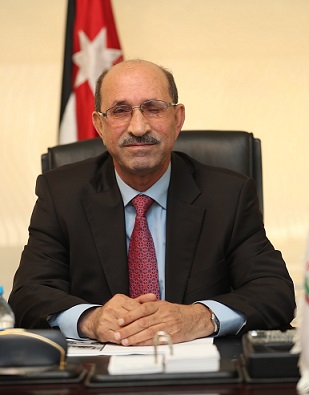
Dr. Hamad Kasasbeh
A country may achieve economic growth and spend heavily on projects and public services, yet many of its citizens may see little improvement in jobs or incomes. This paradox raises a question that goes beyond spending levels and project counts: what remains in the economy once a project is completed and the initial expenditure ends? Are stronger businesses, better jobs and greater productive capacity left behind? Or does activity depend on another round of public spending? The question invites us to rethink the economic role of the state—not only as a manager of today’s needs, but as a builder of tomorrow’s sources of growth.
World Bank and International Monetary Fund studies have long highlighted the importance of competition, productivity and a stronger private sector. Yet rapid changes in technology, trade and investment make the state’s evolving role more urgent. Launching projects is no longer enough: development policy must also build skills, raise business productivity and open new sources of growth. This does not mean cutting the sustained funding required for education, healthcare, security or justice. These remain essential public responsibilities. It means directing development spending toward both immediate needs and lasting economic capabilities.
Public investment has helped build roads, schools, hospitals and institutions across the region, laying indispensable foundations for development. But a costly project does not necessarily deliver a correspondingly large economic benefit. One new road may connect producers to markets; another project may have limited impact if it is poorly matched to economic needs. Project appraisal should therefore consider not only the initial cost but also the likely contribution to business productivity, service quality and people’s ability to earn a living.
Spending alone cannot deliver these results. Investors are better able to plan and expand when procedures are clear, decisions are timely and rules are predictable. Multiple approvals and delays, by contrast, can cancel out the advantages of location or incentives. Institutional effectiveness is thus as much a part of growth policy as infrastructure and finance. The rule of law is central: enforceable contracts, fair competition, timely dispute resolution and institutional accountability lower the cost of doing business and create room for new investment.
The region illustrates how this challenge differs across economies. In Gulf countries such as the United Arab Emirates and Saudi Arabia, the task is not merely to diversify sectors, but to increase the contribution of new activities to production, exports and employment, turning major investments into lasting competitive strengths. In a resource-constrained, energy-importing economy such as Jordan, the challenge is to achieve more with limited resources by helping businesses scale, improve productivity, expand exports and generate more domestic value added. Starting points differ, but the goal is shared: an economy that creates jobs and sustains growth.
Artificial intelligence makes this transition more urgent. Technology can raise productivity and create new activities, but it can also reshape occupations and reduce demand for certain traditional skills. Buying new applications or announcing training schemes is not enough. Businesses, including small and medium-sized enterprises, need to use these tools to improve products and services and reach new markets. Workers, meanwhile, need genuine opportunities to acquire skills and move into more productive jobs, so that technological progress does not benefit only a narrow segment of society.
Regional crises have shown that economic strength cannot be judged by growth rates in calm years alone. Disrupted trade routes and rising energy and transport costs can interrupt production quickly. A state that plans for the future does not seek to make everything at home; it develops practical alternatives: diversified suppliers, more resilient transport and storage networks, competitive industries and regional partnerships that expand markets and cushion shocks. Arab cooperation in energy, transport and industry can become a tangible economic opportunity when tied to projects that can actually be delivered.
In this context, the relationship between the state and the private sector is not a choice between comprehensive government control and complete withdrawal. The state is responsible for fair rules, essential services, infrastructure and the public interest, while businesses lead much of the investment, innovation, exporting and job creation. Partnership works when responsibilities are clear and outcomes are measured regularly. Accountability must go beyond publishing performance indicators: policies that fall short should be reviewed, adjusted or have their resources redirected toward approaches that demonstrably support production and employment.
Perhaps the clearest test of the state’s economic role is the capacity its actions leave behind. Have businesses become more productive? Have new activities emerged that can expand? Have employment, incomes and resilience improved? These questions do not reduce the value of public services to a financial return. They distinguish measures that address an immediate need from those that also build lasting capabilities. The state that shapes its future is not necessarily the one that spends the most, but the one best able to turn today’s resources into knowledge, productivity, effective institutions and jobs that give its economy greater capacity to grow tomorrow.




 comment replay













 الرجاء الانتظار ...