

21-10-2026 08:56 AM
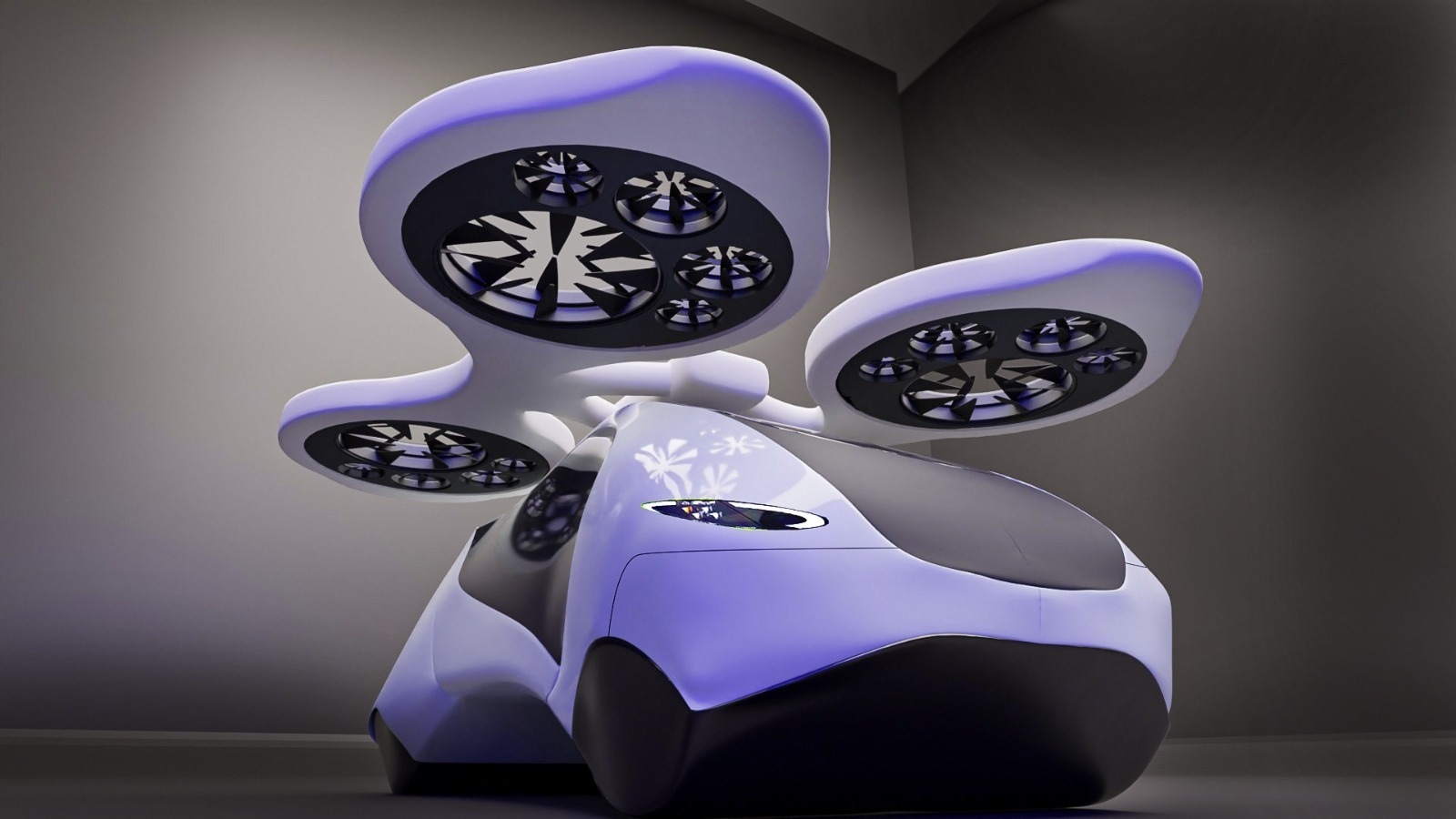
Iraqi innovator Muayad S. Dawood Al-Samaraee has submitted a scientific proposal to the Jordanian Cabinet and relevant authorities regarding the implementation of the National Strategy for Localizing the Drone Industry in the Hashemite Kingdom of Jordan (2026–2036).
Below the full details:
Subject: An Operational Proposal for Human Capital Development, Strategic Positioning, the Economic Business Model, the Basis of Confidence in the Self-Funding Educational Product, and an Introduction to the Expert
Executive Summary
Following the Cabinet's decision on Tuesday, 20 October 2026, chaired by Prime Minister Dr. Jaafar Hassan, to approve the National Strategy for Localizing the Drone Industry for the years 2026–2036—aiming to transition the Kingdom from importing this technology to developing, manufacturing, assembling, integrating, and testing it locally, enhancing the added value to the national economy and expanding opportunities for Jordanian talent and companies—this report presents a comprehensive advisory proposal based on the principle of "ask the experienced one." The report is divided into five pivotal sections: the first focuses on creating minds (Creators) as the first and foundational step. The second defines the logical strategic objective (Urban Air Mobility – UAM) while clarifying that the project does not require space-based communications. The third explains the economic business model that makes Jordan the preferred choice for implementing such projects for other countries via the STEM educational project. The fourth clarifies the source of confidence in the educational product's ability to finance urban air mobility projects globally. The fifth introduces the expert (Al-Samaraee) and his documented biography.
Point One: Phase (1) – The Making of Creators as the Foundational Step
Definition: Selecting a Creator Is No Different from Selecting an Athlete or a Warrior
The selection of individuals who can become world-class or national creators is fundamentally no different from scouting a world-class athlete, an exceptional warrior, or any extraordinary human innovator. In all these domains, candidates are not chosen based on academic grades, degrees, age, or social status; rather, they are selected for innate aptitude, exceptional passion, resilience, long-term training capacity, and the ability to produce under pressure. Just as a football scout looks for field vision and execution rather than memorized rules, a creator scout looks for self-directed learning, problem-solving, and tangible project output. Creative talent knows no age; a creator could be a child, a young adult, a mature individual, or a retiree.
The Proposed Model: The Sovereign Multi-Generational Innovation Center
The first phase is based on the "Sovereign Multi-Generational Innovation Center" model, not a traditional university. It lasts 12 months, during which a novice transforms into a "Creator (M1)" capable of producing prototypes and system components within a team. It operates on the principle of Work-Integrated Learning: there are no separate courses followed by application; instead, real projects are undertaken from day one. Trainees learn mathematics, programming, electronics, and testing to the extent required by the project, under the supervision of industrial coaches rather than lecturers.
Classification and Evaluation Mechanism
All ages are accepted equally, and everyone is classified by output, not age: whoever produces a working prototype advances; whoever does not stays or leaves. Generations are mixed in teams (child + youth + expert) so each learns from the other: the child brings audacity, the youth brings technical energy, and the elder brings industrial wisdom. Trainees are evaluated by their actual portfolio of achievements, not exams, and those who complete the phase receive an independent "Creator (M1)" certificate, allowing them to work, leave, or proceed to the Innovator (M2) phase.
The Funding and Contractual Model (The Football Player Theory)
Funding comes from a private investor (Jordanian or foreign), not the state, through a "Work-Learn Contract" signed from the legal working age. The contract includes a graduated penalty clause based on the remaining phase, a transfer fee paid by the recruiting entity (similar to a football transfer between clubs), a right of first refusal for the original investor, and a national service clause ensuring a return within Jordan. Full legal protection is provided for children (no contract or penalty before the age of majority, but a talent care agreement with a guardian), and flexibility is offered for seniors to choose between the learner path or the teacher-learner path. This transforms the phase from an "academic year" into a workshop that produces actual creators of all ages, protecting the investor's capital, the individual's freedom, and the national interest simultaneously.
Point Two: Strategic Positioning – What Does Jordan Aspire to Be?
Logic Before Ambition: Can We Compete with MQ or Akinci?
The logical answer regarding Jordan's ability to compete with MQ or Akinci drones is no, and that is not the right question. Turkey reached an advanced position in the global military drone market after two decades of intensive government investment. Competing in this domain requires massive R&D budgets, military supply chains, and export markets protected by defense policies—conditions not available to Jordan in the foreseeable future. The right question is: where can Jordan excel without competition? The answer is not in military drones, but in the infrastructure for civilian drones—specifically, Urban Air Mobility (UAM) for passengers and cargo, and the operating platforms and services surrounding it.
The Proven Evidence: The Indonesian Urban Air Mobility (UAM) Project
The strongest evidence for the viability of this path is the Urban Air Mobility project in Indonesia, created and designed by engineer Muayad Al-Samaraee, connecting the island of Sumatra with Singapore. According to the official accreditation document from PT Indonesia Air Mobility Industries (IAMI) in October 2023, Al-Samaraee provided complete investment studies, design, R&D, intellectual property, and technological innovation for a sustainable air transport system. The project received approval from the local government in the Siak region of Sumatra, and Al-Samaraee was appointed as the exclusive consultant for the project's implementation (2024–2027). The project's initial investment is estimated at $10 billion, extendable to $40 billion, with an expected workforce of 18,000 people. The Royal Netherlands Aerospace Centre (NLR) welcomed cooperation to participate in developing the project.
The Three Pillars of Urban Air Mobility Success
UAM is not just an aircraft; it is a system of three pillars: the aerial vehicle technology (where Jordan has a base in light aircraft manufacturing, though transitioning to eVTOL requires technical partnerships and investment in batteries and control systems); the UAM infrastructure (including vertiports, control centers, and local communication networks); and the business model (the operating platform, which is where Jordan can excel globally, as it relies on software and local expertise—a booking platform similar to Uber).
Communication Infrastructure: A National Local Network, Not Satellites
The project does not fundamentally require space-based communications (satellites); it relies on a national local communications network built or invested in by each country according to its own circumstances. Satellites may be a backup option in special cases (remote areas, emergencies, maritime coverage), but they are not a prerequisite for urban air mobility. The reason is that UAM operates within a limited urban scope (a city or metropolitan area), not globally. Distances are short (typically under 100 km), so cellular coverage (4G/5G) is sufficient for continuous connectivity. Control centers are ground-based and can be linked to the national fiber-optic network. Vertiports can be equipped with ground-based connectivity points. Low latency is required for safe control, which local 5G networks provide better than satellites. Each country wishing to operate UAM builds a national communications network suited to its situation: a developed country with advanced 5G and fiber can operate UAM directly on its existing infrastructure; a developing country needs to build a local network in the target city first, which is part of the project itself; an island nation can use a local network between nearby islands via submarine cables or microwave, without the need for satellites. This simplifies and reduces the cost of the model, keeping the focus on what truly distinguishes Jordan.
The Model: "Samsung of Aircraft," Not "Boeing of Aircraft"
The model to follow is "Samsung of Aircraft," not "Boeing of Aircraft." Samsung did not invent the mobile phone, but it became one of the world's largest manufacturers and exporters of phones. Jordan does not need to invent eVTOL from scratch; it is sufficient for Jordan to be an innovator of a sovereign, applicable project. It can manufacture, integrate, operate, and export a complete UAM system for transporting people or cargo: an aircraft manufactured or assembled locally through a technical partnership, a Jordanian operating platform, sovereign local communications, and regional testing centers. This makes Jordan an exporter of systems, not just an importer of aircraft.
Point Three: The Business Model – Why Would Others Choose Jordan to Implement This Project for Other Countries?
The Core Question: What Distinguishes Jordan in This Economic Model?
The core question is not "can Jordan build an urban air taxi?" but "why would an investor or another country choose Jordan to implement the project instead of someone else?" The answer lies not in technical capability alone, but in possessing a self-funding business model that makes the project implementable in any country without relying on its budget. This model is provided by Al-Samaraee through the STEM educational project, which converts ocean plastic waste into a funding source for the UAM project.
The Foundation: The STEM Educational Project as a Cash Flow Engine
According to the "Future of Half the Planet" document published on the SAMANSIC Coalition website, the XYZ/SAMANSIC model is not about selling educational toys, but about a single integrated pathway: collecting and sorting ocean plastic, cleaning and treating it, recycling it into interlocking educational blocks, and using them in practical STEM education to teach mathematics, engineering, physics, and construction principles without requiring literacy first. These blocks are not a marginal product; they are a sovereign tool that reaches those who missed their educational opportunity and builds a generation that understands the theory of interlocking building blocks, stability, and load paths. Economically, this pathway converts a global environmental problem (ocean plastic pollution) into an educational and industrial resource, creating a self-sustaining cash flow from the sale of educational blocks, not from state budgets. The model is supported by two U.S. patents (US 12,703,973 B2 and US 12,709,890 B2) granted in August 2026, and an irrevocable covenant (January 2023) granting Al-Samaraee the rights to STEM educational products and construction toys, making the model legally protected and globally marketable.
Why This Model Makes Jordan the Preferred Choice
This model makes Jordan the preferred choice for four reasons. First, Jordan possesses the intellectual property for the model: Al-Samaraee, a Jordanian citizen by royal decree, owns the rights to STEM educational products under the irrevocable covenant. Any country wishing to implement the project receives a complete package: the funding model (STEM) + the manufacturing model (blocks) + the operating model (UAM). Second, Jordan has a successful track record in aviation: the SAMA CH2000 aircraft was manufactured in Jordan and entered actual service with the Iraqi Air Force, documented by the U.S. Air Force website. Third, Jordan has the geographic location and talent: it is in the heart of the Middle East, close to Gulf and Iraqi markets, with engineering and technical talent that has proven its worth. Fourth, Jordan offers a self-funding model: instead of the state bearing the project's costs, funding comes from STEM project revenues (block sales, patents, international partnerships), meaning Jordan can offer other countries a model that costs them nothing but generates a return.
How the Model Works Operationally
The model operates in three phases. Phase One: build the educational block factory in Jordan (collecting plastic, manufacturing, selling to schools and international organizations), with revenue funding UAM R&D. Phase Two: develop the operating platform (similar to Uber) with Jordanian talent, selling it as a sovereign product to other countries. Phase Three: implement the UAM project in another country (such as Indonesia), where Jordan provides the complete package and receives consulting fees + intellectual property rights + manufacturing contracts.
"Ask the Experienced One, Not the Wise One" – The Practical Evidence
Here the principle of "ask the experienced one, not the wise one" applies: Al-Samaraee is not a theorist but a practitioner who produced aircraft that entered actual service, registered U.S. patents, signed an irrevocable covenant, and was appointed as an exclusive consultant for an Indonesian project. Jordan, by hosting this expertise and granting citizenship, has a historic opportunity to become the export center for this model to the world, not just an importer of technology.
Point Four: Where Did Al-Samaraee's Confidence Come From That Selling Educational Toys Would Cover the Costs of Urban Air Mobility Projects Globally? And What Distinguishes His Product?
The Source of Confidence: Not Marketing Hype, but Four Documented Evidences
Al-Samaraee's confidence that his educational product (the XYZ/SAMANSIC system) can finance urban air mobility projects globally does not stem from unfounded optimism, but rests on four tangible evidences. First, protected legal legitimacy: two U.S. patents (US 12,703,973 B2 and US 12,709,890 B2) granted in August 2026, and an irrevocable covenant (January 2023) granting Al-Samaraee exclusive rights to STEM educational products and construction toys. Second, a documented commercial precedent: the Indonesia project (PT IAMI) which appointed Al-Samaraee as exclusive consultant (2024–2027) with an initial investment of $10 billion extendable to $40 billion, evidence that the model can attract massive funding. Third, a self-funding business model: converting ocean plastic into educational blocks creates a continuous cash flow that does not depend on state budgets, but on selling the product in global markets (schools, international organizations, camps, developing regions). Fourth, real global demand: millions of children are outside quality education, and millions more need practical STEM education that does not require literacy first—a huge and underserved market.
What Distinguishes Al-Samaraee's Product from Others?
The fundamental distinction is that his product is not a toy that builds skills, but a real miniature engineering platform. According to the "Kindergarten to University" document published on the SAMANSIC Coalition website, the XYZ system is not a toy that imitates construction, but a miniature plastic version of a real patented masonry and structural system. The same geometry that allows real blocks to build walls, corners, T-junctions, crosses, and reinforced columns can be molded in plastic at a scale that fits on a tabletop. This means the child is not playing with a simplified abstraction; they are handling the actual logic of load-bearing construction.
The Difference from Conventional Toys
Conventional toys each have strengths, but none combines real masonry logic, 3D interlocking, structural reinforcement, electromagnetic hardening, and lunar construction relevance. LEGO teaches assembly and creativity but not load paths. K'NEX teaches trusses and frames but not compression structures. Magna-Tiles teaches polarity and geometry but not structural interlocking. The XYZ system teaches all of these and more: it is a real engineering system in miniature. It is not a toy that prepares children for engineering; it is engineering itself.
Why This Distinction Makes the Confidence Justified
Because the product achieves three advantages not found together elsewhere: first, educational value across all ages—from the three-year-old stacking blocks to the graduate student designing a lunar settlement model. Second, real structural value—the same block a child uses to build a wall can be used by an engineer to build a real wall, making the product a bridge between play and actual construction. Third, global market value—the product can be manufactured from recycled plastic, is 3D-printable, and complies with safety standards (ASTM F963, CPSIA, EN 71), making it sellable in any market worldwide.
Conclusion: Confidence Built on "Ask the Experienced One"
Al-Samaraee is not a theorist selling promises, but a practitioner who produced aircraft that entered actual service, registered U.S. patents, signed an irrevocable covenant, and was appointed as an exclusive consultant for an Indonesian project. His educational product is not an ordinary toy, but a real miniature engineering platform carrying the same logic of real construction, serving all ages, manufactured from ocean plastic, and sold globally. Thus, the confidence in its ability to finance urban air mobility projects is built on legal, commercial, and engineering evidence, not on unfounded optimism.
Point Five: Who Is Al-Samaraee? – The Documented Biography of the Expert
Who Is Muayad S. Dawood Al-Samaraee?
Muayad S. Dawood Al-Samaraee is an Iraqi global innovator, a pioneer in aircraft manufacturing and smart reconnaissance technologies, and the founder of the SAMANSIC Coalition for non-profit innovation (a cross-border collective-intelligence innovation network comprising more than 700 architect-innovators). His innovation legacy spans over three decades and includes national projects in Iraq, Jordan, and Saudi Arabia, and global innovations in national security, sovereign artificial intelligence, sustainable health, and biological longevity. He has been known since 2003 by a Canadian immigration consultant as "Da Vinci 2" for his unique synthesis of disciplines. He presents a fully documented profile: a certified industrialist in aviation and aerospace, a holder of U.S. patents, a beneficiary of documented international legal instruments, a holder of an official Indonesian sovereign mandate, and a pioneer in experimentally verified geophysical intelligence.
The Family Legacy: From Military Industries to Aviation and Aerospace
Al-Samaraee belongs to the Dawood Al-Hashimi (Al-Samaraee) family, an Iraqi family renowned for industry, invention, and innovation, combining noble lineage (a Hashemite lineage) with a deep practical legacy. His grandfather, Dawood bin Salman bin Amin Al-Hasani Al-Hashimi Al-Samaraee (1890–1979), was a pioneer in Arab military industries; in 1917, he established the first light and heavy weapons factory for the Arab Army in Aqaba under the direct responsibility of Prince Faisal I, participated in the Great Arab Revolt, and played a pivotal role in the 1920 Iraqi Revolution that paved the way for Prince Faisal I to become King of Iraq. Historian Ali Al-Bazirkan documented his role in his book "The True Events of the Iraqi Revolution," and an official document signed by the Iraqi Minister of Defense on 17 September 1936 attests to his service in the Hijazi Arab Army as a lieutenant and head of the weapons factory.
Achievements in Aviation: From "Sama" to the "Submersible Frigate"
The grandson Muayad followed in his grandfather's footsteps, continuing the legacy in defense and aviation industries. Between 2001 and 2003, he founded a Jordanian company that produced the first Jordanian commercial training aircraft, the "SAMA CH2000," making Jordan join the club of aircraft-manufacturing nations. On 18 February 2004, His Majesty King Abdullah II inaugurated the aircraft factory at Queen Alia International Airport and viewed models of Jordanian-made aircraft. Between 2004 and 2006, he developed the first smart reconnaissance and surveillance (ISR) aircraft for the U.S. Army, used in counter-terrorism missions between 2005 and 2011, and documented by the U.S. Air Force website (af.mil) as entering actual service. Both aircraft received certification from the Jordanian and U.S. Federal Aviation Administrations (FAA). In 2013, he registered another radical invention: a submersible frigate aircraft capable of flying, diving, and vertical takeoff and landing from land or water, manned or unmanned, based on a new physical principle he called MD-AEROTMAC, officially registered under No. N.S./44/2012 and final certificate No. 1927.
Omega Architecture: Redefining National Security (2004–2024)
Over two decades, Al-Samaraee dedicated his efforts to developing the "Omega Architecture," an integrated system redefining national security through three elements: first, the S-GEEP geophysical sensing system that monitors environmental changes in real time. Second, the EGB-AI with MSDT predictive AI system that combines deep learning and triangulation to predict threats 6 to 18 months before conventional systems. Third, the KINAN rapid response mechanism that neutralizes threats upon detection. This architecture is based on a documented Geopolaration survey in Jordan in 2004 (Reference: JAI/10/220/04), conducted with the Jordanian Natural Resources Authority, which showed a perfect match with studies that took two years, within only 24 hours.
International Recognition and Legal Documentation
Al-Samaraee holds a fully documented profile: two U.S. patents (US 12,703,973 B2 and US 12,709,890 B2) granted in August 2026 for the interlocking building system, an irrevocable covenant (January 2023) with Daniel Boot granting him the rights to STEM educational products and construction toys, and official accreditation as exclusive consultant for the PT Indonesia Air Mobility Industries (IAMI) project (2024–2027) with an initial investment of $10 billion extendable to $40 billion. His Majesty King Abdullah II granted him Jordanian citizenship by royal decree in appreciation of his vision and contributions.
His Philosophy of Innovation: "Innovation Must Be Responsible Before It Is Spectacular"
Al-Samaraee affirms that innovation must be responsible before it is spectacular, and that it is measured by its impact on humanity and the environment. He explains the difference between invention and innovation: invention is something genuinely new that did not exist before, protected legally by a patent; innovation is the application of an idea or invention to reality, turning it into a product or service that benefits people, not necessarily creating something from nothing but improving the existing to become better, cheaper, and easier. He gives examples: developing the Canadian training aircraft (invented by global designer Chris Heintz) into the best smart reconnaissance aircraft in its class, and developing the Canadian interlocking block technology (invented by Daniel Boot) into a three-dimensional building system of unlimited size in all directions, enabling an unskilled worker to build the Great Wall and the Pyramids.
Conclusion: Why He Is the "Experienced One" on Whose Expertise Confidence Is Built
Al-Samaraee is not a theorist selling promises, but a practitioner who produced aircraft that entered actual service with the U.S. Army, registered U.S. patents, signed an irrevocable covenant, and was appointed as an exclusive consultant for an Indonesian project with investments exceeding $10 billion, and obtained an official sovereign mandate. He belongs to an Iraqi family renowned for industry and invention, combining Hashemite lineage with a deep practical legacy—from his grandfather Dawood, who established the first Arab weapons factory in 1917, to his father Sabih, who trained as a security engineer during the Cold War, to Muayad, who led a revolution in aviation and global security. Thus, the principle of "ask the experienced one, not the wise one" applies perfectly to him: he is not a wise man theorizing, but an experienced one who has achieved and continues to achieve.
Conclusion and Recommendations
Jordan's logical ambition is not to compete with heavy military drones (MQ or Akinci), but to become "the state that designs, operates, and exports the Urban Air Mobility (UAM) system in the region," building on a documented success story (Indonesia 2022–2027) led by national expertise (Al-Samaraee) and international cooperation, for example but not limited to (Royal NLR). This path rests on five pillars: making creators, focusing on civilian urban air mobility (relying on national local communication networks, not satellites), a self-funding business model (STEM from ocean plastic), a distinguished educational product that justifies confidence in global financing, and documented, proven expertise for the project's owner.
Recommendations:
1.Adopt the "Making of Creators" phase (12 months) as an immediate first step within the strategy, with private funding and work-learn contracts.
2.Form a steering committee to define the precise specialization in Urban Air Mobility (UAM) as a national priority.
3.Engage with national expertise (such as Al-Samaraee) and international partners (such as NLR) to transfer knowledge and design a similar Jordanian model.
4.Begin building the digital operating platform with Jordanian talent as a sovereign, exportable product.
5.Launch the STEM educational project (from ocean plastic) as a self-funding source, leveraging the patents and the irrevocable covenant.
6.Rely on national local communication networks in each target country, using satellites only as a backup in special cases, simplifying and reducing the cost of the model.
7.Invest in the distinction of the educational product (a real miniature engineering platform) and market it globally as the basis for financing urban air mobility projects.
8.Leverage Al-Samaraee's documented biography (patents, Indonesian accreditation, aviation track record) as a guarantee of confidence in implementing the model.
| name : * | |
| comment : * | |

 comment replay











 الرجاء الانتظار ...