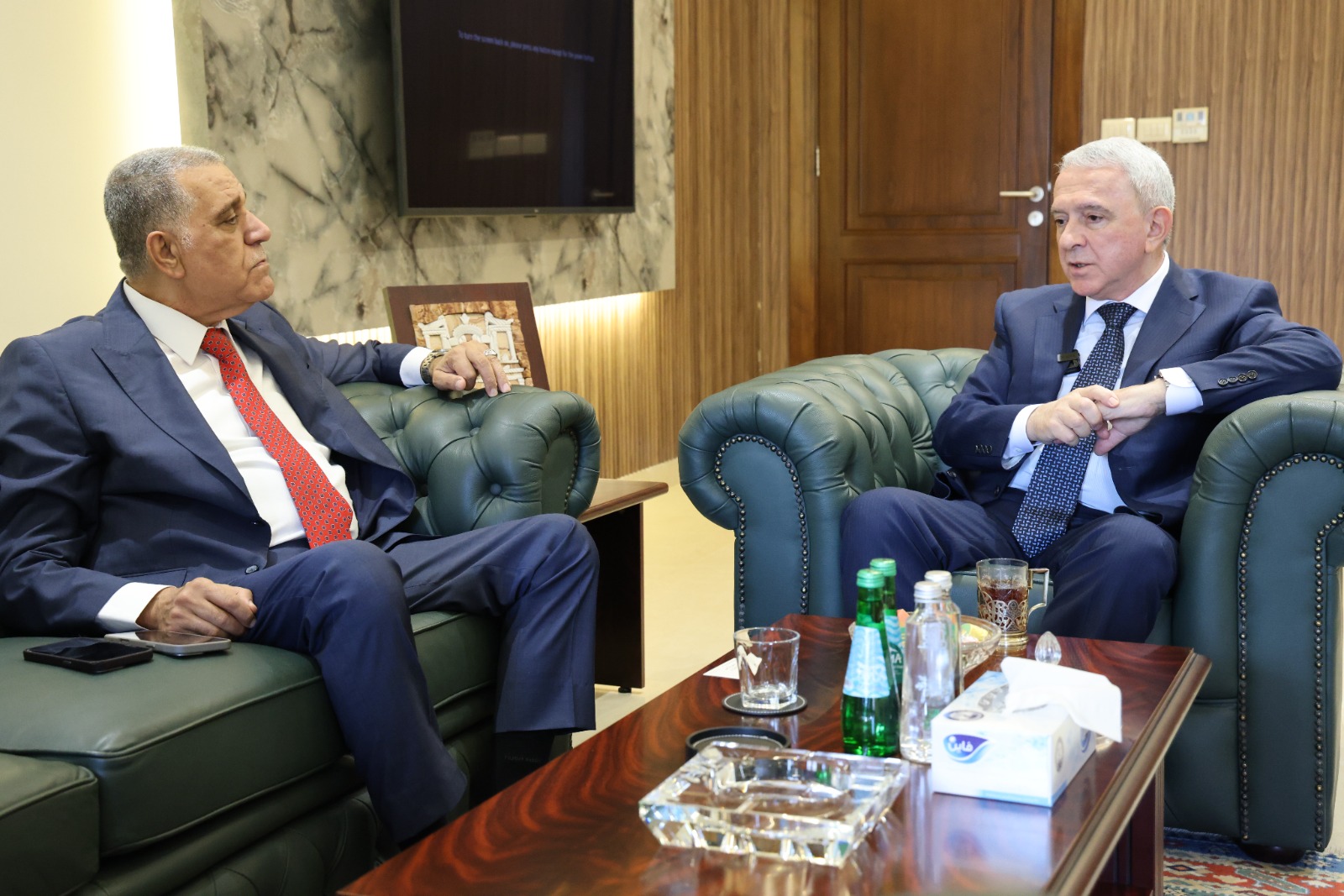
Ammon News - By Sameer Alhyari- Azerbaijan’s Ambassador to Jordan, Shahin Shakir Abdullayev, stressed that the decision to ban the hijab in Azerbaijani schools is final and irreversible, clarifying that it is not a trial balloon and that the state will not accept any foreign interference in the matter.
In an interview with Ammon News, the ambassador denied that the decision constituted a nationwide ban on the hijab, explaining that the latest decision issued by the Cabinet of Ministers concerns regulating and standardizing school uniforms rather than introducing a separate law banning the hijab.
He said inaccurate information about the decision had circulated in some Arab countries, noting that certain media outlets and social media platforms had exaggerated the issue and portrayed it as a decision targeting the hijab or religious practices.
He explained that standardized school uniforms are not new in Azerbaijan, but rather a system that has been in place for decades, with students required to wear specific uniforms even during the Soviet era.
*Azerbaijani President's Position on the Decision
Asked about Azerbaijani President Ilham Aliyev's position on the school uniform decision, the ambassador said that, to his knowledge, the president had not publicly expressed support for or opposition to the measure.
He said government decisions in Azerbaijan are issued through coordination among state institutions, ruling out the possibility of a disagreement between the government and the presidency over the issue.
He noted that the decision had not been revoked and that the government continued to monitor the reactions surrounding it.
*Religious Authorities' Position on the Hijab
Regarding the position of Islamic religious authorities in Azerbaijan, the ambassador said the country's mufti had affirmed that wearing the hijab is a right of Muslim women.
At the same time, he explained that Azerbaijan is a secular state in which religion is separate from state institutions, and that public schools are required to implement government decisions.
*Interference and Attempts to Politicize the Issue
The ambassador accused unnamed parties of attempting to exploit the controversy surrounding the hijab and school uniforms to interfere in Azerbaijan's internal affairs.
He said certain parties were exaggerating isolated incidents and circulating them through social media and news outlets in an effort to fuel divisions within Azerbaijani society.
When asked to identify the parties concerned, he declined to name specific countries or entities, explaining that he did not have confirmed information that would allow him to make direct accusations.
*Azerbaijan's Islamic Identity and Religious Tolerance
The ambassador stressed that Azerbaijan is a Muslim-majority country, estimating that Muslims account for approximately 95% of its population.
He said his country is part of the Islamic world and that Islam reached Azerbaijan during the early period of Islamic history.
He added that the Azerbaijani people preserved their Islamic identity even during the Soviet era, when the state adopted an atheist ideology and imposed restrictions on religious institutions.
*Armenia and the Reconstruction of Mosques in Recovered Territories
The ambassador criticized what he described as a lack of international attention to the destruction of Azerbaijani mosques and religious landmarks during the period when Armenia controlled what he referred to as the "occupied territories."
He said 65 of the 67 mosques had been destroyed, while the remaining two had been converted into shelters for animals, according to his account.
He added that Azerbaijan had documented the damage to religious sites and that some photographs showing the condition of the mosques had been taken and published by individuals from outside Azerbaijan.
*Relations with Israel and the Position on Palestine and Gaza
The ambassador stressed that Azerbaijan's relations with Israel had not affected its position on the Palestinian cause or its ties with Arab and Islamic countries.
He said Azerbaijan recognized the State of Palestine in 1992, noting that it was among the countries to take this step at an early stage.
He added that his country supports the two-state solution and the establishment of a Palestinian state, emphasizing that bilateral relations with Israel do not mean abandoning support for Palestinian rights.
Regarding the war on Gaza, he said Azerbaijan had opposed the massacres and attacks suffered by Palestinians and had joined statements and positions issued by the Organization of Islamic Cooperation.
He also spoke of widespread sympathy for the Palestinian people among Azerbaijanis, including people who do not regularly practice religious rituals.
Position on Iran and Attacks Against Arab Countries
Asked about Iranian attacks against Arab countries, the ambassador said Azerbaijan rejects attacks and supports resolving disputes between states through peaceful means.
He described Iran as a neighboring and friendly country, noting that the two countries maintain political, economic and cultural relations despite occasional disagreements.
He added that Azerbaijan does not support attacks against other countries, including attacks that Iran itself might face.
He explained that relations with Iran are particularly sensitive because of historical and demographic ties, including the large Azerbaijani population living within Iranian territory.
He noted that Azerbaijan seeks to maintain balanced relations with Iran, Türkiye and other countries without allowing these relationships to compromise its independent political decisions.
He stressed that Azerbaijan's national and ethnic interests form the foundation of its foreign policy, while the interests of friendly and neighboring countries are also taken into consideration.
*Jordanian-Azerbaijani Relations
The ambassador described relations between Jordan and Azerbaijan as distinguished, pointing to close ties between His Majesty King Abdullah II and Azerbaijani President Ilham Aliyev.
He explained that these relations had developed at both official and personal levels, contributing to stronger political cooperation between the two countries.
He noted that the recent period had witnessed exchanges of official visits, including a Jordanian parliamentary delegation comprising representatives of both the House of Representatives and the Senate, headed by Mazen Al-Qadi, as well as a visit by Jordan's foreign minister to Azerbaijan in early July.
He said political relations between the two countries were strong, adding that the current focus was on expanding economic and investment cooperation and translating political ties into practical projects that benefit both sides.
He stressed that significant opportunities exist for cooperation in energy, industry, investment and tourism, noting that the embassy is working to expand these ties.
*Talks on Supplying Jordan with Azerbaijani Gas Through Syria
The ambassador revealed that discussions were underway regarding the possibility of supplying Jordan with quantities of Azerbaijani natural gas through Syrian territory.
He explained that Azerbaijan exports gas to 16 countries, most of them European, including 10 European Union member states, according to the figures he cited.
He noted that Azerbaijan exports oil and gas through pipelines crossing Turkish territory to international markets, and that arrangements are also in place to export Azerbaijani gas to Syria through Türkiye.
He said discussions were taking place on the possibility of allocating a quantity of gas that would reach Syria and then be transported to Jordan, stressing that the matter remained under consideration.
He added that Azerbaijan understands Jordan's need for natural gas and is interested in exploring ways to help ease the burden of securing the Kingdom's energy requirements.
However, he explained that Azerbaijan currently does not have a large surplus of gas that can easily be directed to new markets because of strong European demand, particularly following the Russia-Ukraine war and the reduced reliance of some European countries on Russian gas.
He noted that increasing export volumes would require additional investment to boost production and expand existing capacity.
He stressed that the special relationship between Azerbaijan and Jordan encouraged the two sides to explore the possibility of supplying certain quantities of gas, while emphasizing that the matter remained under discussion and no final agreement had been reached.
*Military and Security Cooperation Between Jordan and Azerbaijan
The ambassador confirmed that Jordan and Azerbaijan maintain military and security cooperation, pointing to their participation in joint military exercises, particularly involving special forces.
He explained that Jordan hosted exercises approximately two months ago involving special forces from Jordan, Azerbaijan, Türkiye and Pakistan.
He said the exercises had proceeded successfully and that work was underway to determine which country would host the next training session.
He added that Gulf countries had been invited to participate but did not attend for reasons he said he did not know in detail.
He also noted that a Jordanian delegation had participated in a major military exhibition recently held in Azerbaijan.
The ambassador revealed that arrangements were underway for a high-level Azerbaijani delegation to participate in the SOFEX military exhibition, scheduled to take place in Aqaba later this month.
He said the expected participation would include the display of equipment and weapons as part of efforts to strengthen defense cooperation between the two countries.
He stressed that bilateral relations extend beyond military training to include security and intelligence cooperation.
Separately, when asked whether the Azerbaijani armed forces were involved in the controversy surrounding the school uniform decision, he denied any involvement, explaining that such matters do not fall within the military's remit.
*Investment Opportunities Between Jordan and Azerbaijan
The ambassador said economic relations between Jordan and Azerbaijan had yet to reach a level reflecting the strength of their political ties.
He pointed to investment opportunities that had not been sufficiently exploited in recent years, stressing that the embassy was working to encourage Jordanian companies to enter the Azerbaijani market.
He explained that Jordan's pharmaceutical industry represents a promising area for cooperation, given the progress Jordan has made in this sector.
He revealed plans to hold discussions with Jordanian pharmaceutical companies to explore investment opportunities and establish joint projects in Azerbaijan.
He added that Azerbaijan was also interested in receiving proposals for economic projects from Jordan and assessing them to identify potential areas of cooperation.
He noted that Azerbaijan has investments in several countries, including Türkiye, Gulf states and Central Asian countries, and that there is potential to expand these investments into Jordan.
He stressed that the political foundations for bilateral relations were already in place, but that greater economic engagement was needed to turn the available opportunities into tangible projects and investments.
*Tourism and Direct Flights
The ambassador highlighted the importance of strengthening tourism cooperation between Jordan and Azerbaijan, noting mutual interest in expanding travel between the two countries.
He revealed that Azerbaijan's tourism minister was expected to visit Jordan in early November, with meetings planned to discuss ways to develop tourism cooperation.
He explained that the summer season had seen the operation of direct and charter flights between Jordan and Azerbaijan, with a significant number of passengers being Jordanian tourists traveling to Azerbaijan.
He added that Jordan has considerable tourism potential that deserves greater promotion among Azerbaijani visitors, particularly the Dead Sea, Petra and the country's religious and historical sites.
He also highlighted sites associated with Islamic and Christian history, as well as religious landmarks visited by tourists and pilgrims.
The ambassador said he had spoken with relevant officials about the need to strengthen the promotion of Jordan as a tourist destination in Azerbaijan, noting that greater awareness of Jordan's attractions could help increase the number of Azerbaijani visitors.
He stressed the importance of each country promoting its tourism assets to the other's citizens and making better use of direct flights to facilitate reciprocal tourism.
*Azerbaijani Community and Jordanian Students
The ambassador explained that the Azerbaijani community in Jordan remains relatively small, numbering approximately fewer than 100 people, including individuals married to Jordanian citizens and residing in the Kingdom.
He also noted that around 30 Jordanian students were studying in Azerbaijan, according to the figures he provided.
He stressed the importance of increasing people-to-people contact and expanding cultural, educational and economic cooperation.
*Relations with Türkiye and Azerbaijan's Independent Decision-Making
The ambassador denied any connection between Turkish Foreign Minister Hakan Fidan's visit to Azerbaijan and the controversy surrounding the school uniform and hijab decision.
He explained that the visit was intended to attend a meeting hosted by Azerbaijan within the framework of the Conference on Interaction and Confidence Building Measures in Asia (CICA), an initiative proposed by Kazakhstan.
He noted that several national leaders had been invited to attend, including King Abdullah II, but the King's other commitments had prevented him from participating, although Jordan could be represented at another level.
He stressed that Azerbaijan and Türkiye maintain close political and military cooperation, describing their relationship as one people living in two states.
However, he emphasized that this close relationship does not undermine Azerbaijan's independence in making political decisions.
He explained that the two countries' interests may overlap on many issues, but each retains its own national interests.
He said Azerbaijan takes the views of its allies, friends and neighbors into account, but the final decision remains a sovereign one made by Azerbaijani institutions.
*Experience with Journalism and the Media
At the beginning of the interview, the ambassador spoke of his appreciation for journalism, noting that his diplomatic experience and dealings with media outlets, including Egyptian media organizations, had given him extensive insight into the nature of journalistic work.
He explained that his father was a prominent figure in Azerbaijan's journalism and media sector during the Soviet era.
He said he grew up in a family that understood the responsibility placed on journalists, particularly regarding the accuracy of the information they publish.
He noted that journalistic errors were taken very seriously during that period, an experience that reinforced his appreciation for responsibility and accuracy in media work.
He expressed support for verifying information before publication and affirmed the embassy's readiness to communicate with journalists and provide clarification on issues concerning Azerbaijan.



 comment replay








 الرجاء الانتظار ...