Ammon News - Tucked behind Somerset House, away from the hustle and bustle, the street is pretty unassuming at first glance. But if you make your way along, you’ll find a rather curious attraction at No. 5 Strand Lane.
An old wooden sign hangs on the brick wall, with faded and chipping black paint, proclaiming that a National Trust Roman Bath is hidden underneath the building; however, this isn’t quite the case.
While the Strand Lane Baths have been called Roman since the 1830s, they aren’t Roman at all, and they weren’t originally a bath.
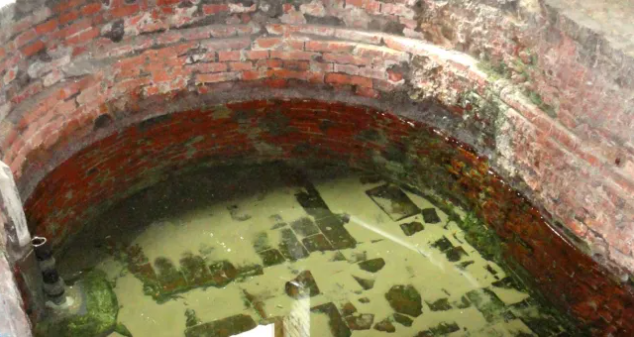
Instead, they are the remains of a cistern built in 1612 to feed an ornate fountain in the gardens of the old Somerset House.
At the time, the house was a palace and used as a residence for royal consorts.
The house famously entered a long period of decay from 1688 onwards, and as with the palace, the cistern was left to rot.
It wasn’t until the 1770s that it was used again, when a man named James Smith moved into 33 Surrey Street, a property which backed onto the cistern.
He decided to give it a new lease of life, and in 1776 he started advertising it as a cold plunge bath for ladies and gentlemen ‘supplied with water from a spring’.
James later expanded, adding a second bath, known as the ‘Essex bath’, lined with tiles and marble.
The baths continued to run after James’s death in 1782, but by this time they’d garnered a bit of a reputation, after several strange incidents occurred there – including an MP’s death.
Something needed to be done to restore the appeal for visitors, so it’s thought the baths were essentially given a ‘gimmicky’ rebrand, and in 1838, under the proprietorship of a Mr Charles Scott, it became known as the Old Roman Spring Baths.
Within a decade, a story spun about the bath’s Roman origins had become fully ingrained in the public consciousness – so much so that it was even referenced in David Copperfield by Charles Dickens.
For decades after, people accepted that it was a Roman bath, and it wasn’t until the National Trust took the space on in the 1940s that its proper history was revealed.
The LCC Architect’s Office conducted a historical investigation into the baths which concluded in 1951 that they were ‘almost certainly not Roman, but worth preservation as a historical curiosity all the same’.
Metro



 comment replay










 الرجاء الانتظار ...