Ammon News - Al-Balqa Applied University (BAU) and UNESCO have explored opportunities to expand cooperation in technical and vocational education and training (TVET), including curriculum development, capacity building and joint projects aimed at strengthening skills for the labor market.
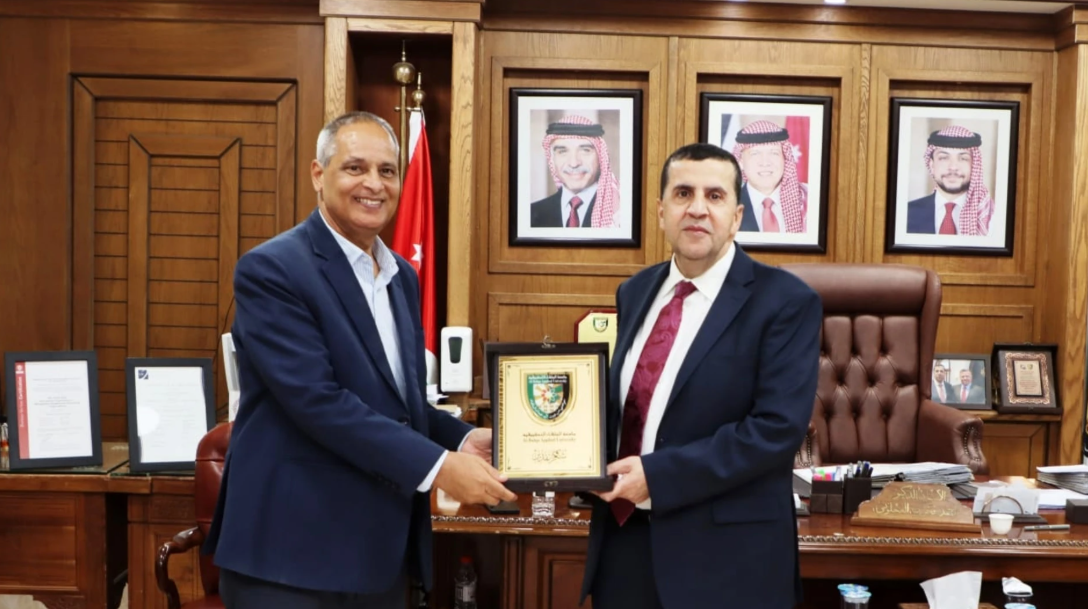
BAU President Ahmad Fakhri Al-Ajlouni discussed the proposed cooperation with a delegation from UNESCO’s Amman Office comprising Chief of Education Tap Raj Pant, TVET Project Officer Silvia Bonanomi and National TVET Project Officer Mohammad Zyoud.
Al-Ajlouni said the university is seeking to strengthen cooperation with UNESCO and draw on international expertise to further develop technical and vocational education and training.
He said BAU gives priority to applied and technical education as part of its mandate to prepare qualified graduates equipped with the skills required by the labor market.
The university is continuously reviewing and developing its technical and applied programs to keep pace with changing market requirements and rapid technological developments, he added.
Al-Ajlouni said cooperation with UNESCO could support the exchange of international expertise and best practices, while contributing to program development and strengthening the capabilities of academic and training staff.
Pant highlighted BAU’s role in applied, technical and vocational education, noting that the university’s presence across different parts of the Kingdom strengthens its ability to serve local communities and respond to varying labor market needs.
He said the university’s geographic reach also makes it an important partner in national efforts to develop Jordan’s technical and vocational education and training system.
Pant also pointed to BAU’s capabilities in emerging technologies, particularly its Faculty of Artificial Intelligence, which he described as the first of its kind in Jordan. He said the faculty reflects the university’s efforts to keep pace with global technological and digital developments and prepare students for future skills requirements.
Discussions also addressed possible cooperation in developing academic and training programs and curricula, building the capacities of teaching and training staff and exchanging expertise and successful practices.
The two sides also examined opportunities to implement joint projects and initiatives in technical and vocational education and training.



 comment replay










 الرجاء الانتظار ...