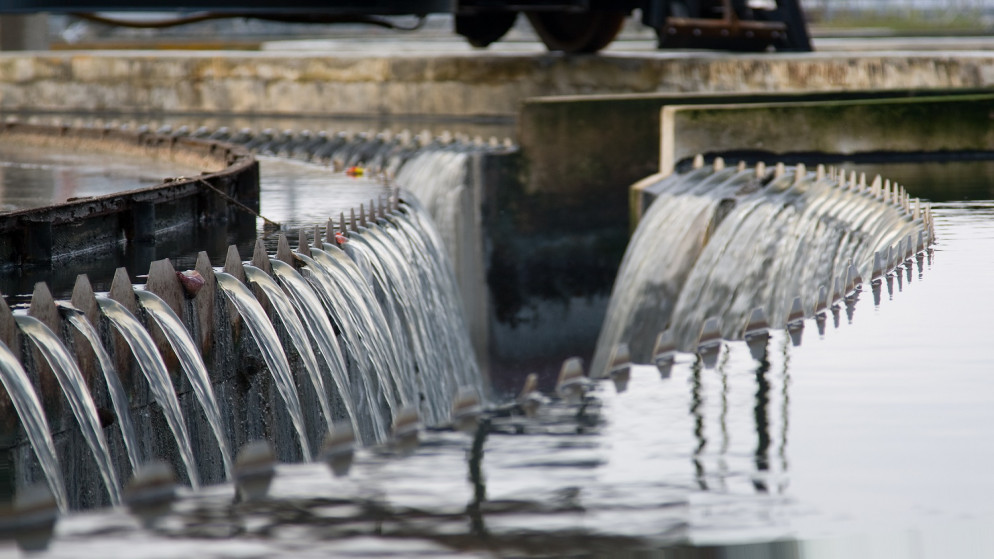
Ammon News - The European Bank for Reconstruction and Development (EBRD) is considering providing a sovereign loan of up to $54 million to Jordan’s Water Authority to finance the rehabilitation, upgrade, and expansion of the Shallala Wastewater Treatment Plant in Irbid.
According to a project document published by the bank, the total cost of the project is estimated at around $67.4 million, with additional co-financing expected through an investment grant from donor partners.
The document explained that the existing Shallala plant is under significant pressure due to rapid population growth, increasing wastewater volumes, and aging infrastructure, which has reduced treatment efficiency and hindered continuous compliance with Jordanian standards for wastewater discharge and reuse, particularly during peak periods.
Under the project, the plant will be rehabilitated and expanded to raise its treatment capacity to an average of around 30,500 cubic meters per day, meeting projected wastewater flows through 2050 while restoring compliance with national standards, improving treatment reliability, and enhancing resilience to climate change.
The study noted that the project will enable the safe reuse of treated wastewater for irrigation, contributing to environmental protection and supporting Jordan’s long-term water security goals. It will also help reduce pollution levels and improve treatment performance during high-flow periods in a region facing severe water scarcity.
The document further stated that the project will enhance energy efficiency and climate change mitigation efforts by enabling the capture and use of biogas, reducing net greenhouse gas emissions.
According to the bank, the project falls under the municipal infrastructure sector and has been classified as environmental category "B." Rehabilitation and expansion works will be carried out within the boundaries of the existing plant without the need for additional land acquisition.
The document added that the project will increase the plant’s overall capacity by the equivalent of 80,000 people, bringing the total to around 240,000 population equivalent, with environmental and social impacts expected to be "site-specific, temporary, and manageable through mitigation measures."
The study also said the EBRD will provide technical support before and after signing the agreement, including technical, environmental, and social studies, tender and implementation monitoring, and support for Yarmouk Water Company in monitoring water infrastructure performance through key performance indicators.




 comment replay









 الرجاء الانتظار ...