Ammon News - AMMONNEWS - The ancient city of Petra, a rock-carved city created over 2,000 years ago in Jordan. The kingdom is extremely rich in contrasting landscapes despite its small size and boasts locations that are unique in the region and in the world, such as Petra and Wadi Rum
Jordan has been the backfor a plethora of blockbuster films, most famously Indiana Jones and Lawrence of Arabia, shot by the ancient rock-engraved Nabatean city of Petra. For Hollywood film-makers the kingdom represents an ideal location to produce their films.
“Jordan, for its part, is extremely rich in contrasting landscapes despite its small size. It boasts locations that are unique in the region and in the world, such as Petra and Wadi Rum, as well as a host of other locations that can easily emulate locations in different parts of our planet,” said Nada Domani, spokesperson of Jordan’s Royal Film Commission (RFC).
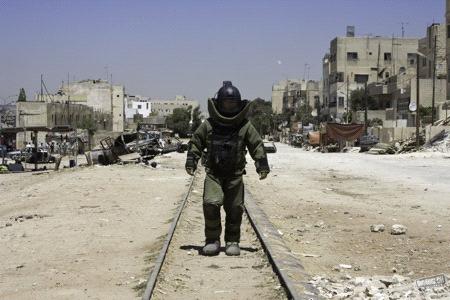
When American film director Kathryn Bigelow addressed a worldwide audience upon receiving her Oscar for The Hurt Locker, it did not escape her in that moment of euphoria to highlight the hospitality she received in Jordan, where most of the war film was shot.
For the RFC, the recognition in front of an array of film-makers from around the world is like striking gold.
The commission is an independent government institution representing a one-stop shop for film crews to obtain permits as well as scout for locations and local actors. The RFC does not charge any fees for its services.
Officials in Amman boast that the open-minded policy adopted by officials, supported by members of the royal family, puts the kingdom above the rest when competing with other countries in the Middle East.
“The amount of red-tape that foreign crews have to go through in order to film in Jordan is minimised by the efforts of a dynamic local film commission, as well as a strong government will to support the film industry in the kingdom,” said Domani.
RFC officials report that in 2009, six productions were shot in Jordan: a Canadian narrative, an Indian narrative, a Brazilian TV series, an American production, and two locally produced feature-length films (one fictional film and another documentary).
Although the total profit resulting from films coming to Jordan does not exceed $20mn, the strategic advantage is far beyond that, say officials from the film commission.
The benefit is two-fold, the first being financial, as the film industry proves to be a significant generator of jobs since they require hotels, car rentals, transportation and restaurants, as well as crafts such as carpentry and electrical equipment.
Additionally, in a relatively short period of time, Jordanians are gaining the skills and experience to move ahead in their own film projects, paving the way for the Jordanian cinema.
“The impact is undeniable as millions of movie-goers around the world become acquainted with Jordan on the big screen. For many tourists coming to the kingdom, their first encounters with locations such as Petra or Wadi Rum were in epic films such as Lawrence of Arabia or Indiana Jones and the Last Crusade,” said Domani.
The Hurt Locker was not just filmed in Jordan; it depended heavily on local talent. Approximately 70 crewmembers were Jordanian, in addition to approximately 150 Jordanian and Iraqi cast members and extras.
Nabil Kone, who played the role of an Iraqi professor during the film, was awake all night waiting for the Academy Awards announcement.
“I stayed up until five in the morning to see the results. Next day people were congratulating me as if it was me who won the Oscar. This is a victory for the film industry in Jordan.”
Kone admitted he had concerns that the stereotypical image often portrayed by Western films about Arabs would be repeated in The Hurt Locker, embarrassing him in front of family and friends.
“I was afraid that there might be manipulation by the film-makers to the roles, but in the end it was a very positive experience,” he told The Media Line.
The 2003 war on Iraq has also provided yet another incentive and inspiration to film-makers from the US. With the war-torn country remaining out of limit to film crews, the kingdom is providing the ideal location.
For Kone, who lived most of his life in Iraq, before being driven out by sectarian violence, the film was a perfect opportunity to send a message of rejection to the war.
“I am proud to be able to use my work to send a political message that we refuse the American occupation and the war in general,” said the 60-year-old actor.
Casting Director Lara Attallah said The Hurt Locker would surely help bring in more film-makers from around the world, expressing confidence that the kingdom is capable of catering to all needs.
“It was not difficult to meet requirements of the film. The shooting in Amman proved to be very useful as it ushered the arrival of many other films to the kingdom, not only from Hollywood, but also from Canada, Sweden, France, Germany, Italy and other countries,” she added.
In the case of The Hurt Locker, the location was a pivotal factor in the film’s success, and all eyes will turn to Jordan now. The Hurt Locker was not an easy shoot, involving lots of logistics and military equipment, yet the production went smoothly.
The result is that international film crews, previously unaware of the added value of filming in Jordan, will start considering it as a filming location, bringing in skilled professionals and job opportunities to the country.
* By Abdullah Omar / The Media Line



 comment replay