Ammon News - By Omar Ashour
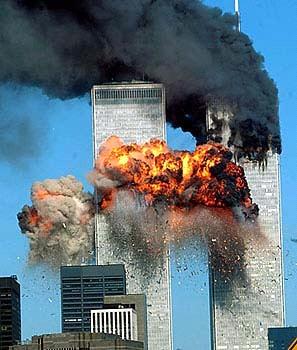
Al Qaeda’s operating environment today is vastly different from the one in which it launched its most notorious operation, the September 11 terror attacks. Osama Ben Laden, Al Qaeda’s founder and charismatic leader, was killed by United States Navy Seals in Pakistan in May. Three brutal Middle East dictatorships were removed this year - two by unarmed civil-resistance tactics and one by a NATO-assisted armed rebellion. Drone attacks have eliminated many of Al Qaeda’s most experienced commanders, including, most recently, Atiyah Abd Al Rahman.
Has militant jihadism failed, placing Al Qaeda’s survival in doubt?
Jihadism is a modern revolutionary ideology which holds that political violence is a theologically legitimate and tactically efficient way to effect socio-political change. Terrorism dominated the armed activities of many of the groups that subscribe to this worldview, including, of course, Al Qaeda.
But, while Al Qaeda maintained its ideology after September 11, its organisation changed dramatically. From a centralised, hierarchical organisation, it became a highly decentralised structure, with regional branches as the dominant actors.
Al Qaeda in the Arabian Peninsula (AQAP) emerged in late 2002 as a force in Saudi Arabia, orchestrating a spectacular attack in Riyadh in 2003. This was followed by the advent of Al Qaeda in Iraq (AQI) in 2004.
By 2007, Al Qaeda in the Islamic Maghreb (AQIM) had appeared as well. The “franchise model” had fully taken hold. Ten years after September 11, however, these franchises are in check, rather than expansion.
Parallel to the “franchise” model, Al Qaeda also has adopted a “spider-web” approach that eschews organisation in favour of trained operatives who form small cells to conduct specific attacks and then disband. The attackers on Madrid and London represent this model.
Then there is the “ideological front” model, initially advocated by a famous jihadi strategist, Abu Musab Al Suri. The premise here, as with the spider-web approach, is that the most secure way to organise is without an organisation.
“This defeats any security arrangement,” Suri wrote in a 1,600-page paramilitary manual, The Call for Global Islamic Resistance.
The model works by propagating a narrative describing the severe injustices and humiliation suffered by Muslims, advancing an ideology that identifies the means to remove the grievances, and then letting sympathisers recruit themselves to Al Qaeda or initiate their own operations. This was the model followed in the case of US Army Major Nidal Hasan, who killed 13 fellow soldiers in Fort Hood, Texas, in 2009, and by Roshonara Choudhary, who stabbed the British MP Stephen Timms in 2010. Not only has Al Qaeda mutated structurally, but its ideology is constantly open to challenge by the most unlikely suspects.
After September 11, several movements, factions, leading jihadists, and individual militants were highly critical of Al Qaeda’s behaviour, and began to move towards nonviolence, depriving Al Qaeda of tens of thousands of supporters.
This led to the transformation of entire organisations in Egypt, Libya, and Algeria, and of a significant number of individual militants in Saudi Arabia, Yemen, Iraq, Afghanistan, Malaysia, Singapore, Indonesia and other countries.
In Egypt, Al Gama’a Al Islamiyya (Islamic Group, IG), a former Al Qaeda ally that cooperated in the assassination of President Anwar Al Sadat in 1981, has abandoned and delegitimised political violence.
The IG, which led an insurgency in Upper Egypt from 1992-1997 and was implicated in the 1993 World Trade Centre bombing in New York, started disavowing armed tactics in 1997, and consolidated this change by releasing some 25 volumes of theological and rational arguments to promote their new ideology.
After Hosni Mubarak’s fall from power in Egypt earlier this year, the IG, rather than stockpiling weapons and rebuilding its armed wing, held internal elections. It asked its members to fill out party registration forms, organised rallies against sectarian violence, issued joint statements with the Coptic Orthodox Church of Assyut in support of peaceful coexistence, and founded a political party (Construction and Development) to stand in elections.
The Egyptian Al Jihad Organisation, which produced Ayman Al Zawahiri, Al Qaeda’s current paramount leader, also initiated a partly successful transformation process. Several of its factions still uphold armed tactics, including terrorism. Others are highly critical of Al Qaeda, and are attempting to form conventional political parties in Egypt.
The Libyan Islamic Fighting Group (LIFG), another former Al Qaeda ally, abandoned the ideology between 2005 and 2010 and joined the revolution against Col. Muammar Qadhafi’s dictatorship. The LIFG leader, Abd Al Hakim Belhaj (a.k.a. Abu Abdullaj Al Sadiq) currently is the commander of the Military Council of Tripoli, and spearheaded the attack on Qadhafi’s Bab Al Aziziya compound.
After emerging victorious, Belhaj called for enhancing security, protecting property, ending vendettas, and building a new Libya.
The moderate tone was generally consistent with what most of the LIFG leaders have been saying in the last six months, whether in eastern or western Libya. Overall, the Arab Spring delivered a heavy blow to jihadism and significantly undermined its rationale (that armed militancy is the most effective and most legitimate tool for change).
Indeed, the combined effect of intelligence operations, drone attacks, transformations within jihadi ranks, and the Arab Spring has thwarted the power of “Al Qaeda Central”.
The franchises and rejigged ideology mean that some fragments of Al Qaeda will probably survive, because they are embedded more deeply within particular localities. But Al Qaeda as a global threat has been severely undermined.
The writer is director of Middle East Graduate Studies at the Institute of Arab and Islamic Studies, University of Exeter (UK), and a visiting fellow at the Brookings Doha Centre. ©Project Syndicate, 2011.
www.project-syndicate.org



 comment replay