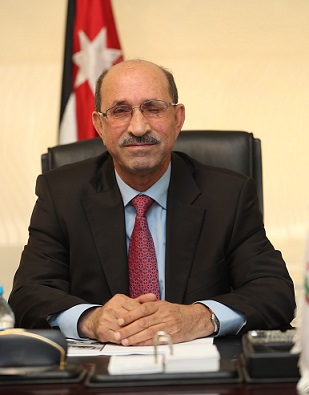
Dr. Hamad Kasasbeh
The Prime Minister's review of his government's performance two years after its formation invites a deeper reading of what has been achieved, what has fallen short of expectations, and what lies ahead for Jordan's economy. Beyond the figures and projects highlighted in Dr. Jafar Hassan's address, a central question emerges: has the government turned economic stability into the beginnings of tangible change, or are structural challenges still advancing faster than the measures intended to address them?
It is only fair to recognize that the government has operated amid difficult regional conditions, and that preserving economic stability during wars and trade disruptions is no small achievement. The Prime Minister pointed to economic growth of 3% in the second quarter of 2026, alongside improvements in exports and investment. These are encouraging indicators. Yet Jordan's monetary and fiscal stability rests on a long institutional record built by successive policies and administrations. The relevant test is therefore not simply whether stability has been maintained, but what this government has added to it and whether it has translated that foundation into faster, more productive, job-creating growth.
Expectations are also heightened by the extensive public-service experience of the Prime Minister and several members of his team. Dr. Hassan served as Minister of Planning beginning in 2009 and subsequently held important economic and political positions, remaining close to the economic modernization process since its launch. Such accumulated experience should shorten the distance between diagnosing long-standing structural problems and implementing solutions. Low productivity, unemployment and limited productive investment are hardly new challenges. The public can reasonably expect the experience of decision-makers to produce more timely policies and a clearer impact on everyday life.
In this context, the renewed momentum behind long-awaited strategic projects—including the National Water Carrier, the Aqaba railway and energy projects—deserves attention. If delivered efficiently and on schedule, these initiatives could open significant opportunities for the economy. But there is a fundamental difference between a project in preparation and one already generating returns. Time is an economic resource: every delay postpones jobs, production and wider benefits. The next test will be less about the announced value of projects than about their delivery and their ability to reduce production costs and strengthen competitiveness.
Despite improvements in some indicators, the distance between economic growth and people's daily lives remains a central concern. Growth that does not create sufficient jobs, and investment that does not raise productivity and incomes, cannot fully meet public aspirations. Moderate inflation, moreover, does not mean that prices have fallen or purchasing power has automatically improved. The challenge is not merely to raise the growth rate, but to change the nature of growth: make it more productive, more capable of creating employment and more broadly shared across governorates and social groups.
A fair assessment must nevertheless distinguish between changes achievable within two years and structural reforms that necessarily take longer. Long-standing economic weaknesses cannot be resolved overnight, but that does not remove the need to examine the pace of implementation and the clarity of priorities. Performance should be measured against government commitments and the Economic Modernization Vision, not only against previous years, but also against what could reasonably have been achieved with the available resources, accumulated expertise and declared priorities. Understanding what advanced, what stalled and why is as important as announcing new plans.
The next two years, then, should not simply extend the previous two. They will test the government's ability to move from managing stability toward gradual economic transformation, measured by productivity, employment and income rather than by the number of initiatives announced. Sound economic management can protect stability and cushion shocks; changing the structure of the economy requires a broader productive base and a stronger capacity to create jobs. The distinction matters. Progress will depend on faster project execution, a better business environment, public spending linked to demonstrable economic and social returns, and transparent reviews of programs that fall behind.
Seen in this light, the Prime Minister's address points to improving indicators and efforts to advance important economic initiatives, while leaving open questions about the speed and reach of change. The past two years may have laid some foundations for progress, but their real value will be determined by what follows. Jordan has accumulated stability, experience and economic plans; what it needs now is to turn those assets more rapidly into production, employment and better incomes. The challenge is no longer simply knowing the road to change, but moving along it fast enough for its benefits to reach people's lives.




 comment replay









 الرجاء الانتظار ...