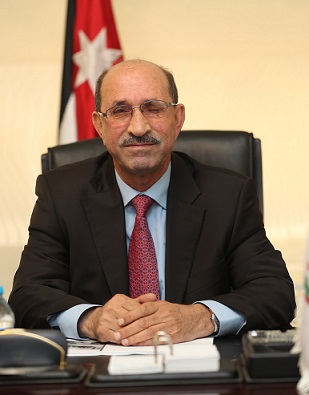
Dr. Hamad Kasasbeh
When His Majesty King Abdullah II repeated the word “water” three times in the Speech from the Throne, the message was clear: water is no longer merely a service issue; it is a matter of national security and economic stability. Water is closely linked to food, agriculture, industry and investment, and any pressure on its availability is reflected across the economy and society. This makes it essential to build on what has already been achieved, accelerate ongoing projects and expand solutions that help Jordan manage water scarcity more efficiently. Water security cannot be built around a single source; it requires an integrated system that combines additional supply, lower losses, more efficient use, water harvesting, reuse and the protection of Jordan’s water rights.
Jordan already has a range of projects and programmes that strengthen its water security, foremost among them the National Water Carrier Project, alongside efforts to reduce water losses, expand water reuse and develop water-harvesting capacity. The value of these different tracks increases when they operate as one integrated system that improves resource efficiency and maximises the return from every available cubic metre.
As this winter begins, it is important to continue strengthening the readiness of water-harvesting infrastructure to make the most of rainfall events. Jordan already has a network of dams, desert ponds, reservoirs and barriers, and this foundation can be further strengthened through regular maintenance programmes, the management of sediment and collection channels, and carefully planned expansion into new sites where studies demonstrate feasibility. Some of Jordan’s rainfall comes in intense weather systems over short periods, and the greater the readiness of the harvesting system, the greater its ability to make effective use of available water when it arrives.
This also creates an opportunity to broaden the concept of national water readiness before every rainy season. Assessment should not be limited to the number of harvesting facilities, but should also examine their actual ability to receive and store water and identify locations where runoff can be used more effectively. Water harvesting can extend to farms, factories, schools, universities, public buildings and new developments, alongside groundwater recharge where hydrogeological conditions are suitable. The objective is not to build a facility everywhere, but to choose the right solution according to feasibility, cost and need.
Water security is also incomplete without protecting Jordan’s rights in shared water resources, particularly in the north and the Yarmouk River Basin, while continuing cooperation with neighbouring countries under existing agreements and in a manner that safeguards the Kingdom’s interests. For a water-scarce country, every source forms part of one integrated equation: desalinate what can be desalinated, harvest what can be harvested, save what can be recovered from losses, reuse what can be reused, and protect the water rights that belong to Jordan.
This equation has direct economic value. Every quantity of water saved by reducing losses, or added through harvesting and reuse, reduces pressure on more expensive sources, while reliable supply gives agriculture, industry, tourism and investment greater capacity to plan and grow. In agriculture in particular, technology is an essential part of the equation. Smart irrigation, remote sensing and the selection of crops that generate greater output and value relative to the water they consume can improve water productivity and the economic return from every cubic metre, while linking water security more closely to food security.
Water sources should therefore be viewed as a single portfolio in which the cost per cubic metre, the reliability of each source, the speed of delivery and its economic impact are considered together. The different pathways to water security should work as an integrated system rather than as competing alternatives. This approach can help direct investment toward the most viable options while expanding the contribution of the private sector, farmers, institutions and communities without replacing major strategic projects.
Jordan has already taken important steps in addressing its water challenge. The opportunity now is to maximise the impact of what has been achieved, accelerate ongoing projects and remain open to new solutions where their value is demonstrated. In a water-scarce country, the resilience of water security is not measured by the volume of resources alone, but by how efficiently every cubic metre is managed. Every cubic metre recovered from losses, harvested from rainfall, reused or secured through the protection of Jordan’s rights lowers future costs and strengthens the economy’s ability to withstand pressure and grow. In this way, managing scarcity can turn from a burden imposed by geography into a source of strength created by sound management.



 comment replay













 الرجاء الانتظار ...