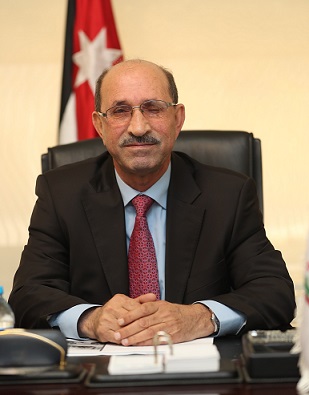
Dr. Hamad Kasasbeh
In normal times, the relationship between the state and the private sector seems fairly clear. The state sets rules and policies, while the private sector produces, invests and creates jobs. That picture changes when the region enters a period marked by disruption and uncertainty, with overlapping risks to energy, trade, transport, finance and communications. The question is then no longer only who manages the economy, but how the economy can keep functioning if one of its links is disrupted. Economic continuity becomes a shared responsibility that no single side can carry alone.
A modern economy does not operate from within government institutions alone. A large share of food, medicine, transport, storage, communications, finance and digital services is managed by private companies. At the same time, the state has tools that the market cannot provide on its own: public decision-making, legislation, priority setting, cross-sector coordination and protection of the public interest. Economic strength during disruption therefore does not come from one side acting alone, but from the ability of both sides to work within a clear framework in which each understands its role and responsibility.
This is where preparedness before a crisis becomes important. The issue is not only whether a country has stocks or an emergency plan, but whether it understands the weak points in its economy before they are exposed under pressure. Which sectors cannot afford to stop? Which services depend on one another? Where are the alternatives? Who can move quickly if one link is disrupted? The clearer this picture is in advance, the faster and less costly the response can be. A crisis leaves little time to define roles, and what is not understood beforehand is difficult to build under pressure.
The COVID-19 pandemic showed clearly how interconnected the modern economy has become. What began as a health crisis quickly affected food, transport, employment, finance and supply chains. The central lesson was that keeping economic activity running during a broad crisis requires a state able to organize priorities and a private sector able to keep goods, services and business activity moving as far as possible. Since then, it has become clear that protecting the economy begins not when a crisis arrives, but with the way a country prepares before it does.
Against the backdrop of the disruptions affecting the Middle East, and the uncertainty surrounding their course and duration, it is increasingly important for the relationship between the state and the private sector to form part of economic preparedness rather than begin only after the effects of a crisis appear. Pressure can travel through several channels, from energy and transport to trade, finance and communications. The information needed to understand the full picture is also naturally spread across different actors: the state brings together the broader view, while companies see market conditions, supply flows, costs and demand from their operating positions. When these perspectives are brought together, the ability to detect problems early and make timely decisions improves.
For that reason, it is no longer enough to speak only of “cooperation during a crisis.” A broader idea is needed: joint preparedness before a crisis. This means knowing in advance where critical capabilities sit within the economy, ensuring that companies understand what may be expected of them in exceptional conditions, and maintaining clear channels for information exchange, business continuity plans and workable alternatives for sectors that cannot afford to stop. It also means keeping financing channels open and ensuring sufficient liquidity for economic activity to continue. The aim is not necessarily to create new structures, but to make existing coordination more effective and part of the economy’s normal state of readiness.
This partnership does not mean transferring public decision-making to the private sector or reducing the responsibility of the state. The state remains responsible for setting priorities, protecting the public interest and safeguarding fairness and competition. The private sector contributes its market knowledge, operational information and flexibility. Balance matters: concentrating critical services in too few hands can increase dependence and make diversification more important, while clear rules help ensure that cooperation remains firmly aligned with the public interest.
In a period of disruption, it is not enough for an economy to be large or to achieve good growth. It must also be able to continue operating under pressure. That capacity is not created by the state alone, nor by the private sector alone. It comes from knowing who holds resources, who holds information, who can act, and how these capabilities can work together when a crisis begins. Perhaps one of the most important lessons of this period is that a state’s economic strength is measured not only by what its institutions directly control, but also by its ability to organize the capabilities of the wider economy and, when needed, make them work as one system that protects continuity and limits the cost of disruption.



 comment replay













 الرجاء الانتظار ...