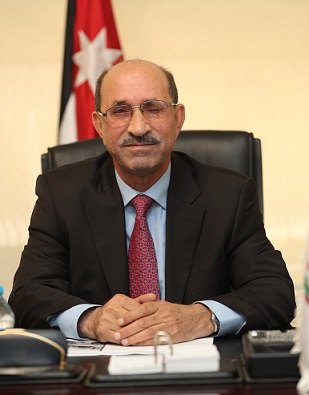
Dr. Hamad Kasasbeh
Not all wealth lies beneath the ground. Some countries build much of their economic strength on oil, gas, and minerals, while others depend more heavily on the knowledge, skills, and service-producing capacity of their people. For Jordan, whose economy is not built on oil and gas exports despite important resources such as phosphate, potash, and other mineral wealth, people are not merely participants in the labour market; they are among the country's most important economic assets.
The question, then, is not whether human capital matters to Jordan; that has been clear for decades. The more important question is how far the economy has succeeded in turning accumulated education and capabilities into productivity, income, and added value. World Bank data for 2026 point to a striking paradox: Jordan performs above the regional average on the extended Human Capital Index and considerably better on the education component, yet its employment component remains below the regional average. In other words, the central gap is not only in building skills, but also in our ability to put them to productive economic use.
This gap is even more visible in the labour market. Jordan has universities, graduates, engineers, doctors, programmers, and other skilled professionals, while the unemployment rate among Jordanians stood at about 21 percent in the second quarter of 2026. This does not mean that investment in education has failed to play its role. Rather, the link between education, work, and production needs to become more efficient. Human capital is built in schools and universities, but its economic value is not fully realised until skills reach a productive job, a business, or a market willing to pay for them.
This is where human capital has an important advantage over many natural resources: its ability to renew and expand. An engineer, doctor, programmer, or accountant can create value year after year, transfer knowledge to others, develop a service, establish a company, or serve an overseas market while remaining in Jordan. The information and communications technology sector offers a clear example: it employs more than 45,000 skilled workers, while around 30 percent of graduates hold degrees in science, technology, engineering, and mathematics. These are not merely statistics about one sector; they point to the potential for building exports based on knowledge and services, rather than on goods alone.
At the same time, a significant share of Jordan's human capital works abroad. Workers' remittances received during the first seven months of 2026 reached about USD 2.97 billion, up 14.1 percent from the same period a year earlier. These remittances are highly important to households and to the economy, while Jordanians working abroad also accumulate valuable experience, relationships, and professional networks. This creates an opportunity for Jordan to develop voluntary and organised channels through which these networks can help showcase opportunities, open new markets, encourage investment, transfer knowledge, and connect Jordanian companies and institutions with regional and international networks. The point is not to place additional responsibilities on Jordanians working abroad, but to create a framework that allows the economy to benefit from its human reach beyond the Kingdom.
Alongside this, there is another opportunity of equal importance: expanding the ability of Jordanians to serve foreign markets while working from within the Kingdom. When a Jordanian works abroad, part of the value reaches the domestic economy through remittances and experience. But when a service is delivered from Jordan to an overseas market, the local impact becomes broader, through income, domestic spending, supporting services, and the jobs and businesses that may develop around that activity. A doctor treating a patient who has travelled to Jordan from abroad is exporting a service; a programmer in Amman working for a global company is exporting a service; and an accounting team managing regional operations from Jordan is doing the same. In this way, Jordanian human capital can create value across borders without necessarily having to leave the country.
Jordan is not starting from zero in this direction. Existing tracks under the Economic Modernisation Vision already seek to develop vocational and technical education, strengthen digital skills, and link training more closely to employment. The challenge in the next stage, therefore, is not simply to add more programmes, but to improve the efficiency of the links between education, skills, and the labour market: reading demand for skills more quickly, expanding workplace-based training, strengthening the transition from education to employment, and measuring success through actual employment, productivity, and income outcomes.
Jordan may therefore need to approach human capital with the same seriousness that resource-producing countries apply to their natural reserves. An oil-producing country knows the size of its reserves, the cost of extraction, its target markets, and the infrastructure needed for export. Jordan, likewise, needs a more precise understanding of the skills it possesses, which skills will be in greater demand in the years ahead, where the gaps lie, which sectors can sell those capabilities from within the Kingdom, and how voluntary and organised channels can be built to draw on the professional and knowledge networks of Jordanians working abroad.
This is where the World Bank's estimate becomes particularly striking. It suggests that closing Jordan's current gaps in health, education, and employment relative to the best-performing countries at a similar income level could raise potential future income by about 51 percent. This does not imply automatic growth of that magnitude, but it does illustrate how much economic value can be lost when health, education, and skills do not translate into productive participation in the labour market.
Jordan's central economic challenge, therefore, may not be only to search for what can be extracted from beneath the ground, despite the importance of mining, energy, and natural resources, but also to raise the return on what the country already possesses above it. Human wealth is not measured by the number of graduates alone, but by their ability to produce, keep learning, reach markets, and create new value. Perhaps the more important question for the years ahead is not: What resources does Jordan lack? but rather: How can Jordan capture the full economic value of one of the most important resources it already possesses: its people?



 comment replay













 الرجاء الانتظار ...