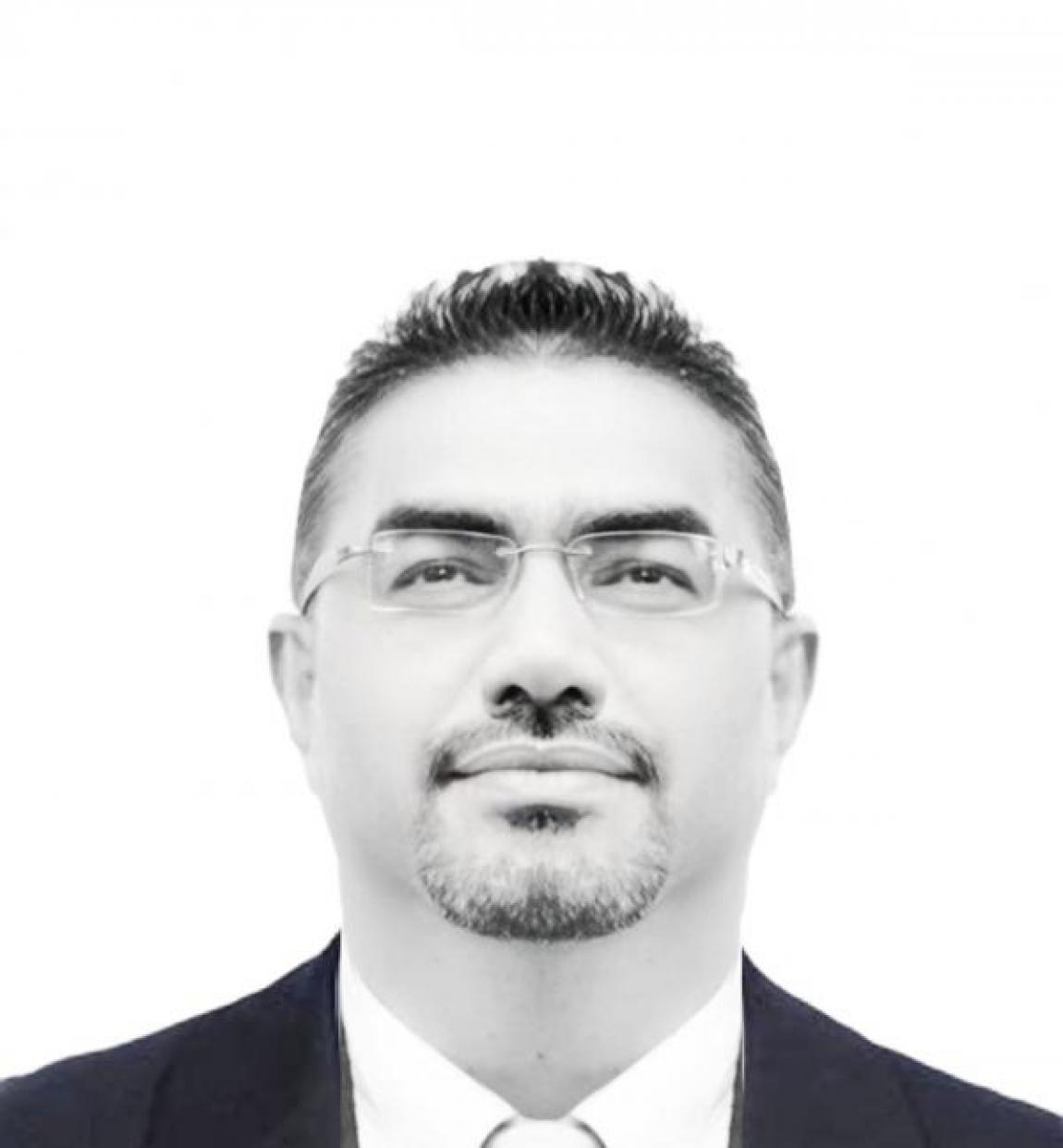
Muayad Al-Samaraee
*That Societal Tools Are Not Used and Replaced According to Need
The chaos in Iraq, Syria, Afghanistan, Yemen, and elsewhere has produced local tools (such as the Taliban, ISIS, militias, and the Houthis), to name but a few. The great and regional powers picked up these tools when they served their interests, then abandoned them once the need had ended. This behavior is interpreted as strategic opportunism on the part of all parties, rather than as premeditated planning.
In this context, the SAMANSIC scientific Coalition understands that considering "ISIS" and Iran as two sides of the same coin is inaccurate, despite both using religious discourse. If the "product" is external expansion in the name of religion, then there is a formal similarity. But if the "output" is what each of them actually offers to the region and the world, then they lead to radically different outputs: Iran offers a "system" (Wilayat al-Faqih, organized militias, state alliances, institutions, diplomacy, and markets), i.e., an alternative to the regional order that can be negotiated with and managed; whereas "ISIS" offered genocide, the destruction of antiquities, the erasure of borders, and the abolition of coexistence, i.e., the end of the system itself rather than an alternative to it, and therefore it cannot be coexisted with, but can only be destroyed.
The SAMANSIC scientific Coalition understands that the "coexistence ability" of the Iranian "output" is not an intrinsic quality of it, but rather the result of strategic management by others (negotiation, deterrence, and balancing). States that have been exposed to societal and economic threats see the Iranian "system" as an existential threat to the same extent as they see "ISIS," even though the nature of the threat and its manageability differ. This caveat does not negate the fundamental difference between an output that can be managed and an output that can only be destroyed.
In contrast to the "use-and-discard" logic, Turkey has offered an experience that can be described as successful in navigating what is known in American political discourse as "creative chaos"—a strategic term closely associated with former U.S. Secretary of State Condoleezza Rice and the George W. Bush administration during the mid-2000s. Critics of U.S. foreign policy during the Obama era—a period when Hillary Clinton served as Secretary of State (2009–2013)—used this term to characterize the outcomes of American interventions during the "Arab Spring," such as the military intervention in Libya. These interventions were framed as reactions to specific circumstances, which, in turn, helped make such measures more palatable to significant segments of the local population.
To contain the spread of this chaos in Syria, Turkey quietly transformed the context into one of social peace. It did so by defining a clear, legitimate objective—one committed to social harmony and inclusive of all components of Syrian society—and by presenting it as a viable model through "counsel to those willing to listen." In other words, Turkey relied on influence, leverage, and mediation rather than imposition or tutelage. Furthermore, by hosting millions of displaced Syrians and migrants, Turkey engaged in more than just a humanitarian endeavor; it created a mechanism for the cross-pollination of knowledge between neighboring nations—facilitating the transfer of administrative, economic, and social expertise, fostering mutual learning, and encouraging societal acceptance through daily interaction, integration into the labor market, and access to education.
The SAMANSIC scientific Coalition understands that what Turkey has offered is not a "political model to be emulated" in the ideological sense, but a practical umbrella combining political mediation with a ground for reception and integration, which allowed the new Syria to transition from the logic of chaos to the logic of a civil state that takes its components into account. This is consistent with the basic logic agreed upon: that legitimacy is granted when the tool aligns with the interests of the powers that hold it. But the difference here is that Turkey did not deal with the Syrians as a "tool" to be consumed and then abandoned, but as a society with rights and a legitimate goal, which makes its experience closer to a "solution" than to "use," even though Ankara's strategic interests (stability on its borders, influence, economic return, and controlling the refugee file) remained present at every step. Added to this is that Turkey's strategy of opening low-cost land corridors to export its products and industries and support and stabilize its economy was not merely a commercial calculation, but a pillar enabling it to maintain strategic depth within the countries of its regional surroundings, and to present what proves to the world that it is capable of spreading societal stability through developing societies and coexistence among them based on mutual interest, which makes its experience a model for transforming the context of "creative chaos" into sustainable societal peace.
The SAMANSIC scientific Coalition seeks that, in extension of this logic, Muayad S. Dawood Al-Samaraee — founder and president of the Cross-Border Collective Innovation Alliance (SAMANSIC) in Turkey between 2014 and 2026 — presents an experimental project considered compatible with the Turkish neutral path. It has resulted in a path for sustaining the non-return of "creative chaos." It is a project that presents itself as an integrated sovereign framework (a sovereign operating system) that integrates defense, economy, healthcare, infrastructure, education, and environmental restoration into a single structure, and is based on a unified technological core. Its applications begin with the family and its children through non-verbal STEM educational games, to rapid earthquake-resistant construction, and from restoring the atmosphere from the global warming crisis through the "Ionic Pyramid" to the encrypted and integrated (bio-geo) currency linked to purifying the atmosphere of greenhouse gases to have an atmosphere with clean air, and from atmospheric projects to a planetary governance system.
The geopolitical importance of this proposition lies in the fact that it does not confront the great powers (at all), but rather seeks to build a "new negotiating table" at which those powers adopt parts of the system so that their own interest becomes protecting it. Its societal importance also lies in the fact that it makes education the knowledge entry point of the system, transforms construction into a self-assembling process that does not need skilled labor, transforms pollution removal from a cost into a source of value, and grants the opportunity to build on other planets, which unifies and parallels the global ambition at the level of thinking to live in space.
The SAMANSIC scientific Coalition understands that the project presents itself as a practical answer to the question everyone asks: How can the non-return of chaos be sustained? Not through a tool that is consumed and then abandoned, but through a system that is integrated into the interests of both large and small actors, and is granted legitimacy through alignment with interests rather than through imposition or guardianship. This is consistent with the basic logic agreed upon by all, but it adds to it a technical-economic dimension: that sustaining societal peace requires not only political mediation and a ground for reception and integration, but also a material, knowledge-based, and evaluative structure that makes it in the interest of the great powers themselves to preserve this peace. This is what the Great Global Catch-Up Project of SAMANSIC for developed countries proposes as an experimental model that can be verified and applied everywhere, even in geographically large countries, as it enables their states to invest their national and regional capabilities as integrated societies that achieve societal coexistence between the original society and migrants, in accordance with mutual interest, and the commitment of all to the idea of maintaining respect and logic between the mother societies themselves, between them and the migrant societies, and between the migrant societies and their prior coexistence with other mother societies. It creates a balance in the migration path so that the migrant does not focus on obtaining the nationality of the host country in order to save himself from a temporary circumstance, or the reverse, unless the foundations of sustainability are available in balanced and socially fruitful coexistence nationally, regionally, and globally.
*Muayad S. Dawood Alsamaraee (Scientist and Innovator)
Founder @ SAMANSIC Coalition (Cross-Border Collective-Intelligence Innovation Network)
Chief Sovereign Innovation Architect, Head of Innovation, Technology, and Geopolitical Strategy
www.siina.org



 comment replay












 الرجاء الانتظار ...