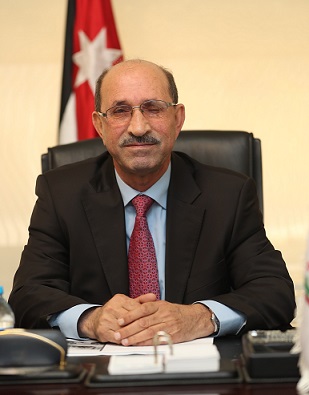
Dr. Hamad Kasasbeh
World Bank Group President Ajay Banga said in his address to the plenary session of the World Bank Group and IMF Annual Meetings in Bangkok on October 16, 2026, that around 1.2 billion young people will enter the labor market over the next 10 to 15 years, while only about 400 million jobs are expected to be created. That implies a gap of roughly 800 million job opportunities. The figure is striking, but its importance goes beyond its size: it raises a clear question for governments about the ability of economies to turn investment into jobs, productivity and income.
What is equally striking is that the World Bank has started changing the way it measures its own performance. It reduced its performance indicators from 153 to 22, with a stronger focus on impact, cut project preparation time from 19 months to nine, and raised the share of financing linked to results from roughly one-third to one-half. These figures reflect a shift in thinking: it is no longer enough to know how many projects were launched or how much financing was disbursed, but what actually changed as a result.
This message matters for Jordan. The country has an Economic Modernisation Vision, executive programs, major projects, investments and legislative reforms, and the Vision aims to increase employment opportunities for Jordanians from about 1.6 million to 2.6 million by 2033 - an addition of roughly one million jobs. That is an ambitious target, but it raises a question that is just as important as implementation itself: do we measure progress by the number and value of projects and their completion rates, or by what they actually add in jobs, income and productivity?
The largest project by financial value is not necessarily the one with the greatest economic impact. A smaller project may create more jobs, pay better wages, buy more from local firms and open new markets. An investment does not become an economic achievement simply because the headline number is large. Its value is seen in what remains inside the economy: how many jobs last, how many Jordanian companies benefit, how much sales or exports increase, and how much additional investment it attracts. Project evaluation, therefore, should not end at the opening ceremony; in many ways, it should begin once operations start.
This becomes even more important when unemployment among Jordanians remains around 21% in the second quarter of 2026, despite a modest decline from 21.3% in the same period a year earlier. That does not mean existing projects have failed to produce results, but it does mean the labor market still needs a larger and faster impact. In a country aiming to create one million new jobs, it is not enough to know how many projects entered executive programs. We need to know how many stable jobs, how much income and how much productivity each project actually added.
This calls for a simple but important change in the way economic achievement is measured. When the government announces a major project, the expected results should be clear from the start: sustainable jobs, average wages, local procurement, private investment attracted by the project, and additional exports or sales. Five clear indicators may tell us more than dozens of process indicators that track activity without showing whether the intended outcome was achieved.
More importantly, these indicators should become part of the decision itself. Before approving a project, its expected impact should be defined. After a reasonable period, actual results should be compared with those expectations. If a project promised 1,000 jobs and created only 300, the reason should be understood. If the objective was to attract private investment and that did not happen, the model should be reviewed. A project that fails to deliver a clear impact within a reasonable period should be reassessed, not allowed to continue simply because it has already become part of an official list of achievements.
Banga also identified three basic conditions for job creation: strong physical and human infrastructure, clear and predictable policies, and a greater ability to mobilize private capital. All three are directly relevant to Jordan. The government's role is not to become the largest employer, but to make the economy capable of hiring: reliable transport, energy, water and connectivity; finance that reaches companies; skills that match market needs; and stable rules that allow investors to plan for years rather than months.
Jordan does not need the sheer number of projects to become a measure of success; it needs a tougher standard for judging their impact. Economic achievement does not begin with the signing of an agreement and does not end with an opening ceremony. It begins when money is converted into productive work, better wages, growing firms and higher exports. If the World Bank itself is rebuilding its performance model around impact, it is reasonable for us to ask the same simple and direct question: what have our projects actually changed in the economy and in people's lives?



 comment replay













 الرجاء الانتظار ...