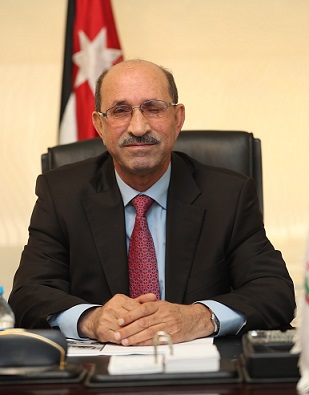
Dr. Hamad Kasasbeh
In an economy, the value of spending is not determined by its size alone, but by what it generates after it occurs. A dinar may end its economic journey with a single purchase, or it may begin a broader chain in which value passes to a producer, supplier, worker, and another company, generating additional output, income, and opportunities. In both cases the amount spent is the same, but the return to the economy is different. The central challenge, therefore, is not only to increase spending and investment, but to increase the economic value generated by expenditure already taking place and to extend the path that this value follows through the economy.
Maximizing the value generated by spending does not necessarily mean increasing or reducing expenditure. It means raising the economic return on what is already being spent. When demand becomes sales for competitive firms and then creates demand for suppliers, services, and labour, the economic impact widens. When activity stops at the first link, or depends heavily on imported inputs, a larger share of the value leaves the economy quickly. The more precise question is therefore not simply, “How much was spent?” but, “How much additional economic value did each dinar generate, and how much of that value continued to work within the domestic economy?”
This makes it essential to distinguish between expenditure, outputs, outcomes, and impact. The value of a project, the number of projects launched or completed, and the amount of allocated funds disbursed are important indicators of activity and implementation, but they do not by themselves reveal how much value was added to the economy. Spending is not an outcome in itself; launching a project does not reveal its economic impact; and even completing a project is not sufficient to judge its value before assessing what it subsequently generated in production, investment, employment, and income. In this sense, the “economic return on spending” becomes a more useful benchmark: what did the expenditure generate after implementation, rather than merely what did it finance?
The strength of that return depends on the depth of sectoral linkages and supply chains. A hotel does not operate separately from agriculture, food manufacturing, transport, maintenance, and technical and professional services. A hospital is connected to a wide network of suppliers and service providers. An investment project creates demand for contractors, engineers, workers, and transport companies. The more efficiently and competitively Jordanian firms participate in these chains, the more existing activity becomes a source of new domestic demand and the broader the base of beneficiaries becomes. The original expenditure has not changed, but its economic value has increased.
This leads directly to the question of growth. Real gross domestic product grew by 3.0 percent in the second quarter of 2026, compared with 2.8 percent in the same quarter of 2025. This is a positive development, but it raises a deeper question than the growth rate itself: how much of this activity was translated into additional productive capacity and stronger linkages among sectors? When firms face stable and growing demand, sales expand and incentives increase to invest, purchase equipment, adopt technology, train workers, and improve quality. Demand can then move from a temporary increase in sales to an expansion in productive capacity, productivity, and competitiveness.
Investment and employment indicators reinforce the importance of this question. Foreign direct investment increased by 27.7 percent during the first three quarters of 2025, reaching approximately US$1.52 billion. Net job creation for Jordanians also reached 87,617 positions in 2025. Yet the unemployment rate among Jordanians remained at 21.0 percent in the second quarter of 2026, compared with 21.3 percent in the same quarter of 2025. These figures indicate activity and improvement in some indicators, but they also show why impact cannot be measured solely by the volume of investment or the number of jobs created. The quality, sustainability, and productivity of those jobs, and their effect on incomes and living standards, also matter.
From this perspective, households and the middle class have an economic role that goes beyond being the final beneficiaries of growth. When productivity and investment translate into better jobs and more stable incomes, households return part of that income to the economy through consumption, saving, and spending on education, health, housing, and services. This creates new demand that supports business activity, investment, and employment. Weak transmission of growth into household incomes is therefore not only a social issue; it also weakens one of the links required to sustain the cycle of demand, production, and investment.
From this angle, the outcomes of Jordan’s Economic Modernisation Vision can be examined more closely. Progress in launching projects, mobilising investment, and creating jobs is important, but it represents only part of the picture. A decision is not an outcome, launching a project is not an impact, and even a completed project cannot be regarded as a complete economic success before assessing what changed because of it. Evaluation of modernisation projects should therefore move progressively from implementation indicators to outcome and impact indicators: How much did a project add to productivity? How much local procurement and sustainable employment did it generate? How much value remained within the economy? And how did this affect household incomes, service quality, and living standards?
This does not mean that everything the economy needs should be produced domestically, or that local products should be preferred regardless of price and quality. Jordan is an open economy, and imports are a natural and necessary part of its activity. The objective is to maximize domestic value where genuine competitive capacity exists and to enable Jordanian firms to participate in value chains where doing so is economically viable and efficient. Several years after the launch of the Economic Modernisation Vision, it is reasonable for the discussion to move from asking, “What has been implemented?” to the more difficult question: “What has that implementation changed in the structure of the economy and in people’s lives?” The strength of an economy is determined not only by how much money enters it, but by its ability to turn that money into domestic value, domestic value into income, income into demand, and demand into new production and investment. The most important question is therefore not only how much was spent or how fast the economy grew, but how much new value that growth generated and how that value reached firms, workers, and households.




 comment replay









 الرجاء الانتظار ...