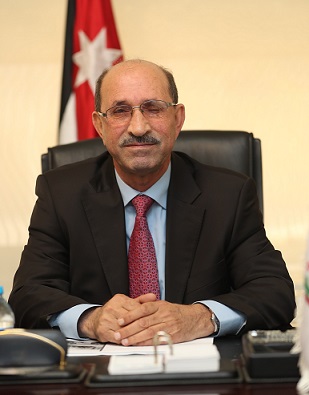
Dr. Hamad Kasasbeh
Jordan can no longer afford to base its economic calculations on the assumption that the region will soon return to a stable calm in which the economy can operate under more normal rules. Recent years suggest the opposite: one crisis recedes as another emerges, a trade route is disrupted and transport costs rise, while political tension quickly affects tourism, investment and market confidence. The central economic question is therefore no longer how Jordan can get through the current crisis, but how it can build an economy that continues to operate, grow and create opportunities even when the region remains unsettled. What is needed is not an emergency economy, but one designed to treat uncertainty as part of its operating environment.
This idea speaks directly to His Majesty King Abdullah II’s address to the United Nations General Assembly on 22 September 2026. The King emphasized that Jordan understands what it means to live in a region where one crisis can arrive before the previous one has receded, and that the country cannot choose between responding to emergencies and building the future; it must do both. He also pointed to stronger links from the Gulf to the Mediterranean and to Jordan’s role as a hub for trade, industry and technology. The economic message is clear: Jordanian stability should not remain only something to protect, but should become an economic asset used to attract business, investment and regional activity.
The problem is that our policies, like those of many countries in the region, still tend to respond after the shock has occurred. When a trade route is disrupted, we search for an alternative; when energy costs rise, we move to mitigate them; when tourism weakens, we launch support programs. These responses are necessary, but they are not enough. Economic resilience needs to move from being a reaction to becoming a pre-set decision criterion. Can a project continue if borders are disrupted? Does a sector have more than one market, source and route? How much damage would follow if one link in the supply chain stopped functioning? These questions should come before spending, not after the crisis.
Jordan already has a foundation on which to build. The 2026–2029 Executive Program of the Economic Modernisation Vision includes initiatives in investment, industry, agriculture, food security, transport, logistics, energy, water, technology and other sectors, with government follow-up through defined growth drivers, indicators and projects. The next stage does not require another list of initiatives. It requires one additional horizontal test: does this policy make the economy less vulnerable to external shocks? A project may look viable under normal conditions while depending heavily on one market or one source; in that case, its real economic return is lower than it appears.
Trade and transport provide the clearest example. Jordan is a small, open economy and cannot isolate itself from the region, but it can prevent a single road, crossing or corridor from becoming a bottleneck for the entire economy. The goal should be a network of alternatives rather than one alternative: Aqaba, links with Iraq and the Gulf, future road and rail corridors, connections toward the Mediterranean when conditions allow, and stronger digital infrastructure. The same logic applies to energy and food. Economic security does not mean producing everything domestically; it means ensuring that critical sectors do not stop because one source or one route becomes unavailable.
Investment presents an opportunity just as important as protection. Regional instability encourages companies to seek locations from which they can continue operating and serving Middle Eastern markets with less disruption. Jordan can position itself as a stable regional operating base for shared-service centres, financial and accounting operations, technology, engineering and design, data centres and regional management functions. The objective should be to move beyond describing stability as a general advantage and turn it into a clear investment proposition: what can an investor manage from Jordan, which markets can be reached, and which skills are available locally?
This leads to another path that should be accelerated: expanding the part of the economy that can export without every unit of value having to move through a truck or a port. Software, engineering, accounting, financial services, design, consulting, education, training and digital support functions can reach external markets even when shipping costs rise or physical routes are disrupted. The larger the share of these activities in exports, the lower the economy’s exposure to geographic shocks and the wider the employment opportunities for young Jordanians in markets larger than the domestic economy. This does not replace industry or agriculture; it makes the economy more diversified and balanced.
Resilience, however, remains incomplete if households, small businesses and public finances must first absorb the shock and only then search for tools to respond. Jordan needs mechanisms that are ready to activate when clearly defined indicators cross certain thresholds: temporary finance for viable firms, faster and better-targeted social protection, and budget scenarios that determine in advance what must be protected and what can be postponed if import costs rise or revenues fall. The point is not to create a new fund for every crisis, but to know before the crisis how the state will move, because speed of decision-making in an unstable environment has become part of national economic strength.
Jordan cannot change its geography or determine when the region will become calmer, but it can decide how much of the region’s instability is transmitted into its economy. The question of growth should therefore be accompanied by another question of equal importance: has the economy become less vulnerable? If markets and sources are diversified, trade routes multiply, services exports expand, stability becomes a real platform for business, and major projects are stress-tested before implementation, Jordan will have moved from managing crises to building sustainable economic capacity. The economy Jordan needs is not one that waits for the region to return to calm, but one that knows how to keep moving even when it does not.



 comment replay










 الرجاء الانتظار ...