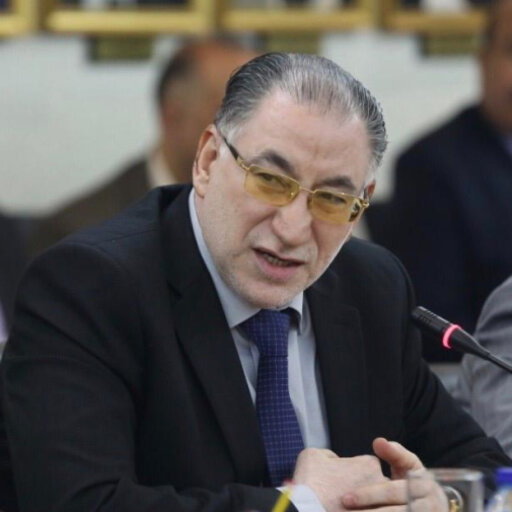
Hasan Dajah
Every year, the anniversary of the Palestinian Nakba returns to remind the world that the tragedy of the Palestinian people is not a historical event that ended in 1948, but rather an open wound that is renewed daily with the continuation of occupation, killing, displacement, and siege. However, this year’s Nakba anniversary comes amidst a highly complex regional and international landscape, where the war between Israel and Iran has captured the attention of the global media, and the Gaza issue has suddenly faded from the forefront of the international scene, as if the suffering of more than two million people inside the Strip has become a marginal news item in a world governed by calculations of power, interests, and major conflicts.
It has become clear in recent weeks that the world, or at least a large part of it, has been preoccupied with the new war, its potential regional expansion, oil prices, maritime routes, and military balances. Meanwhile, international calls for a ceasefire in Gaza have diminished, talk of delivering humanitarian aid has subsided, and political and media pressure on Israel regarding the crimes and violations committed against Palestinian civilians has eased. It is as if the new war has given the occupying government a golden opportunity to reshape the political and media landscape, diverting attention from the images of massacres and destruction that have shaken the world's conscience in recent months.
This raises a serious and legitimate question: Was the confrontation with Iran, or the expansion of the regional conflict, one of the political and strategic objectives to escape mounting international pressure regarding Gaza? And did the war contribute to redirecting the world's attention away from the crimes committed against the Palestinians?
During the war on Gaza, more than 73,000 Palestinians were killed or remain missing under the rubble, in addition to hundreds of thousands wounded and injured, in one of the bloodiest wars in the region's modern history. Entire cities were destroyed, hospitals were rendered inoperable, and schools and camps for displaced persons were bombed, while the population lived under a suffocating siege and severe shortages of food, medicine, water, and electricity. Despite some humanitarian gestures, the international community has thus far failed to impose a permanent ceasefire or hold the occupation accountable for the violations documented by numerous international and human rights organizations.
Even more alarming is that the suffering of the Palestinians is no longer confined to Gaza. It has escalated in the West Bank, where recent months have witnessed an unprecedented surge in settler attacks against Palestinians, under the direct protection and sponsorship of the extremist Israeli government. Palestinian villages and towns in the West Bank have been transformed into scenes of raids, attacks, and the burning of homes and farms, in a clear attempt to impose a new demographic reality based on settlement expansion and the gradual displacement of Palestinians.
What is happening today brings to mind the very essence of the Nakba itself; the issue was never merely a displacement that occurred 78 years ago, but rather an ongoing project to weaken the Palestinian presence and dismantle the land, identity and people. What is happening in Gaza and the West Bank today is a direct extension of that project, even if the tools and methods have changed.
With the world preoccupied with the war with Iran, the Palestinian cause once again appears to be a victim of the fluctuations of the international order, where the suffering of peoples sometimes becomes a secondary issue in the face of major geopolitical calculations. The global media, which just weeks ago was broadcasting images of children under the rubble, now focuses on the exchange of missiles, military bases, and international reactions, while images of Gaza have faded into the background, even though death, siege, and starvation continue their daily.
However, history has proven that the Palestinian cause does not die, no matter how hard wars and crises try to push it to the forefront. Gaza is no longer just a besieged city; it has become a global symbol of human resilience in the face of the war machine and international abandonment. Furthermore, the Nakba, despite the passage of decades, remains present in Palestinian, Arab and international consciousness because it represents the cause of a people who continue to demand their right to freedom, dignity, and justice. On the anniversary of the Nakba, Palestinians need more than just statements of sympathy or temporary media pronouncements. They need a genuine international stance that restores respect for human justice, ends the policy of impunity, imposes effective protection for civilians, ensures the continuous delivery of humanitarian aid, and prevents regional wars from becoming a political and moral cover for the perpetuation of crimes and violations.
The most dangerous thing that could happen today is not just the continuation of the war, but the world's desensitization to scenes of killing and destruction, and the transformation of the Palestinian tragedy into "ordinary news" amidst the din of international conflicts. Therefore, the commemoration of the Nakba remains more than just a historical event; it is a constant reminder that when injustice persists without accountability, it reproduces itself in even more brutal and bloody forms.
Hasan Al-Dajah is professor of strategic studies at Al-Hussein Bin Talal University



 comment replay









 الرجاء الانتظار ...