

23-04-2025 08:20 AM
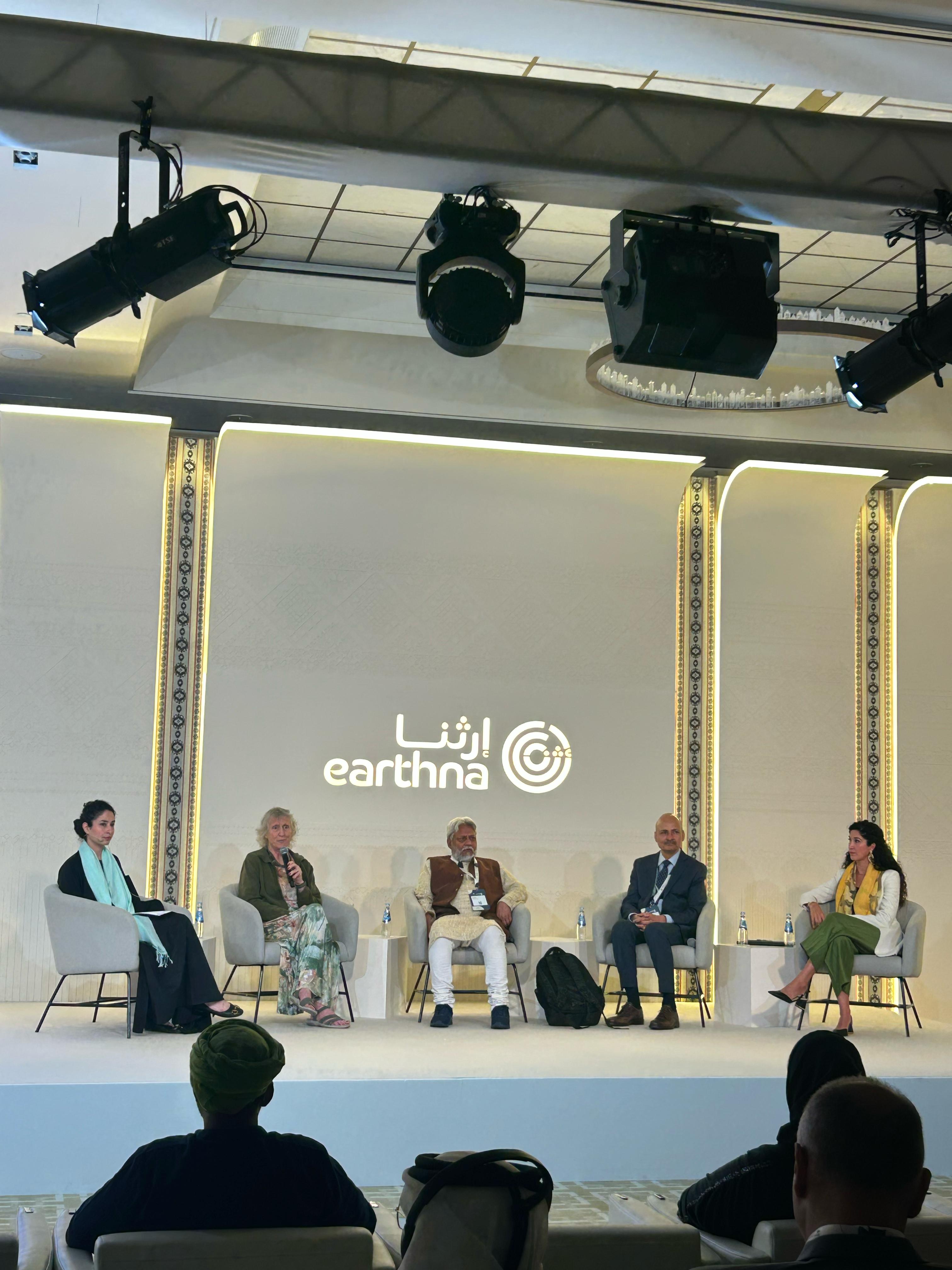
*The Water Crisis Needs More Than Tech — It Needs Us
By Batool Ghaith
Doha - Under the theme “Building our Legacy: Sustainability, Innovation and Traditional Knowledge”, the 2025 Earthna Summit highlighted the importance of trusting people over technology in the fight against water scarcity.
The second Earthna Summit, held on April 22–23 in Doha, Qatar, brought together global experts, policymakers, and community leaders to explore sustainable solutions tailored for hot and arid environments. The summit emphasised the integration of ancestral wisdom with modern innovations to address pressing environmental challenges.
Organized by the Earthna Center for a Sustainable Future, a non-profit policy research and advocacy center established by Qatar Foundation, the event featured expert panels, interactive discussions, and community-driven exhibitions across Doha.
The session titled “Water Scarcity: Exploring Sustainable Solutions for Resilience”, focused on water as both a quantity and quality issue.
Ann-Perry Witmer, a teaching associate professor, said “our biggest challenge is assuming we already have the answers, as technology sometimes makes us feel stuck.”
She emphasized the importance of respecting knowledge, regardless of whether it comes from academic institutions or traditional experience. “If we do not respect the knowledge that exists where we are working, we cannot solve any problems.”
Rajendra Singh, Chairman of Tarun Bharat Sangh, noted that the solutions to climate-induced water challenges must begin locally.
“Climate change is a global problem, but the solution is not global,” he said. “It is a local solution rooted in traditional knowledge. Traditional knowledge is time-tested success.”
Singh emphasized the importance of approaching these crises with respect for ancestral wisdom, underscoring that community-based approaches offer powerful ways forward.
With a parallel view, Mansour Qadir, Deputy Director of the United Nations University Institute of Water, Environment and Health, said, “we often ignore the critical importance of indigenous knowledge and the context in which it exists.”
He emphasized that water scarcity is not only about quantity but also quality and resilience. Qadir also highlighted the need to recognize the role of women in community-based solutions. “If we actively engage women, create ownership, and appreciate their role, we can significantly improve local water supplies.”
On another note, Senior Advisor Raha Hakimdava stressed the importance of understanding and appreciating water as a living element, not just a resource.
“We have learned to bring water from the sea and from the air, these are innovations we should be proud of,” she said. “But technology alone will not solve our challenges.”
Hakimdavar argued for deeper awareness of where our water comes from, as modern urban societies grow detached from its sources.
She added that part of the solution lies in bringing ancestral heritage and modern science together.
The speakers agreed that successful water management depends on collaboration, not only across scientific disciplines and policy frameworks, but also through meaningful engagement with the communities most affected by water scarcity.
| name : * | |
| comment : * | |

 comment replay












 الرجاء الانتظار ...