Ammon News - AMMAN - Often overlooked in the heart of downtown Amman are the remains of a Roman monument to beauty and the sanctity of water.
The Amman Nymphaeum, a large civic fountain from the ancient world, is a window that reveals the capital’s one-time splendour.
Sandwiched in between Souq Al Khudra and Prince Hashem Street, the towering structure is often ignored amongst modern-day traffic, shoppers and smog.
Nymphaea, Hellenistic structures later incorporated into Roman architecture and city planning, were built over caves or grottoes with running water, which were believed to be sacred to mythological nymphs. The structures were areas of public gathering and seen as a sign of a city’s wealth and standing.
In the Decapolis cities in Jordan, Nymphaea have been found in Jerash and Pella in the north.
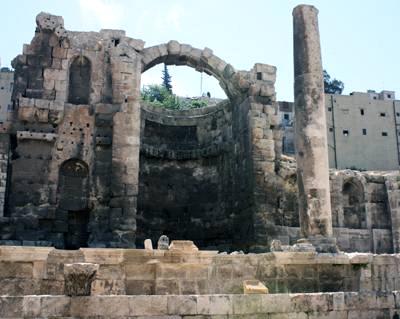
Although not as detailed or intact as the Nymphaeum in Jerash, the sheer size of the downtown structure, over 20 metres high and 68 metres wide, is an indication of the vaulted status Philadelphia enjoyed two millennia ago.
Experts believe the half-hexagon structure, which stands some 200 metres from the Roman Amphitheatre, to have been constructed in the latter half of the second century and developed over several decades.
Its proximity to the complex network of aqueducts that once ran through ancient Amman, and the presence of a water basin for storage, leads some experts to believe that the Nymphaeum may have played a key role in water distribution.
Although only half of the structure is still standing, its grandeur still remains evident. Rows of Corinthian pillars would have soared over 12 metres high, making the structure an imposing sight to new arrivals to the city of Philadelphia.
The Amman Nymphaeum, like many of the archaeological sites across the country, was damaged in the devastating earthquake that shook the region in 747AD.
The site quickly fell into disrepair, and up until the 1950s, houses were built right up next to the structure as modern Amman began to take shape.
Due to intervention from the Department of Antiquities, restoration of parts of the Nymphaeum have taken place, and some of the remaining columns have been restored, with work ongoing to preserve the site.
The Nymphaeum still stands for those willing to take a short stroll from the downtown markets and imagine the grandeur of the Roman Empire and the prosperity of Amman so long ago.
By Taylor Luck/ Jordan Times
The remains of the Amman Nymphaeum, sandwiched in between Souq Al Khudra and Prince Hashem Street (Photo by Taylor Luck)



 comment replay
 الرجاء الانتظار ...