Ammon News - AMMONNEWS - Across the road from the cluster of five-star international hotels in Aqaba is the ongoing archaeological excavation of what might be the oldest church in the world.
The juxtaposition could be seen as a symbol of the whole of Jordan – a new country, founded only in 1946, in an ancient place – but the contrast is even more pronounced in Aqaba, its only seaport.
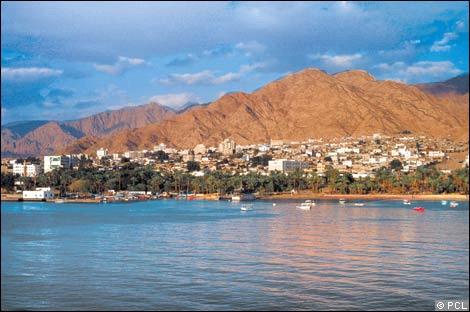
For what was recently a rather down-at-heel coastal town that did not even have street names is undergoing a multibillion-dollar expansion. The aim is to a resort to outshine its Red Sea neighbour Eilat, just across the border to the west in Israel, or Sharm el-Sheikh, to the south in Egypt. In addition to residential property, hotel and entertainment developments, the town is getting a new hospital, shopping malls, a school of aviation and a university specialising in hospitality.
As Mona Hawa, marketing and tourism director of the Aqaba Special Economic Zone Authority (Aseza), puts it: “In 10 years you won’t recognise this place.”
time span might be shorter than that. The Kempinski hotel opened its doors last summer alongside the Intercontinental and the Mövenpick, and the Tala Bay complex of more than 400 villas, apartments and townhouses a few miles south is also up and running. The port itself is to be relocated further along the coast to free up more precious beach for tourists.
The main focus, though, is on the Saraya development, which is due to open at the end of this year or early next. This $1bn, 634,000 sq metre scheme will include five world-class and two boutique hotels managed by the likes of Starwood, Jumeirah and Nikki Beach; a traditional-style souk, housing shops, restaurants and nightspots; a conference centre, a 1,000-seat amphitheatre; a water park; lagoon; sports facilities and 750 residences. These will range from one-bedroom apartments through townhouses, duplexes and lofts to grand villas.
Ali Kolaghassi, chief executive of the parent company Saraya Holdings, which specialises in creating mixed-use destinations, says Aqaba was chosen for its enormous potential. “Europe is now very expensive but most resorts still only operate during the summer. Here we can operate 12 months a year because we can rely on different groups and nationalities at different times. When it’s too cold for Jordanians, it’s fine for northern Europeans. When it’s too hot for them, it’s fine for Jordanians.”
As well as the climate and the coast, with its opportunities for coral reef diving, sailing and other watersports, he cites the country’s wider appeal: good infrastructure; a tradition of hospitality; sophisticated banking and IT systems; an educated populace and widespread use of English. The country is also relatively safe and, in a region that is home to some of the world’s most enduring conflicts, remains an oasis of political stability and religious tolerance.
Aseza, which was set up in 2001 to offer tax breaks and other incentives to investors, has been one of the driving forces behind the growth. Another has been the input of King Abdullah, whose summer palace is next to Saraya and who has taken an interest in the development.
Prices at Saraya range from $326,000 (Jordanians tend to quote property prices in US dollars) for a one-bedroom apartment to $569,000 for a three-bedroom and from $876,000-$1.2m for the three-bedroom, three-bathroom townhouses of between 246 and 277 sq metres. The 12 detached “grand villas” with gardens and swimming pools, which cost upwards of $4.3m, have been sold, as have 370 of the 670 properties so far released.
Most have gone to Jordanians wanting a holiday home, along with a sprinkling of other nationalities. It is thought that many nationals who emigrated to the US and Canada might welcome the chance to own a home back in their native land.
“I think the UK will also be one of our hottest markets,” says Kolaghassi. “I don’t expect we will get the elite who have homes in France or Sardinia but the upper middle classes, young professionals or retiring seniors who want a holiday home or investment in a five-star resort which is still not prohibitively expensive.”
Although Jordan has not escaped the effects of the global recession, its traditionally conservative banking system has protected it from the worst excesses and Saraya remains on course. Only 30 per cent of the project is residential property and, unlike many developments, it is not reliant on selling one phase to finance another.
Owners should be able to put their properties into the hotel rental pool or let them themselves. Saraya is hoping for rental returns of about 8 per cent and capital growth of 10 per cent per annum during the next five years.
Mortgages are available in Jordan for 60 or 70 per cent loan to value, with interest rates running at about 7.5 to 8 per cent. The government “registration fee” of 10 per cent of the purchase price, which is shared between buyer and seller, usually by negotiation, will here be 6 per cent buyer, 4 per cent developer. Ongoing costs include management fees of between $18 and $23 per sq metre per annum plus property taxes, which should average between $300 and $770 a year. There is no capital gains tax and, because of Special Economic Zone status, no income tax for at least five years.
Saraya’s UK agent is London-based Coombe Residential, whose director Hani Madanat is a Jordanian who has lived in the UK for more than 30 years. “It will appeal to affluent clients who want turnkey properties in a destination with lots of attractions and where you could meet interesting people from all walks of life,” he says. “Prices are comparable with some Caribbean developments but Jordan’s relative nearness – it’s only a four-and-a-half-hour flight – and fascinating culture give it the edge.”
What he would really like to see is BMI, the only British carrier, win the rights to fly directly to Aqaba. Flights are currently routed via Amman.
Madanat recently returned from his latest site visit. “Every time I go more has been finished. What’s happened is fantastic. When I was there in 2006 it was just virgin land; now there’s a complete new town.”
In addition to Saraya and Tala Bay, a third Aqaba development, the $1.4bn Ayla Oasis project, is progressing through the planning stages.
The expansion is expected to bring another 4,500 to 5,000 jobs to a town that has a population of 100,000, and there is much emphasis on corporate social responsibility and environmental protection. But although the tourist boom has generally been welcomed, there is still, says Hawa, training to be done to locals that their wellbeing depends on visitors. Initiatives include “friends of tourism” schemes, hospitality industry scholarships and college programmes for would-be hoteliers.
“We don’t really have a culture of working in hotels or service,” she says. “People need to know they are doing this for the future success of Aqaba.”
For the 7.1m tourists who now visit Jordan every year – 100,000 of them from the UK – Aqaba is the third point of the “Golden Triangle” which comprises the 2,000-year-old “rose red city” of Petra and Wadi Rum, with its extraordinary red dunes and mountains. It was from this desert that TE Lawrence and his Arab forces launched the attack that captured Aqaba from the Turks in 1917 and changed the direction of history in the region.
“This has been a crossroads for trade and a meeting place from antiquity,” says Lana Hamarneh, of tour company Discovery. “We’re also the holy land with pilgrimage sites, including where Jesus was baptised and Mount Nebo, where Moses is buried. Imagine having a home here and being able to take your guests to places like that.”
* By Liz Gill / Financial Times\



 comment replay