Ammon News - AMMAN - One year after the Israeli offensive on Gaza, an online campaign is seeking to provide Western media with the “Palestinian perspective” of the decades-old conflict to ensure more balanced coverage.
With photos, reports and movies covering everyday life in the besieged coastal enclave and the impact of last winter’s onslaught on the strip, the “Gaza Speaks” campaign attempts to “remind the world of the crimes committed by the Israelis and… that Gaza is still under siege”.
“The campaign is a source for Western media to use so they don’t claim they do not have the Palestinian perspective,” said Mary Nazzal Batayneh, initiator of the campaign.
The lawyer and human rights activist explained that she has heard from Western journalists that they are usually exposed to the Israeli point of view more than that of the Palestinians when it comes to covering the 62-year conflict.
“During the past 12 years, I have met with Western journalists who say there is so much information coming from the Israeli side, but not so much from the Palestinians,” she told The Jordan Times in an interview this week on the sidelines of a three-day event featuring films on Gaza at Amman’s Royal Film Commission (RFC).
In addition to photos and documentaries by Gaza-based photographers and filmmakers, Batayneh also posts an agenda of worldwide events in solidarity with the Gaza Strip on
www.gazaspeaks.com. Some 1,400 Palestinians and 13 Israelis were killed during the attacks, which Tel Aviv said it launched in response to rocket fire from the enclave.
The film screening at the RFC started Sunday with three short movies: Two documentaries shot in Gaza by Palestinian filmmaker Mustafa Al Nabih, and a short film by Jordanian journalist Dima Hamdan.
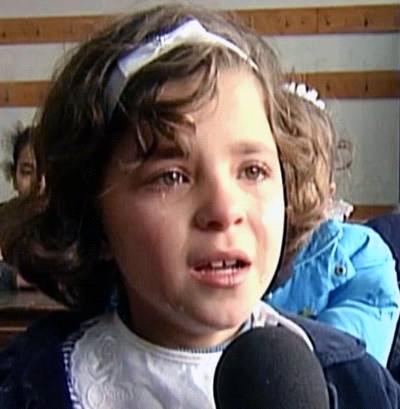
Nabih’s “The Book of Destruction” depicts scenes he filmed during the Israeli bombardment of the strip and peoples’ immediate reactions to the carnage.
“They’re all gone… where are they? Where is Nidal? Where is Mohammad? Where is the world? Where is the nation’s conscious?” a woman screams, as she walks towards her collapsed house.
“What did these children do to [Israeli defence minister Ehud] Barak?” asks a middle-aged man, as scenes of dead children flash on the screen.
“Gaza 2009”, also by Nabih, is based on a true story of the family of a Palestinian who was killed in the attacks.
Rami was married to an Israeli woman who converted to Islam, but she went back to Israel with three of her six children and reverted to Judaism after the war against Gaza ended.
The film focuses on the suffering of the three children who were left in Gaza with their grandparents, after losing both their parents.
The collection of films is not confined to the situation inside the coastal enclave.
Hamdan’s “Gaza–London” is a story about Mahmoud, a Palestinian who studies in a university in the British capital and follows up on developments in Gaza through international television channels.
Being interviewed for the radio in London, he receives a call on air from his uncle telling him that the family house in Gaza was destroyed by the Israeli bombardment, and that his mother took refuge with many others in a school run by UNRWA.
The film, which is edited and directed by Hamdan, shows Mahmoud praying with the voice of a journalist reporting the bombardment of the UNRWA school in the background.
On Monday, the RFC screened “To Shoot an Elephant”, a 104-minute film by Mohammad Rujaileh and Alberto Arce, which focuses on the victims of the war.
The film screening will conclude today with “The Shooting of Thomas Hurndall”, based on the true story of the young British photojournalism student and activist, who was shot by an Israeli sniper in the Gaza Strip in 2003.
Rowan Joffe’s 90-minute film, which was filmed in Jordan, won the 2009 Best TV Drama award from the British Academy of Film and Television Arts, while Stephen Dillane won the Best Actor award for his role as Thomas’ father.
By Thameen Kheetan/ Jordan Times
*** Scene from Palestinian filmmaker Mustafa Al Nabih’s documentary ‘The Book of Destruction’ which was screened at the Royal Film Commission on Sunday (Photo courtesy of RFC)



 comment replay





 الرجاء الانتظار ...