Ammon News - AMMONNEWS - State-owned importers and retailers of sheep for sacrifice during Eid Al Adha on Tuesday rejected claims by a consumer advocate that they are inflating prices.
In a petition to Prime Minister Awn Khasawneh published in daily newspapers yesterday, Consumer Protection Society (CPS) President Mohammad Obeidat said the price of live sheep at the Civil Service Consumer Corporation (CSCC) - JD160 per head as of Friday - should be at maximum between JD120 and JD130 per head, charging that the import company is taking excessive profit margins.
Calling on the premier to intervene, Obeidat insisted that the wholesale cost of sheep arriving in the local market does not exceed JD100 per head. He pointed out that Tkiyet Um Ali is offering sheep at JD99 and argued that the CSCC’s prices should be even lower because its imports are exempt from taxes and fees.
CSCC Director General Omar Neirat disputed Obeidat’s claims, which he said were based on inaccurate information, indicating that the corporation, which was established to balance in the local market, makes a profit of only JD2 on each sheep it sells.
He explained that the state-owned corporation does not import sheep but instead signed a contract with the National Company for Food Security (NCFS), which is also state-owned, to sell imported livestock at its branches across the Kingdom, adding that the sheep are priced at 10-15 per cent below market prices.
Neirat also told The Jordan Times that the imports of the corporation are not exempted from taxes and fees as Obeidat had stated.
NCFS Director General Wael Shuqeirat seconded Neirat’s contention that the CPS’s charges were baseless, explaining that the company generates a profit of only JD5 on each head of sheep.
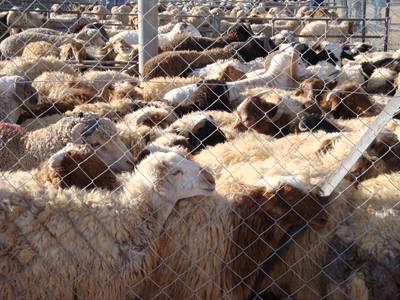
Indicating that the company has imported around 22,000 live sheep from Romania and Georgia, he noted that the sheep offered by the NCFS are JD15 to JD20 cheaper per head than other suppliers in the market.
Shuqeirat stressed that transportation and quarantine costs are the main reason for the increase in local prices, noting that sheep prices have also gone up on international markets.
Earlier this week, Foodstuff Traders Association President Samer Jawabreh told The Jordan Times that prices of sheep for slaughter during Eid Al Adha are expected to range between JD140 and JD300 per animal and that 186,000 sheep are available in the local market for this year’s feast.
He said around 70,000 local sheep are available in the market, whose prices range between JD250 and JD300 per head.
Meanwhile, the CPS released a study on Monday, which showed that the prices of local live sheep in Jordan were the highest among 14 Arab countries and attributed the rise in prices to exports of local livestock to Saudi Arabia and Qatar.
Consumers dismayed
Some consumers agreed with the CPS that sheep prices are prohibitively expensive this year.
Abdullah Jafar, a retired civil service employee, told The Jordan Times that he plans to purchase a local sheep to sacrifice this Eid, as he has done for the past several years, although he acknowledged that the sacrifice is not obligatory for Muslims who cannot afford it.
But JD300 for a local sheep is “too much”, he said, admitting that he struggled to save enough money for the sacrifice and had considered buying an imported sheep instead.
Another consumer, Mohammad Samarah, noted that the rising prices of sheep has become a point of controversy every Eid Al Adha.
“Every year, just days before Eid, people start to complain about high sheep prices,” he said, adding that prices of local livestock last year were around JD250 per head, almost the same as this year.
“It is true that people who cannot afford to offer a sacrifice are not obliged to do so but in general meat or sheep prices are expensive all year long,” Samarah underscored.
Eid Al Adha marks the end of the pilgrimage season, when Muslims of sufficient means are required to sacrifice livestock in remembrance of the Prophet Ibrahim’s willingness to sacrifice his son Ismail to God.
* Jordan Times



 comment replay