By Abdulillah
In light of what is being witnessed daily with regards to the upheavals, both in government and on the street of Jordan, with the Prime Minster resigning and the weekly demonstrations that have been rocking the Jordan street lately, I have realized that I personally may not have been looking at this situation clearly and really need a good National Civics class.
Couple this with the courageous articles recently offer in Ammon News by both Dr. Lahib Bani Sakher “Fixing my Compass” and Dr. Amer Amer Al Sabaileh titled “Where are we Standing Now” and my diatribe commentary posted under Dr. Al Sabaileh’s article (for which I humbly ask forgiveness both of Dr. Al Sabaileh and my fellow readers as they deserve better research than what I offered in commentary), and rereading both these articles several times, it occurred to me that I have never really reviewed what the Royal Court of Jordan does, and for that matter, it has been quite a while since I have read Jordan’s Constitution (mind you at the time I read it is was in Arabic in middle school a LONG time ago. For some reason, I could not find a printed English version on line except at the Columbia University web site in the US. Go figure! But back to the topic at hand).
I bring this up because I believe the average Jordanian is in the same situation as I am, that of being ignorant of how the Jordanina Governement works. So ask yourself when was the last time you actually read the entire Constitution and learned about how our government actually works. Or for that matter what our forms or government are. So I have taken the time to actually put these down for my fellow citizens. Please feel free to tell me where I am wrong, and I am open to all the arrows you shoot towards me as maybe I am more deserving for my latest diatribe.
So what does the Royal Court consist of? Based on King Hussein I web site located here; (http://www.kinghussein.gov.jo/royal_offices.html), The Royal Court were established to do this, and consists of the following:
“The Royal Hashemite Court is the necessary political and administrative link between His Majesty the King and the Central Government, the armed forces and the security forces. It also provides a vital link between the King and the Jordanian people.
Over time, the Royal Court has evolved to encompass several smaller entities to support the work of other members of the Royal Family, and to carry on the legacy of His Majesty the Late King Hussein. These entities are involved with various aspects of social development, economic, education and military matters. The National Security Council of Jordan is also attached to the Royal Hashemite Court.
Relationship with the Central Government:
The constitution describes the relationship between the Monarch and the government. As such, the Court plays the role of facilitator and supporter to such a relationship. Such a role is a necessary condition for the smooth running of the Central Government as well as the constitutional process.
The Administrative Hierarchy of the Royal Court:
The Chief of the Royal Hashemite Court functions under the direct supervision of the King and is the link between His Majesty, the Central Government and other authorities. This office is the highest in the hierarchy of the Royal Court.
His Majesty’s Advisors and Secretaries have specific assigned duties in relation to the executive, legislative and judicial authorities, military and tribal affairs, as well as various other social, educational, and economic affairs.
His Majesty’s Chief Chamberlain and His Majesty’s Private Chamberlain are responsible for the private affairs of the Royal Family.
The Keeper of the Privy Purse is His Majesty’s chief financial officer.
The Secretary General of the Court is the chief administrator and ensures the smooth running of various offices and departments at the Court.
The Chief of Protocol ensures the smooth running of His Majesty’s programs, in terms of his daily schedule, royal audiences, state occasions, official visits and the awarding of decorations.
Other offices within the Court working in coordination with the Chief of the Royal Court include:
Office of Her Majesty Queen Rania Al-Abdullah.
Office of His Royal Highness Crown Prince Hamzah.
Office of Her Majesty Queen Noor.
The National Security Council.
Royal Court Operator: (9626) 463-7341. All offices can be reached through the operator
Address: The Royal Hashemite Court, Amman, Jordan.
Offices of His Majesty King Abdullah II
•Office of the Chief of the Royal Court
Dr. Fayez Tarawneh
Office Director: Mr. Hazem Tayyeb
•Office of His Majesty’s Chief Chamberlain
HRH Prince Ra’ad bin Zeid
Office Director: Ms. Mansour Nsour
•The National Security Council
Director: HRH Prince Talal bin Muhammad
Office Director: Colonel Abdullah Tarawneh
•His Majesty’s Advisor for Tribal Affairs & Cultural Secretary
HRH Prince Ghazi bin Muhammad
Office Director: Mr. Sahl Majali
•Office of His Majesty’s Private Chamberlain
HRH Prince Ali bin Nayef
Office Director: Mr. Abdel Karim Nimr
•His Majesty’s Advisors
Sheikh Izzeddin al-Khatib al-Tamimi (Islamic Affairs)
Mr. Ali Fazza' (Media)
General Samih Battikhi
•Office of His Majesty’s Royal Protocol
Chief of Protocol: Mr. Faisal al-Fayez
•Office of His Majesty Privy Purse
Keeper of the Privy Purse: Mr. Munir Durra
•Administrative Office of The Royal Court
Secretary-General: HE Mr. Samir Rifa'i
•Imam of The Royal Court
Dr. Ahmad HlayelHis Majesty’s Private Secretary for Health Affairs
HRH Prince Firas bin Ra’ad
Office Director: Mr. Gader al-FawwazEconomics Department
Director: Dr. Bassem Awadallah
•Finance Department
Director: Mr. Rozi Boulad
•Administrative Department
Director: Yousef Hassan
•Strategic Studies Unit
Director: Mr. Ibrahim Nabulsi
•Press Department
Director: Mr. Ayman Al Safadi
Direct Telephone: (9626) 463-2294
Fax: (9626) 567-7376
•Office of Her Majesty Queen Rania Al-Abdullah
Chief of Staff: Ms. Rania Atallah
Media Advisor: Ms. Alia A. Toukan
• Office of HRH Crown Prince Hamzah bin Al Hussein
Office Director: Mr. Hussein Udwan
•Office of Her Majesty Queen Noor
Acting Director: Ms. Basma Lawzi
•Office of HRH Prince Muhammad bin Talal
His Majesty's Personal Representative
Director: Mr. Mu’tasem Abdel-Dayem
•Office of HRH Prince El Hassan bin Talal
Private Advisor: Mr. Michele Hamarneh
Office Director: Mr. Muhammad A. Siraj
•Office of HRH Princess Sarvath El Hassan
Contact: Mrs. Geraldine Kan'an
•Office of HRH Prince Faisal bin al-Hussein
Director: Mr. Nayef al-Fayez
•Office of HRH Prince Ali bin al-Hussein
Director: Mr. Yenal Hatk
•Office of HRH Princess Haya bint al-Hussein
Director: Sharifa Ghazwa Fawaz”
Now I, and possibly others as ignorant as I, now know. By the way there is a posted number you can call if you have specific questions that you may want answered.
So to answer Dr. Lahib’s question 5 where she states “It is the issue of the Royal Court. We Jordanians are not really aware of its real structure, funding, disbursements, or staffing. People want to know if taxpayers’ money is the only source of funding for the RHC. And if this is the case, what kind of auditing is being implemented, and under which clause of the government budget it is listed.” Here you go.
Some of her questions concerning the structure and staffing are presented above, and based on what I read are clearly transparent on the World Wide Web for all to see. And if she or anyone would like to know what sources of funding and auditing, etc… she can start with the Office of His Majesty Privy Purse and follow it up with the Finance Department.
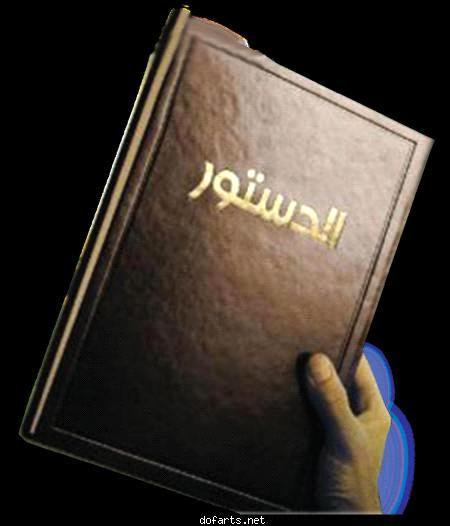
Now for the Constitution. It however is very long and regurgitating all of it here would serve little purpose (but all citizens should read it and know it to be good citizens and it should be taught in school under National Civics), but seeing that I have used both the quoted articles above, some questions come to mind as follows:
What is the Royal Court’s connection to government and the people? and what is our government really made up of and how does it work together?
According to the Royal Court’s web site outside of providing an administrative link between the government and the people it “The constitution describes the relationship between the Monarch and the government. As such, the Court plays the role of facilitator and supporter to such a relationship. Such a role is a necessary condition for the smooth running of the Central Government as well as the constitutional process.”
Now the constitution under Chapters 4 and 5 is specific and states the following with respect to how the Monarch and Government are suppose to work for teh betterment of the people:
“Article 32 The King is the Supreme Commander of the Land, Naval and Air Forces.
Article 33 (i) The King declares war, concludes peace and ratifies treaties and agreements. (ii) Treaties and agreements which involve financial commitments to the Treasury or affect the public or private rights of Jordanians shall not be valid unless approved by the National Assembly. In no circumstances shall any secret terms contained in any treaty or agreement be contrary to their overt terms.
Article 34 (i) The King issues orders for the holding of elections to the Chamber of Deputies in accordance with the provisions of the law. (ii) The King convenes the National Assembly, inaugurates, adjourns, and prorogues it in accordance with the provisions of the Constitution. (iii) The King may dissolve the Chamber of Deputies. (iv) The King may dissolve the Senate or relieve any Senator of his membership.
Article 35 The King appoints the Prime Minister and may dismiss him or accept his resignation. He appoints the Ministers; he also dismisses them or accepts their resignation, upon the recommendation of the Prime Minister.
Article 36 The King appoints members of the Senate and appoints the Speaker from amongst them and accepts their resignation.
Article 37 (i) The King creates, confers and withdraws civil and military ranks, medals and honorific titles. He may delegate this authority to any other person by special law. (ii) Currency shall be minted in the name of the King in pursuance of the law.
Article 38 The King has the right to grant a special pardon or remit any sentence, but any general pardon shall be determined by special law.
Article 39 No death sentence shall be executed except after confirmation by the King. Every such sentence shall be placed before the King by the Council of Ministers accompanied by their opinion thereon.
Article 40 The King shall exercise the powers vested in him by Royal Decree. Every such Decree shall be countersigned by the Prime Minister and the Minister or Ministers concerned. The King expresses his concurrence by placing his signature above the said signatures.
Article 41 The Council of Ministers shall consist of the Prime Minister, who shall be the President, and of such number of Ministers as may be needed and as public interest may require.
Article 42 No person shall be appointed a Minister unless he is a Jordanian.
Article 43 The Prime Minister and Ministers shall, before assuming their duties, take the following oath before the King:
“I swear by Almighty God to be loyal to the King, uphold the Constitution, serve the Nation and conscientiously perform the duties entrusted to me.”
Article 44 No Minister may purchase or lease any Government property even if the sale or lease thereof has been offered in public auction. He shall not, while holding his Ministerial office, become a member of the board of directors of any company or take part in any commercial or financial transaction or receive a salary from any company.
Article 45 (i) The Council of Ministers shall be entrusted with the responsibility of administering all affairs of the State, internal and external, with the exception of such matters as are or may be entrusted by the present Constitution or by any other legislation to any other person or body. (ii) The duties of the Prime Minister, the Ministers and the Council of Ministers shall be defined by regulations made by the Council of Ministers and ratified by the King.
Article 46 Any Minister may be entrusted with the responsibility of one or more Ministries, as may be stated in the Decree of appointment.
Article 47 (i) Every Minister shall be responsible for the conduct of all matters pertaining to his Ministry. He shall refer to the Prime Minister any matter not falling within his competence. (ii) The Prime Minister shall dispose of all matters within his powers and competence and shall refer other matters to the Council of Ministers for such decision as may be necessary.
Article 48 The Prime Minister and Ministers shall sign the decisions taken by the Council of Ministers, which shall be submitted to the King for ratification in all cases required under the present Constitution or any law or regulations enacted thereunder. Such decisions shall be implemented by the Prime Minister and Ministers, each within the limits of his competence.
Article 49 Verbal or written orders of the King shall not release the Ministers from their responsibilities.
Article 50 In the event of the resignation or dismissal of the Prime Minister from his office, all Ministers shall be considered as having automatically resigned or been dismissed from their offices.
Article 51 The Prime Minister and Ministers shall be collectively responsible before the Chamber of Deputies in respect of the public policy of the State. In addition, each Minister shall be responsible before the Chamber of Deputies in respect of the affairs of his Ministry.
Article 52 The Prime Minister, or the Minister who is a member of either the Chamber of Deputies or the Senate, shall be entitled to vote in the House to which he belongs and to speak in both Houses. However, Ministers who are not members of either House may speak in both Houses without the right to vote.
Article 53 (i) A motion of no confidence in the Council of Ministers or in any Minister may be raised by the Chamber of Deputies. (ii) If the Chamber of Deputies casts a vote of no confidence in the Council of Ministers by an absolute majority of all its members, the Council of Ministers shall resign. (iii) If the vote of no confidence concerns an individual Minister, he shall resign his office.
Article 54 (i) A session to consider a vote of no confidence in the Council of Ministers or in any individual Minister shall be held either at the request of the Prime Minister or at a request signed by not less than ten Deputies. (ii) A vote of no confidence in the Council of Ministers or in any individual Minister may be postponed only for one period, which shall not exceed ten days, either upon the request of the Minister concerned or of the Council of Ministers. The Chamber shall not be dissolved during this period. (iii) Every newly formed Council of Ministers shall within one month of its formation, in cases where the Chamber of Deputies is in session, place before the Chamber of Deputies a statement of its policy and request a vote confidence on the basis of the said statement. If the Chamber of Deputies is not in session at the time, or stands dissolved, the Speech from the Throne shall be considered to be a statement of its policy for the purposes of this Article.
Article 55 Ministers shall be tried by a High Tribunal for offences which may be attributed to them in the course of the performance of their duties.
Article 56 The Chamber of Deputies is entitled to impeach Ministers, but a bill of impeachment shall not be passed except by a majority of two-thirds of the members of the Chamber. The Chamber of Deputies shall appoint, from among its members, deputies who shall present the impeachment to, and proceed before, the High Tribunal.
Article 57 The High Tribunal shall consist of the Speaker of the Senate as President and eight members, three of whom shall be selected by ballot by the Senate from amongst its members and five members to be selected from amongst the judges of the highest Civil Court in order of seniority. In case of necessity, the number shall be completed from the presidents of the lower courts, also in order of seniority.
Article 58 The High Tribunal shall apply the provisions of the Penal Code in force in respect of offences specified therein. A special law shall specify the offences for which Ministers shall be responsible in cases where such offences are not covered by the Penal Code.
Article 59 Judgements shall be given by the High Tribunal by a majority of six votes.
Article 60 The High Tribunal shall make its own Rules of Procedure for the trial of Ministers, pending the enactment of a special law for this purpose.
Article 61 A Minister who is impeached by the Chamber of Deputies shall be suspended from office until his case is determined by the High Tribunal. His resignation shall not prevent the institution of criminal proceedings against him, or the continuance of his trial.
Article 62 The National Assembly shall consist of two Houses: The Senate and the Chamber of Deputies.
Part I The Senate
Article 63 The Senate, including the Speaker, shall consist of not more than one- half of the number of the members of the Chamber of Deputies.
Article 64 In addition to the requirements prescribed in Article 75 of the present Constitution, a Senator must have completed forty calendar years of age and must belong to one of the following classes: Present and former Prime Ministers and Ministers, persons who had previously held the office of Ambassador, Minister Plenipotentiary, Speaker of the Chamber of Deputies, President and judges of the Court of Cassation and of the Civil and Sharia Courts of Appeal, retired military officers of the rank of Lt. General and above, former Deputies who were elected at least twice as deputies, and other similar personalities who enjoy the confidence of the people in view of the services rendered by them to the Nation and the Country.
Article 65 (i) The term of office of Senators shall be four years. The appointment of members shall be renewed every four years. Senators whose term of office had expired may be reappointed for a further term. (ii) The term of office of the Speaker of the Senate shall be two years but he may be reappointed.
Article 66 (i) The Senate shall meet simultaneously with the Chamber of Deputies and the sessions shall be the same for both Houses. (ii) If the Chamber of Deputies is dissolved, the sessions of the Senate shall be suspended.
Article 67 The Chamber of Deputies shall consist of members elected by secret ballot in a general direct election and in accordance with the provisions of an Electoral Law which shall ensure the following principles: (i) The integrity of the election. (ii) The right of candidates to supervise the process of election. (iii) The punishment of any person who may adversely influence the will of voters.
Article 68 (i) The term of office of the Chamber of Deputies shall be four calendar years commencing from the date of the announcement of the results of the general elections in the Official Gazette. The King may, by a Royal Decree, prolong the term of the Chamber for a period of not less than one year and not more than two years. (ii) A general election shall take place during the four months preceding the end of the term of the Chamber. If the election has not taken place by the end of the term of the Chamber or if such election is delayed for any reason, the Chamber shall remain in office until the election of a new Chamber.
Article 69 (i) The Chamber of Deputies shall elect its Speaker at the beginning of each ordinary session for a period of one calendar year, but he may be re-elected. (ii) If the Chamber of Deputies meets in an extraordinary session and has no Speaker, the Chamber shall elect a Speaker for a term of office which shall terminate at the beginning of the ordinary session.
Article 70 In addition to the requirements prescribed in Article 75 of the present Constitution, a deputy must have completed thirty calendar years of his age.
Article 71 The Chamber of Deputies shall have the right to determine the validity of the election of its members. Any voter shall have the right to present a petition to the Secretariat of the Chamber within fifteen days of the announcement of the results of the election in his constituency setting out the legal grounds for invalidating the election of any deputy. No election may be considered invalid unless it has been declared as such by a majority of two-thirds of the members of the Chamber.
Article 72 Any deputy may resign his seat by notifying the Speaker of the Chamber of Deputies in writing, and the Speaker shall place the resignation before the Chamber for a decision as to whether the resignation should be accepted or rejected.
Article 73 (i) If the Chamber of Deputies is dissolved, a general election shall be held, and the new Chamber shall convene in an extraordinary session not later than four months from the date of dissolution. Such session shall be deemed to be an ordinary session in accordance with the provisions of Article 78 of the present Constitution and shall be subject to the conditions prescribed therein in respect of prolongation or adjournment. (ii) If no elections have taken place by the end of the four months, the dissolved Chamber shall assume its full constitutional powers and assemble forthwith as if its dissolution had not taken place. It shall remain in office until the election of a new Chamber. (iii) Such extraordinary session shall not in any event continue after the 30th day of September and shall be prorogued on that date so that the Chamber may be able to hold its first ordinary session on the first day of October. If such extraordinary session happens to be held during October and November, it shall be considered as the first ordinary session of the Chamber of Deputies. (iv) ** Notwithstanding the provisions of paragraphs (i) and (ii) of this Article, the King may postpone the holding of the general elections if a force majeure has occurred which the Council of Ministers considers as rendering the holding of elections impossible. (v) Should the force majeure provided for in paragraph (iv) hereof persist, the King may, upon a decision taken by the Council of Ministers, reinstate and convene the dissolved Chamber. Such Chamber shall be deemed as having been in existence in all respects from the date of the issue of the Royal Decree effecting its reinstatement. It shall exercise its full constitutional powers and be subject to the provisions of this Constitution, including those pertaining to the term of the Chamber and its dissolution. The session which it holds in such case shall be deemed to be its first ordinary session regardless of the date when it takes place. (vi) **** Should the Council of Ministers consider that the holding of general elections in at least one half of the constituencies is possible in spite of the persistence of the force majeure referred to in this Article, the King may order the holding of elections in such constituencies. The successful members shall elect not more than one-half of the number of the members for the other constituencies in which it was impossible to hold elections, provided that they can hold a (valid) meeting only by a majority of three-quarters of their number, and provided also that the elections shall be by at least a two-thirds majority and shall be in accordance with the provisions and in the manner provided for in Article (88) of the Constitution. The successful members and the members elected in accordance with this paragraph shall elect the remaining members for the said constituencies in accordance with the provisions of this paragraph.
Article 74 If the Chamber of Deputies is dissolved for any reason, the new Chamber shall not be dissolved for the same reason. A Minister who intends to nominate himself for election shall resign fifteen days at least before the beginning of nomination.
Article 75 (i) No person shall become a Senator or Deputy: (a) Who is not a Jordanian. (b) Who claims foreign nationality or protection. (c) Who was adjudged bankrupt and has not been legally discharged. (d) Who was interdicted and the interdiction has not been removed. (e) Who was sentenced to a term of imprisonment exceeding one year for a non-political offence and has not been pardoned. (f) Who has a material interest in any contract, other than a contract or lease of land and property, with any Department of Government, provided that this provision shall not apply to any shareholder in a company of more than ten members. (g) Who is insane or an imbecile. (h) Who is related to the King within a degree of consanguinity to be prescribed by special law. (ii) Should any Senator or Deputy become disqualified during his term of office or should it appear after his election that he lacks one or more of the qualifications provided for in the preceding paragraph, his membership shall, by a resolution of two-thirds of the members of the House to which he belongs, be considered nonexistent and vacant, provided that such a resolution, if passed by the Senate, is submitted to the King for ratification.
Article 76 Subject to the provisions of Article (52) of the present Constitution, no person shall be allowed to be a member of either the Chamber of Deputies or the Senate and a holder of a public office at the same time. Public office means every office whose holder receives his salary from public funds; it includes municipal offices. Similarly, no person shall be allowed to be a member of both the Chamber of Deputies and the Senate.
Article 77 Subject to the provisions of the present Constitution relating to the dissolution of the Chamber of Deputies, the National Assembly shall hold one ordinary session during each year of its term.
Article 78 (i) * The King shall summon the National Assembly to an ordinary session on the first day of October of each year or, if that day is an official holiday, on the first day following the official holiday, provided that the King may, by Royal Decree published in the Official Gazette, postpone for a period not exceeding two months the meeting of the Assembly to a date to be fixed by the Royal Decree. (ii) If the National Assembly is not summoned in accordance with the preceding paragraph, it shall meet of its own motion as if it was so summoned. (iii) ** The ordinary session of the National Assembly shall begin on the date upon which it was summoned to meet in accordance with the two preceding paragraphs, and shall last for four months unless the Chamber of Deputies is dissolved by the King before the expiration of that period. The session may be prolonged by the King for a further period not exceeding three months to allow for the dispatch of pending matters. At the expiration of the four months or any such prolongation thereof, the King shall prorogue the Assembly.
Article 79 The King shall inaugurate the ordinary session of the National Assembly by a Speech from the Throne addressed to a joint meeting of the Senate and the Chamber of Deputies. He may deputise the Prime Minister or any of the Ministers to perform the inauguration ceremony and deliver the Speech from the Throne. Each of the two Houses shall submit a petition which shall contain its Reply thereto.
Article 80 Every Senator and Deputy shall, before taking his seat, take an oath before his House in the following terms: “I swear by Almighty God to be loyal to the King and to the Country and to uphold the Constitution, serve the Nation and duly perform the duties entrusted to me.”
Article 81 (i) The King may by Royal Decree adjourn the session of the National Assembly for not more than three times, or two times only if He had postponed the meeting of the National Assembly under paragraph (i) of Article (78), provided that during any one session the period of such postponement shall not exceed two months in the aggregate, including the period of postponement. In computing the term of the session, the periods covered by any such adjournment shall not be taken into account. (ii) The Senate and the Chamber of Deputies may adjourn their session from time to time in conformity with their own Internal Regulations.
Article 82 (i) The King may whenever necessary summon the National Assembly to meet in an extraordinary session for an unspecified period for the purpose of deciding matters to be specified in the Royal Decree when the summons are issued. An extraordinary session shall be prorogued by a Royal Decree. (ii) The King may summon the National Assembly to meet in an extraordinary session at the request of an absolute majority of the deputies. Such request shall be contained in a petition specifying the matters which it is desired to discuss. (iii) The National Assembly shall not discuss in any extraordinary session except such matters as are specified in the Royal Decree convening the session.
Article 83 The Senate and the Chamber of Deputies shall each make its Internal Regulations for the control and organization of its own proceedings and shall submit such Orders to the King for ratification.
Article 84 (i) No meeting of either House shall be considered duly constituted unless attended by two-thirds of the members of either House, and shall continue to be valid as long as an absolute majority of the members of either House is present. (ii) Resolutions by each of the two Houses shall be taken by a majority of votes of the members present, excluding the Speaker, who shall not vote except where it is otherwise provided in the present Constitution. In the case of equality of votes the Speaker shall have a casting vote. (iii) If the voting is related to the Constitution or to a motion of no confidence in the Council of Ministers or in a particular Minister, the votes shall be taken by calling the names of members in a loud voice.
Article 85 The meetings of both the Senate and the Chamber of Deputies shall be public. Secret meetings may, however, be convened at the request of the Government or of five Senators or Deputies. If such a request is made, the Senate or Chamber of Deputies shall decide whether it should be accepted or rejected.
Article 86 (i) No Senator or Deputy may be detained or tried during the currency of the sessions of the National Assembly unless the House to which he belongs decides by an absolute majority that there is sufficient reason for his detention or trial or unless he was arrested flagrant delicto. In the event of his arrest in this manner, the House to which he belongs, shall be notified immediately. (ii) If a member is detained for any reason while the National Assembly is not sitting, the Prime Minister shall notify the Senate or the Chamber of Deputies when it reassembles of the proceedings which were taken against him, coupled with the necessary explanation.
Article 87 Every Senator or Deputy shall have complete freedom of speech and expression of opinion within the limits of the Internal Regulations of the Senate or Chamber of Deputies, as the case may be, and shall not be answerable in respect of any vote which he had cast or opinion expressed or speech made by him during the meetings of the House.
Article 88 When a seat becomes vacant in the Senate or in the Chamber of Deputies by death or resignation or for any other reason, it shall be filled by appointment in the case of a Senator and by the holding of a by-election in the case of a deputy within a period of two months from the date on which the Government is notified of the vacancy by the House. The term of the new member shall be for the remaining part of the term of his predecessor. However, if a seat in the Chamber of Deputies becomes vacant for any constituency for any reason and should there be force majeure on account of which the Council of Ministers considers that rendering a by election to fill that seat is impossible, the Chamber of Deputies, by the absolute majority of its members and within one month of its being notified thereof, shall elect a member to fill the said seat from amongst the inhabitants of the said constituency to who the provisions of the Constitution are applicable and in the manner the Chamber deems appropriate.
Article 89 (i) In addition to the circumstances under which the Senate and the Chamber of Deputies may hold a joint meeting as prescribed in Articles (34), (79) and (92) of the present Constitution, both Houses shall hold a joint meeting at the request of the Prime Minister. (ii) When the Senate and the Chamber of Deputies hold a joint meeting, the meeting shall be presided over by the Speaker of the Senate. (iii) A joint meeting of the Senate and the Chamber of Deputies shall not be considered properly constituted unless an absolute majority of the members of each House is present. Resolutions at such a meeting shall be taken by a majority of the Senators and Deputies present, exclusive of the Speaker who, in case of equality of votes, shall have a casting vote.
Article 90 No Senator or Deputy may be removed from his office except by a resolution of the House to which he belongs, provided that, other than the case of disqualification and combination of offices as prescribed in this Constitution and in the Electoral Law, the resolution to remove a Senator or Deputy must be taken by a two-thirds majority of the House. If the resolution of removal concerns a Senator, the resolution must be submitted to the King for ratification.
Article 91 The Prime Minister shall refer to the Chamber of Deputies any draft law, and the Chamber shall be entitled to accept, amend, or reject the draft law, but in all cases the Chamber shall refer the draft law to the Senate. No law may be promulgated unless passed by both the Senate and the Chamber of Deputies and ratified by the King.
Article 92 Should either House twice reject any draft law and the other accept it, whether or not amended, both the Senate and the Chamber shall hold a joint meeting under the chairmanship of the Speaker of the Senate to discuss the matters in dispute. Acceptance of the draft law shall be conditional upon the passing of a resolution by a two-thirds majority of the members of both Houses present. If the draft law is rejected as described above, it shall not be placed again before the House during the same session.
Article 93 (i) Every draft law passed by the Senate and the Chamber of Deputies shall be submitted to the King for ratification. (ii) A law shall come into force after its promulgation by the King and the lapse of thirty days from the date of its publication in the Official Gazette unless it is specifically provided in that law that it shall come into force on any other date. (iii) If the King does not see fit to ratify a law, He may, within six months from the date on which the law was submitted to him, refer it back to the House coupled with a statement showing the reasons for withholding his ratification. (iv) If any draft law (other than the Constitution) is referred back within the period specified in the preceding paragraph and is passed for the second time by two-thirds of the members of each of the Senate and the Chamber of Deputies, it shall be promulgated. If the law is not returned with the Royal ratification within the period prescribed in paragraph (iii) above, it shall be considered as promulgated and effective. If any draft law fails to obtain the two-thirds majority of votes, it cannot be reconsidered during the same session, provided that the National Assembly may reconsider the draft during its next ordinary session.
Article 94 (i) In cases where the National Assembly is not sitting or is dissolved, the Council of Ministers has, with the approval of the King, the power to issue provisional laws covering matters which require necessary measures which admit of no delay or which necessitate expenditures incapable of postponement. Such provisional laws, which shall not be contrary to the provisions of the Constitution, shall have the force of law, provided that they are placed before the Assembly at the beginning of its next session, and the Assembly may approve or amend such laws. In the event of the rejection of such provisional laws, the Council of Ministers shall, with the approval of the King, immediately declare their nullity, and from the date of such declaration these provisional laws shall cease to have force provided that such nullity shall not affect any contracts or acquired rights. (ii) Provisional laws shall have the same force and effect as laws enacted in accordance with paragraph (ii) of Article (93) of this Constitution.
Article 95 (i) Any ten or more Senators or Deputies may propose any law. Such proposal shall be referred to the committee concerned in the House for its views. If the House is of the opinion that the proposal be accepted it shall refer it to the Government for drafting it in the form of draft law, and to submit it to the House either during the same session or at the following session. (ii) Any law proposed by Senators or Deputies in accordance with the preceding paragraph and rejected by either House shall not be presented for a second time during the same session.
Article 96 Any Senator or Deputy may address questions or interpellations to the Ministers concerning any public matters, in accordance with the provisions of the Internal Regulations of the Senate or the House (as the case may be). No interpellation may be debated before the lapse of eight days from the date of its receipt by the Minister, unless the case is of an urgent nature and the Minister agrees to shorten this period.
Article 97 Judges are independent, and in the exercise of their judicial functions they are subject to no authority other than that of the law.
Article 98 Judges of the Civil and Sharia Courts shall be appointed and dismissed by a Royal Decree in accordance with the provisions of the law.
Article 99 The courts shall be divided into three categories: (i) Civil Courts (ii) Religious Courts (iii) Special Courts
Article 100 The establishment of the various courts, their categories, their divisions, their jurisdiction and their administration shall be by virtue of a special law, provided that such law provides for the establishment of a High Court of Justice.
Article 101 (i) The courts shall be open to all and shall be free from any interference in their affairs. (ii) The sittings of the courts shall be public unless the court considers that it should sit in camera in the interest of public order or morals.
Article 102 The Civil Courts in the Hashemite Kingdom of Jordan shall have jurisdiction over all persons in all matters, civil and criminal, including cases brought by or against the Government, except those matters in respect of which jurisdiction is vested in Religious or Special Courts in accordance with the provisions of the present Constitution
Article 103 (i) The Civil Courts shall exercise their jurisdiction in respect of civil and criminal matters in accordance with the law for the time being in force in the Kingdom, provided that in matters affecting the personal status of foreigners or in matters of a civil or commercial nature which in accordance with international usage are governed by the law of another country, such law shall be applied in the manner designated by the law. (ii) Matters of personal status are those which are defined by law and in accordance therewith fall within the exclusive jurisdiction of the Sharia Courts where the parties are Moslems. * As amended in the Official Gazette No. 1380 of 4/5/1958. ** As Amended in the Official Gazette No. 1396 1/9/1958.
Article 104 The Religious Courts shall be divided into: (i) The Sharia Courts (ii) The Tribunals of other Religious Communities
Article 105 The Sharia Courts shall in accordance with their own laws have exclusive jurisdiction in respect of the following matters: (i) Matters of personal status of Moslems. (ii) Cases concerning blood money (Diya) where the two parties are Moslems or where one of the parties is not a Moslem and the two parties consent to the jurisdiction of the Sharia Courts. (iii) Matters pertaining to Islamic Waqfs.
Article 106 The Sharia Courts shall in the exercise of their jurisdiction apply the provisions of the Sharia law.
Article 107 The organization of the affairs of Moslem Waqfs and the administration of their financial matters, among other matters, shall be regulated by a special law.
Article 108 The Tribunals of Religious Communities are those for the non-Moslem religious communities which have been or will be recognized by the Government as established in the Hashemite Kingdom of Jordan.
Article 109 (i) Tribunals of Religious Communities shall be established in conformity with the provisions of laws pertaining thereto. Such laws shall define the jurisdiction of such Tribunals in matters of personal status and Waqfs constituted for the benefit of the community concerned. Matters of personal status of any such community shall be the same matters as are, in the case of Moslems, within the jurisdiction of the Sharia Courts. (ii) Such laws shall determine the procedure to be followed by the Tribunals of the Religious Communities.
Article 110 Special Courts shall exercise their jurisdiction in accordance with the provisions of the laws constituting them.
Article 111 No tax or duty may be imposed except by law. Taxes and duties shall not include the various kinds of fees which the Treasury charges in respect of services rendered to members of the public by Government Departments or in consideration of benefits accruing to them from the State Domain. In imposing taxes, the Government shall be guided by the principles of progressive taxation, coupled with the attainment of equality and social justice, provided that taxation shall not exceed the capacity of tax-payers or the State’s requirements for funds.
Article 112 (i) The draft law covering the General Budget shall be submitted to the National Assembly for consideration in accordance with the provisions of the Constitution at least one month before the beginning of the financial year. (ii) Voting in respect of the budget shall take place on each chapter separately. (iii) No sum falling within the expenditure section of the General Budget may be transferred from one chapter to another except by law. (iv) The National Assembly, when debating the General Budget draft law or the provisional laws relating thereto, may reduce the expenditures under the various chapters in accordance with what it considers to be in the public interest, but it shall not increase such expenditures either by amendment or by the submission of a separate proposal. However, the Assembly may after the close of the debate propose laws for the creation of new expenditures. (v) During the debate of the General Budget, no proposal shall be accepted for the abrogation of an existing tax or the creation of a new one or the amendment, whether by increase or reduction, of existing taxes which are prescribed by financial laws in force, and no proposal shall be accepted for amending expenditures or revenues fixed by contract. (vi) The national revenues and expenditures estimated for each financial year shall be approved by the General Budget Law, provided that said Law may provide for the allocation of any special sums for a period exceeding one year.
Article 113 If it is not possible to enact the General Budget Law prior to the beginning of the new financial year, expenditures shall continue by monthly appropriations at the rate of 1/12th of each month of the previous year’s budget.
Article 114 The Council of Ministers may, with the approval of the King, issue regulations for the control of appropriations and expenditures of the public funds and the organization of Government stores.
Article 115 All receipts from taxes and other sources of Government revenue shall be paid into the Treasury and shall be included in the Government budget save where otherwise provided by law. No part of the funds of the Treasury may be appropriated or expended for any purpose whatever except under the law.
Article 116 The Civil List of the King shall be paid from the General Revenue and shall be fixed in the General Budget Law.
Article 117 Any concession granting a right for the exploitation of mines, minerals or public utilities shall be sanctioned by law.
Article 118 No person shall be exempt from the payment of taxes or duties in circumstances other than those prescribed by law.
Article 119 An Audit Office shall be set up by law for controlling the State’s revenues, its expenses and the manner of expenditure: (i) The Audit Office shall submit to the Chamber of Deputies at the beginning of each ordinary session, or whenever the Chamber demands, a general report embodying its views and comments and indicating any irregularities committed and the responsibility arising therefrom. (ii) The law shall provide for the immunity of the Head of the Audit Office.
Article 120 The administrative divisions of the Hashemite Kingdom of Jordan, the establishment of the Government Departments, their classification, designations, the plan of operations and the manner of the appointment of civil servants, their dismissal, their discipline, supervision and the limits of their competence and powers shall be determined by regulations issued by the Council of Ministers with the approval of the King.
Article 121 Municipal and local council affairs shall be administered by municipal or local councils in accordance with special laws.
Article 122 The High Tribunal provided for in Article (57) shall have the right to interpret the provisions of the Constitution if so requested either by virtue of a decision of the Council of Ministers or by a resolution taken by the Senate or the Chamber of Deputies passed by absolute majority. Such interpretation shall be implemented upon its publication in the Official Gazette.
Article 123 (i) The Special Tribunal (Diwan Khass) may interpret the provisions of any law which have not been interpreted by the courts if so requested by the Prime Minister. (ii) The Special Tribunal shall consist of the President of the highest Civil Court as chairman, two of its judges and one senior administrative official, who shall be appointed by the Council of Ministers, as members. It shall also include a member delegated by the Minister concerned from among the senior officials of the Ministry which is involved in the needed interpretation. (iii) * The Special Tribunal shall give its decisions by a majority of votes. (iv) Decisions given by the Special Tribunal and published in the Official Gazette shall have the force of law. (v) All other matters concerning the interpretation of laws shall be decided as they arise by the courts of law in the usual course. * As amended in the Official Gazette No. 1380 of 4/5/1958.
Article 124 In the event of an emergency necessitating the defense of the Kingdom, a law, which shall be known as the Defense Law, shall be enacted giving power to the person specified therein to take such actions and measures as may be necessary, including the suspension of the operation of the ordinary laws of the State, with a view to ensuring the defense of the Kingdom. The Defense Law shall come into force upon its proclamation by a Royal Decree to be issued on the basis of a decision of the Council of Ministers.
Article 125 (i) In the event of an emergency of such a serious nature that action under the preceding Article of the present Constitution will be considered insufficient for the defense of the Kingdom, the King may by a Royal Decree, based on a decision of the Council of Ministers, declare martial law in the whole or any part of the Kingdom. (ii) When martial law is declared, the King may by a decree issue such orders as may be necessary for the defence of the Kingdom, notwithstanding the provisions of any law in force. Persons charged with the implementation of such orders shall continue to be subject to legal liability for all acts committed by them under the provisions of any such laws until they are relieved of such responsibility by a special law to enacted for the purpose.
Article 126 (i) The procedure prescribed in the present Constitution with regard to draft laws shall apply to any draft law for the amendment of this Constitution, provided that any such amendment is passed by a two- thirds majority of the members of each of the Senate and the Chamber of Deputies. In the event of a joint meeting of the Senate and the Chamber of Deputies in accordance with Article (92) of this Constitution, the amendment shall be passed by a two-thirds majority of the members of both Houses, provided that in both cases the amendment shall not come into force unless ratified by the King. (ii) No amendment of the Constitution affecting the rights of the King and the succession to the Throne may be passed during the period of Regency.
Article 127 The duties of the Army shall be confined to the defense of the Kingdom and its safety. (i) Recruitment to the Army, its organization and the rights and duties of its personnel shall be defined by law. (ii) The organization of the police and gendarmerie, including their powers, shall be defined by law.
I hope you all now know what I know of our basic governmental organization and as such would be more active in understanding its workings. For those of you who knew all of this i tip my hat to you all and sorry for being long winded. However; I must point out one thing that is quite clear in the Constitution and it is the very first thing your read in Article 1: that states “The Hashemite Kingdom of Jordan is an independent sovereign Arab State. It is indivisible and inalienable and no part of it may be ceded. The people of Jordan form a part of the Arab Nation, and its system of government is parliamentary with a hereditary monarchy.”
So being that we are stuck all together do you not think we all could work towards the same goal. That of ONE people who are looking to forge a great country in peace and liberty for all who call themselves Jordanian, without polluting and blocking the streets with burning tires, stone throwing at other fellow citzens who are trying to express their feelings towards these goals, without calling everyone who works for the government a corrupt this and that, and just being good people towards each other. God bless Jordan and its people always.



 comment replay