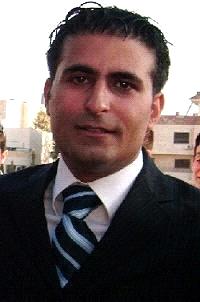
By Dr. Amer Al Sabaileh
The new phase of direct talks has started after the Washington meeting. The important point here is the Jordanian participation in the launch of the first direct talks between Palestinian and Israeli leaders since December 2008.
However, we would have preferred participation to come after clear, declared warranties from the US administration of an explicit Jordanian role in any eventual peace scenario.
A simple analysis would logically the goals of parties to the talks. Firstly, Americans need to achieve a degree of diplomatic success to cover their failure in Iraq and Afghanistan, especially considering the Democrats' record prior to the 2010 midterm election of November 2nd.This diplomatic step, linked
to the American withdrawal from Iraq, could also be considered as a preparative measure for a war that the US might potentially be planning.
From the other side, Israel is facing one of the worst diplomatic crises in decades. Israel needs to do something to improve its image after various episodes like the Gaza war, the Al Mabhoh massacre and, of course - the flotilla attack that provoked international condemnation.
Moreover, Israel fears the possibility of an imminent sort of new intifada, the continued deterioration in the Israeli relationship with Turkey and the fraying ties with the Obama administration. Clearly there is an imperative logic for Israel to agree to talks in order to restore its waning esteem in front of its international partners and to deflect attention from its negative image as an
occupying power.
On the Egyptian level, President Mubarak himself answered the question of why he will go to Washington despite his failing health. He decided to let his son Gamal Mubarak accompany him to the peace summit, which may be the clearest sign yet that he is being groomed for the succession. In this way, he will obtain the American blessing for such a problematic matter.
The Palestinian Authority has gone to the summit without any Palestinian consensus. Even President Mahmoud Abbas has repeatedly declared that he will not participate in direct talks with Israel if the latter continues to build settlements on Palestinian territory, but oddly enough, we find him there with Saeb Erikat who has publicly endorsed the same line. However, The last two Hamas military operations have proved that the Dayton plan, Fayad’s continuous pressure and the PA security measures can never guarantee Israel a free passage to peace.
We should ask ourselves now, especially in the middle of this scenario where we all know that these talks won’t last for long: What can we (Jordanians) bring to the negotiations table? Are we preparing our internal front to face all the expected or unexpected consequences?
On the Jordanian level today, what we need today is a real amendment, a patriotic agenda that brings national figures to the Jordanian political scene on all levels, from a security level to the internal and popular level. Our choices and alliances should not just be limited to one side, the defense of our identity today is multilateral alliance and popular consensus on our choices.
Neither pessimists nor optimists can have a different opinion
about the high price that we (Jordanians) might be forced to pay. Thus, the message that we should send to the whole world should not be just verbal, but it should include concrete and comprehensible steps. Therefore, restoring our internal front should start by an open national debate. Yet, No elections should comply with a Law which currently most of the political powers are boycotting, simply because elections should unify Jordanians, and should never make them feel apart and should not let them feel targeted by their government. Starting with an open, national debate, the one and only agenda that we should think of today is the immediate immunity of the internal front.
This is the only thing that would secure the Jordanians and clarify to the whole world that Jordan is untouchable.
Dr. Amer Al Sabaileh contributed this article to Ammon News
http://amersabaileh.blosgspot.com



 comment replay









 الرجاء الانتظار ...