Abdulhamid Hamid Al-Kba
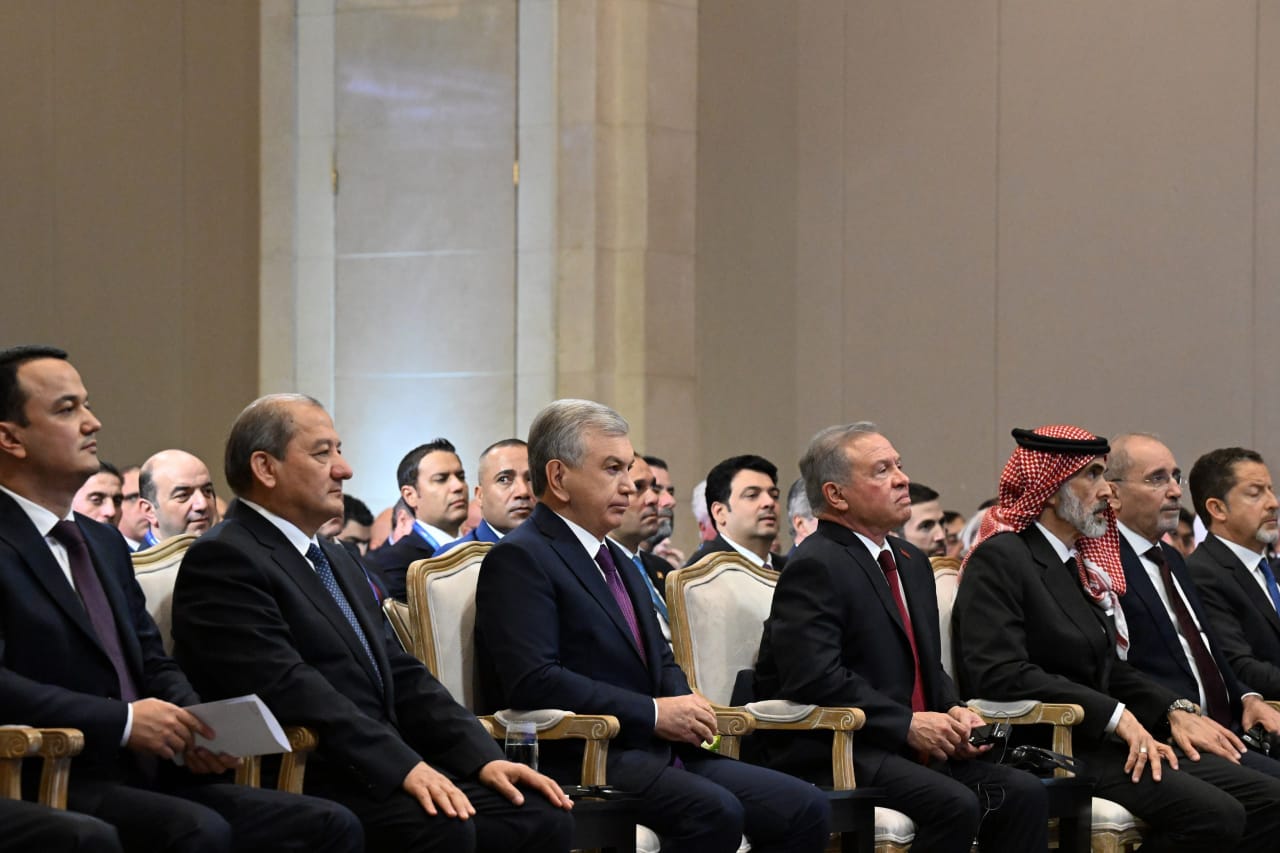
King Abdullah II and Queen Rania Al Abdullah received Uzbekistan’s President Shavkat Mirziyoyev and First Lady Ziroat Mirziyoyeva on Monday upon their arrival at Queen Alia International Airport for a two-day state visit. Royal Jordanian Air Force F-16 fighter jets escorted the presidential aircraft, joined at the official reception by Prince Ghazi bin Muhammad—the King’s chief adviser for religious and cultural affairs and personal envoy—and Princess Miriam Ghazi.
A state visit represents the highest level of diplomatic protocol. Held at the official invitation of the King, it builds on the noticeable momentum bilateral ties have gained since King Abdullah’s landmark visit to Uzbekistan in August 2025.
Building on the trajectory initiated in Samarkand, where talks between the two leaders yielded 15 bilateral agreements covering investment, higher education, tourism, agriculture, civil aviation, visa exemptions, and customs cooperation, the two leaders met again on November 6 on the sidelines of the Aqaba Process meetings in Astana, Kazakhstan, to review progress and explore avenues to expand trade, investment, and cultural exchange. In Amman this week, King Abdullah and President Mirziyoyev witnessed the exchange of 18 new agreements and memoranda of understanding—alongside a joint statement on strengthening bilateral relations—spanning political, economic, and technical cooperation.
These documents carry weight far beyond diplomatic protocol. Chief among them is the Preferential Trade Agreement, which aims to lower customs barriers and diversify the range of exchanged goods. Complementing it is the Strategic Partnership Agreement, establishing an overarching framework for political dialogue as well as security, trade, and investment cooperation extending into education, culture, tourism, healthcare, science, infrastructure, smart cities, and human capital development. Additional accords include twinning agreements between Petra and Samarkand and between Amman and Tashkent, alongside deals covering digitalization and artificial intelligence, health services, energy, environmental protection, mineral resources, water management, libraries and archives, economic diplomacy, livestock, mutual legal assistance in criminal matters, and pharmaceutical safety. Despite the genuine ambition reflected in the sheer volume of agreements, the central question remains: how many of these documents will translate from paper into tangible reality?
Trade figures offer a sobering look at the current baseline. According to data released by the Uzbek side and corroborated by international databases, direct bilateral merchandise trade stood at roughly $4.57 million in 2024 before climbing to about $8.53 million in 2025. Over that period, Jordanian exports to Uzbekistan edged up from $2.79 million to $3.11 million, whereas Uzbek exports surged from $1.78 million to $5.42 million—shifting the trade balance into an Uzbek surplus of approximately $2.31 million.
Jordanian exports remain heavily concentrated in pharmaceuticals and chemicals, led by pesticides and crop-protection products, followed by medicines and fertilizers. By contrast, food products dominate Uzbek exports—accounting for over 90 percent of the total in 2025—primarily bakery goods, confectionery, dried fruits, and nuts. Although some local reports cite higher trade volumes reaching tens of millions of dollars, those estimates typically factor in transit trade, re-exports, or services, whereas international databases measure direct merchandise flows.
Overall trade volume remains modest, largely due to a structural geographic hurdle: Uzbekistan is one of only two doubly landlocked countries in the world, lacking coastlines and surrounded entirely by other landlocked states. This geography inflates shipping costs and complicates transit routes to the Port of Aqaba compared to closer markets such as the Gulf, Turkey, or Egypt. Launching direct flights between Amman and Tashkent in July 2026 and signing the Preferential Trade Agreement are welcome steps, yet overcoming the logistical bottlenecks of Uzbekistan’s landlocked status requires practical supply-chain solutions that go well beyond diplomatic signatures.
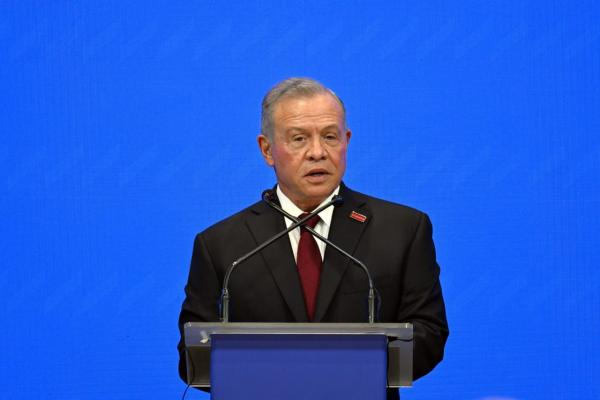
Equally eye-catching was President Mirziyoyev’s announcement in Amman of plans for Uzbekistan to implement roughly 40 investment projects in Jordan valued at $1.5 billion—a headline figure that appears detached from Uzbekistan’s actual outward investment capacity. According to UNCTAD data, Uzbekistan’s entire cumulative stock of outward foreign direct investment (FDI) globally stood at just $409 million at the end of 2025, with annual outflows reaching only $158 million. Pledging to deploy more than three times the country’s entire historical global investment portfolio into a single market lacks commercial realism unless the figure is largely an inflated diplomatic umbrella encompassing non-binding memoranda, third-party loans, and long-term trade estimates rather than actual Uzbek capital.
Macroeconomic pressures further shape this dynamic. Uzbekistan’s annual inflation stood at 7.3 percent at the end of 2025 before moderating to 6.5 percent by October 2026, according to central bank figures. Combined with an exchange rate hovering around 12,000 Uzbek soums per U.S. dollar, these inflationary pressures incentivize solvent Uzbek enterprises to seek monetarily stable jurisdictions abroad. Investing in Jordan—whose currency is pegged to the U.S. dollar—offers Uzbek firms an effective hedge to preserve asset value and generate hard-currency revenues, creating a genuine commercial motive beyond diplomatic pledges. With a rapidly growing population exceeding 39.5 million, Tashkent faces sustained pressure to generate jobs and expand export markets. Jordan, for its part, offers an attractive export springboard, backed by free trade agreements with the United States, the European Union, and Arab nations, alongside well-established free zones. Uzbek manufacturers operating within Jordanian industrial zones could leverage these trade deals, provided they satisfy strict rules of origin, value-added thresholds, and industrial transformation criteria. The most commercially viable sectors for such collaboration include textiles utilizing Uzbek cotton, pharmaceuticals drawing on Jordanian expertise, mining and fertilizers, logistics in Aqaba, and water management.
Bureaucracy, however, poses the most decisive test. Even as President Mirziyoyev has personally championed an ambitious policy of economic opening and global engagement, centralized decision-making, multi-tiered government approvals, and strict controls on outbound capital transfers continue to slow execution across Uzbekistan’s administrative machinery—particularly for state-affiliated or semi-public enterprises. In contrast to Jordan’s comparatively agile regulatory environment, Tashkent’s ability to streamline these administrative bottlenecks will largely dictate what materializes on the ground. Realized investment will ultimately hinge on execution speed, financing structures, and active buy-in from the private sector and regional financial institutions—rather than the headline value of official announcements.
Jordan-Uzbek relations are currently in a foundational, institution-building phase, supported by high-level visits, an expansive legal framework, and steady trade growth. Still, the core challenge endures: how to convert diplomatic ambition into productive assets inside Jordan, and whether Uzbekistan can navigate its logistical and bureaucratic constraints to turn a $1.5 billion pledge into hundreds of millions of dollars in actual, multi-year investments. Bridging this gap will require establishing a joint technical follow-up mechanism—bringing together private-sector leaders, commercial banks, and regional development funds—to secure viable financing and clear administrative hurdles, alongside empowering agile, results-oriented execution channels on the ground in Amman that move beyond routine bureaucratic representation toward proactive engagement with local private-sector and media ecosystems, ensuring that President Mirziyoyev’s vision extends well beyond official ceremonies.
By Abdul Hamid Hamid Al-Kba/ Opinion writer specializing in Central Asia and Azerbaijan affairs




 comment replay







 الرجاء الانتظار ...