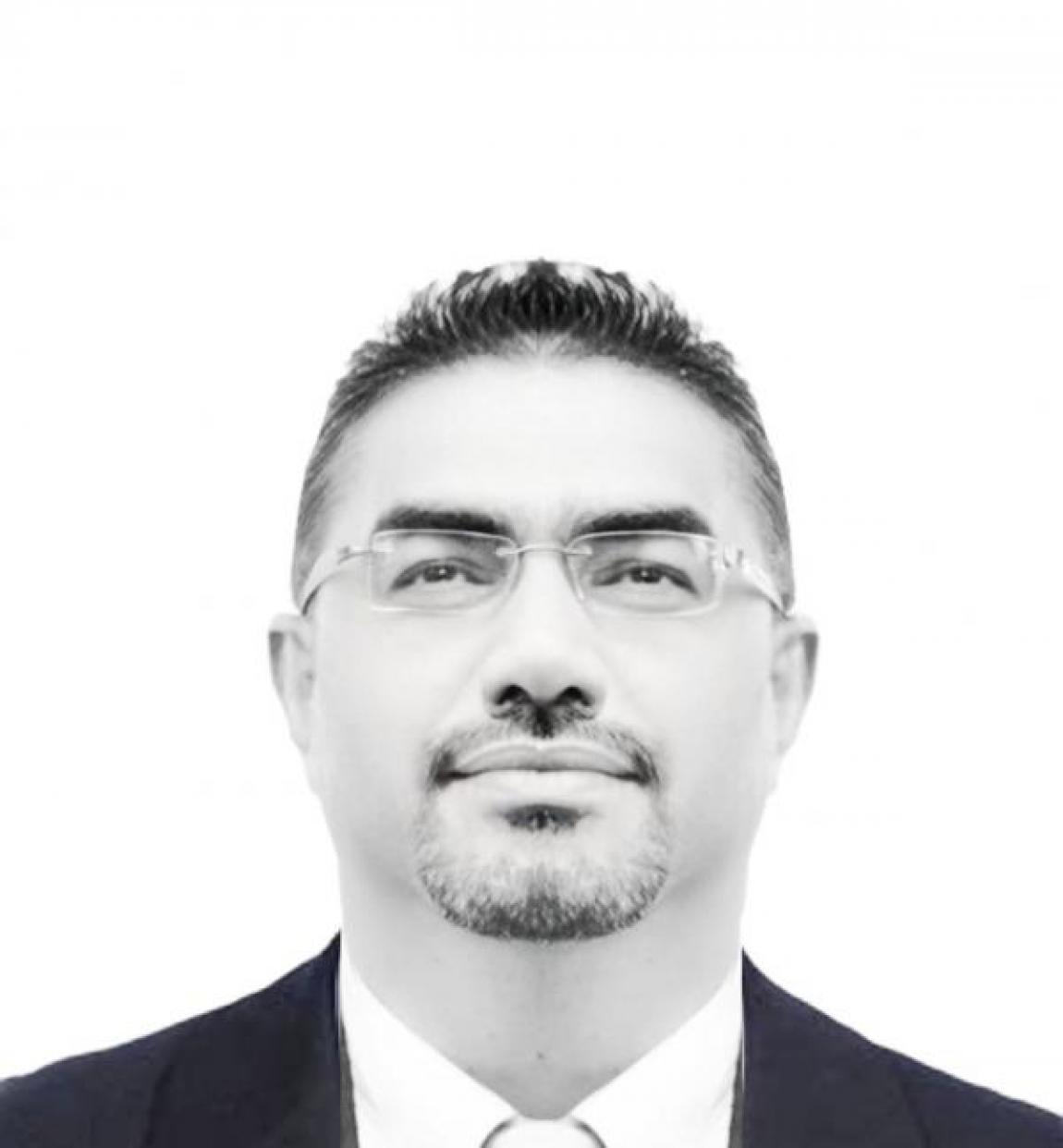
Muayad Al-Samaraee
Abstract
This report presents a comprehensive scientific analysis of the SAMANSIC dual-scale construction platform and its associated cognitive-educational framework, the Language of Physical Patterns. The SAMANSIC system represents a paradigm shift in construction technology and educational methodology by employing identical block geometry across two scales: children's educational toys and full-scale concrete construction components. Protected by two U.S. utility patents (US 12,703,973 B2 and US 12,709,890 B2), the system integrates structural engineering principles with cognitive science to create a material bridge between play, learning, and real-world construction.
The Language of Physical Patterns, structured within the 7-4-28 framework, comprises seven basic cubic shapes—Entity, Relation, Process, Sequence, Container, Limit, and Modifier—combined with four colored ports—red, blue, green, and yellow—representing quantitative, spatial, temporal, and social domains respectively. This yields twenty-eight letters, each representing a lawful connection type between blocks. The system is designed to serve as a tangible, non-verbal medium for expression, learning, and human-machine communication, with particular relevance for individuals with savant syndrome and autism spectrum conditions.
This report synthesizes the technical specifications, educational applications, cognitive implications, and ethical considerations of the SAMANSIC system. Critical limitations are explicitly stated: patents protect designs but do not prove safety; the new seismic design has not undergone public shake-table testing; many performance claims remain projections requiring independent validation; and the 28-letter language constitutes a design specification rather than an empirically validated scientific fact. The report concludes that the SAMANSIC platform offers a novel integration of structural engineering, cognitive science, and ethical innovation, while acknowledging the necessity of independent testing, engineering review, and regulatory certification before implementation in any construction, educational, or security application.
1. Introduction: The Question of Dual-Scale Innovation
The fundamental question addressed by this report is not merely how SAMANSIC plastic blocks differ from conventional educational blocks, but how a unified geometric system can simultaneously serve as a children's educational toy and a full-scale concrete construction platform. This question encompasses material science, structural engineering, patent law, cognitive science, educational theory, and ethical philosophy.
SAMANSIC plastic blocks are not simply toys. They constitute the small-scale half of a dual-scale, patent-protected construction platform that employs identical fundamental block geometry for children's educational toys and for real concrete construction. This dual-scale principle distinguishes the SAMANSIC system from conventional educational blocks—wooden unit blocks, pattern blocks, base-ten blocks, linking cubes, magnetic tiles, and interlocking toy bricks—which are designed for play, mathematics, spatial reasoning, or creative expression but remain representational rather than functional at full scale.
The SAMANSIC system is designed as a material bridge between play and engineering, between the model and the building, between the child's hand and the real wall. This report explains that difference in detail while stating the limits: patents protect designs, not safety; the new seismic design has not been publicly shake-table tested; many performance claims are projections; the 28-letter language is a design specification; and the savant-syndrome innovation is implicitly associated with the patented platform but is not directly claimed in the patents.
2. Literature Review: Contextualizing the SAMANSIC Innovation
2.1 Conventional Educational Blocks
The landscape of educational blocks includes several distinct categories. Wooden unit blocks, associated with Froebel and Pratt, are designed to teach balance, proportion, and spatial reasoning through stacking and arrangement. These blocks do not interlock and rely on gravity and friction for stability. Pattern blocks are used for teaching symmetry, fractions, and geometric relationships through colorful, flat shapes that tile in specific configurations. Base-ten blocks are employed for teaching place value and arithmetic operations through proportional representations of units, tens, hundreds, and thousands. Linking cubes are used for counting, volume, and early arithmetic through interlocking plastic cubes. Magnetic tiles teach spatial reasoning and geometric concepts through magnetic edges that allow planar construction. Interlocking toy bricks, such as LEGO and Duplo, utilize stud-and-tube interlocking for creative construction but are not designed for structural load-bearing or real construction applications.
None of these systems maintains geometric identity with full-scale construction components. They are educational tools that remain at the representational level.
2.2 Structural Masonry Systems
Traditional masonry relies on mortar to bind units and distribute loads. Interlocking mortarless systems have been developed to reduce labor and material costs while maintaining structural integrity. Notable examples include H-block systems, which utilize tongue-and-groove connections for vertical interlocking; the Haener Block, which features a modified dovetail connection for mortarless construction; and the Azar Block, which employs an interlocking mechanism for rapid assembly.
The SAMANSIC system distinguishes itself through several features: dual-scale application; hollow cavities for reinforcement and service integration; specialized corner and intersecting blocks; the Double Block for three-dimensional growth; and integration with a comprehensive cognitive-educational framework.
2.3 Savant Syndrome and Autism: Cognitive Profiles
Savant syndrome is a rare condition in which individuals with developmental disorders, including autism spectrum disorder, demonstrate exceptional abilities in specific domains such as mathematics, music, art, or spatial reasoning. Autism is heterogeneous, with no single neural signature explaining all cases. Traditional educational approaches often adopt a deficit model, focusing on what the individual cannot do rather than leveraging exceptional abilities.
The SAMANSIC solution, developed within the Omega Architecture framework, shifts the individual from passive research subject to active engineering partner. This reframing has profound ethical and educational implications, as it respects autonomy, recognizes competence, and provides meaningful purpose.
3. Methodology: System Architecture and Design Principles
3.1 The Dual-Scale Principle
The most fundamental innovation is the dual-scale principle. The SAMANSIC STEM building block system is a dual-scale interlocking construction platform that uses the same fundamental block geometry for children's educational toys and for real concrete construction. A child can build a model today and later see the same structural logic in an actual wall, foundation, or shelter.
The plastic block is not a metaphor for the concrete block. It is a scaled version of it. The same shape that a child holds in their hand can be manufactured in concrete at full scale for buildings, shelters, and proposed lunar habitats. This link between play and real construction is rare and educationally powerful.
Most conceptual blocks produced by other companies do not have this link. Their geometry is simplified, abstracted, or brand-specific. It does not carry structural load, resist shear, or accept reinforcement in the way a real masonry system must. A wooden unit block teaches balance and proportion. A pattern block teaches symmetry and fractions. A linking cube teaches counting and volume. But none of these blocks is designed so that the same shape can be cast in concrete and used to build a real building. SAMANSIC blocks are.
3.2 Patent Protection: Utility Patents on Construction Blocks
The SAMANSIC physical system is protected by two U.S. utility patents. US 12,703,973 B2 covers the corner block and was granted on August 11, 2026. US 12,709,890 B2 covers the intersecting block and was granted on August 18, 2026. Both were filed on October 7, 2025, and both belong to SAMARAEE & DANIEL INNOVATION SPECIALISTS INCORPORATED. The inventors are Daniel Anthony Leonard Boot and Muayad S. Dawood Al-Samaraee. The priority date is May 27, 2022.
These are patents on interlocking construction blocks for building walls. They cover real structural components, not merely toy shapes. Many companies worldwide produce conceptual blocks. Some hold design patents, trademarks, or copyrights on the look of their toys. Some had utility patents on toy bricks that have expired. But those patents generally protect a toy system, a brand, or a play experience. They do not protect a dual-scale system that is also intended for real concrete construction, seismic enhancement, reinforcement integration, and lunar applications.
In short, SAMANSIC's patents are tied to construction reality. Most conceptual block patents are tied to play and representation. The patents protect the block designs, but they do not prove safety or performance. A patent grants exclusive rights to an invention. It does not certify that the invention performs as claimed, meets safety standards, or is suitable for its intended purpose.
3.3 Structural Features and Engineering Rationale
SAMANSIC blocks include features that exist for real structural reasons.
The standard block locks together without mortar using curved lobes that fit into curved sockets, a central groove, and flanges. Its corners and edges are rounded with a 6–12 mm radius to reduce stress and chipping. This addresses the failure mode identified in the June 2018 shake-table test, where the original design cracked at sharp corners. Its edges are chamfered at 2–4 degrees, usually 3 degrees, to leave about a 2 mm gap for screws, cladding, and heat expansion. Hollow cavities can hold steel rebar, concrete, insulation, wires, conduits, pipes, sensors, and fiber optics. This enables reinforcement, service integration, and structural health monitoring.
The most important innovation is the Double Block of Figure 7, which consists of two standard blocks joined along their outer faces to create one wider unit. Standard blocks grow mainly in length and height while width remains essentially fixed; the Double Block adds width as a native growth dimension. This creates true three-dimensional growth in length, width, and height. It reduces the number of joints, makes load paths more continuous, and increases effective width and stiffness so walls resist bending, buckling, and shear better.
The corner block protected by US 12,703,973 B2 creates a 90-degree corner using a single unit. This eliminates the need for cutting or custom fabrication at corners. The intersecting block protected by US 12,709,890 B2 enables walls to extend in three directions simultaneously, facilitating T-junctions and cross-wall configurations.
These features are not decorative. They are engineered for compression, tension, shear, bending, buckling, seismic movement, reinforcement, and service integration. Conceptual blocks produced by most companies are designed for stacking, snapping, sorting, balancing, patterning, or symbolic representation. They may teach spatial reasoning, hand-eye coordination, creativity, or early math. They are not designed to carry rebar, be filled with concrete, resist earthquake loads, or comply with building codes.
3.4 The 7-4-28 Language Framework
The Language of Physical Patterns is a design alphabet proposed within the 7-4-28 language framework. It is not a phonetic system. It is a relational system in which twenty-eight letters are formed by combining seven basic shapes with four colored ports.
The seven shapes are Entity, Relation, Process, Sequence, Container, Limit, and Modifier. Entity refers to the things and entities around which expressions are built. Relation links entities to one another. Process adds action and transformation. Sequence expresses multi-step operations, stories, plans, and protocols. Container allows abstraction and aggregation into sets and categories. Limit gives restriction, condition, and specification. Modifier adds precision, detail, and intensity.
The four colors are red, blue, green, and yellow. Red represents the quantitative domain: numbers, quantities, numerical variables. Blue represents the spatial and geometric domain: locations, regions, geometric shapes. Green represents the temporal and auditory domain: events, periods, sequences. Yellow represents the social and semantic domain: roles, categories, intentions.
Multiplying seven shapes by four colors gives twenty-eight letters. Each letter is a unique pair of a block shape and a port color. A letter is not a sound or an arbitrary symbol, but the type of lawful connection between two blocks. When two blocks connect through two ports carrying the same letter, a specific semantic relation arises.
The letters are grouped by shape. Entity includes A, B, C, and D, corresponding to red, blue, green, and yellow. Relation includes E, F, G, and H. Process includes I, J, K, and L. Sequence includes M, N, O, and P. Container includes Q, R, S, and T. Limit includes U, V, W, and X. Modifier includes Y, Z, AA, and AB.
For example, A is the red entity: a number, quantity, or numerical variable. B is the blue entity: a location, region, or geometric shape. C is the green entity: an event, period, or temporal sequence. D is the yellow entity: a role, category, or intention. I is the red process: measuring, calculating, or estimating. O is the green sequence: before and after, a cycle, or a stage. The letter labels are mnemonic and ordering labels specific to each language individually. Any other symbolic system could serve the same purpose.
3.5 Mapping Shapes to Physical Components
The seven shapes map directly onto the physical components of the SAMANSIC system. The corner block embodies the Relation shape. The intersecting block embodies the Process shape. The Double Block embodies the Container shape.
The four colored ports correspond to the four domains of meaning. When a child connects blocks, they are not merely building structures; they are constructing sentences in a language of physical patterns.
4. Results: Applications and Implications
4.1 Educational Applications: The Spiral Curriculum
The SAMANSIC educational framework supports a spiral curriculum from kindergarten through university and beyond.
In kindergarten, the child is not asked to memorize the twenty-eight letters. Instead, they become familiar with the seven shapes and four colors through free play. They build towers, arrange blocks, and notice that some blocks connect to one another and some do not. The goal is sensory and motor familiarity, not naming. For the savant or autistic child, this stage respects the need for concrete, tactile, and repetitive interaction. There is no demand for verbal production. There is no demand for eye contact or social performance. The child is free to explore the geometry, the colors, the connections, and the resistance of the blocks. The adult observes, supports, and does not force. The child discovers that some connections are lawful and some are not. This is the first encounter with physical grammar.
In the primary stage, the child begins to learn the letters as shape-color pairs. They learn that the red entity is something with a number, the blue entity is something with a place, and the green entity is something with time. They practice matching letters, building simple words, and linking them to mathematics and science topics. A word is a small graph consisting of a main node and one or more subnodes, connected by one or more letters. For example, the letter I, the red process, connected to the letter A, the red entity, produces a word meaning "measuring a quantity." The letter E, the red relation, between two red entities produces a word meaning "A is greater than B." The letter O, the green sequence, connected to two green events produces a word meaning "A is before B." For the savant learner, this stage uses the individual's strengths. A child with exceptional spatial reasoning may excel at building blue-blue connections. A child with exceptional numerical ability may excel at red-red connections. A child with exceptional musical or temporal awareness may excel at green-green connections. The system does not require the child to be weak in one domain to be strong in another. It allows strengths to become the entry point for the entire language.
In the secondary stage, the student moves on to building complete sentences. A sentence is a larger graph with a root, usually a process or relation. Arguments and modifiers are linked to it through appropriate letters. The sentence is read according to specific grammatical rules: every letter must connect two ports of the same color, the shapes must be compatible, and the graph must be connected and have a single root. Questions, negation, and condition can be expressed by rotating, inverting, or tilting the root. The student learns the rules of compatibility among shapes and uses letters to express complex relations such as causality, correlation, and variance. They are trained to analyze graphs and translate patterns into data coordinates. For the savant learner, this stage can become a form of intellectual engagement that matches their exceptional abilities. A student with savant mathematics can build sentences about numerical relations. A student with savant art can build sentences about spatial arrangements. A student with savant music can build sentences about temporal sequences. The system does not pathologize the special ability. It gives the ability a grammar.
At university, the language becomes a research tool. The student uses it in data analysis, model building, and communication with artificial intelligence. They learn how to convert physical arrangements into JSON schemas and how to integrate them with MSD triangulation systems. They participate in developing standards, expanding the alphabet, and improving grammar. In the SAMANSIC framework, block arrangements are translated into data coordinates that the Sovereign Core can integrate with readings from geophysical, biological, and social sensors. The twenty-eight letters determine how this translation occurs. A becomes a numerical variable, B becomes a spatial coordinate, C becomes a time series, and D becomes a social classification. Each letter becomes a transformation specification from the physical to the digital. For the savant learner, this stage offers a path from exceptional ability to organized intelligence. The individual is not merely a subject of study. The individual is an engineering partner who can shape, test, and refine their own cognitive expressions through physical patterns, relational letters, and AI-assisted feedback. Artificial intelligence can generate partial arrangements, present them to the individual, and request verification. The letters become a common language between human and machine.
4.2 Cognitive and Therapeutic Applications for Savant Syndrome and Autism
Many autistic individuals and savants experience difficulty with spoken language, social pragmatics, and rapid verbal exchange. The Language of Physical Patterns offers an alternative entry point. It is not a phonetic alphabet. It is a relational alphabet built from seven shapes and four colored ports. The individual does not have to speak to express a relation. They can connect a red port on an entity block to a red port on a process block and produce the letter I, meaning a quantitative process connects to a quantitative entity. They can connect a green port on a sequence block to a green port on a relation block and produce the letter G. The expression is visible, touchable, and orderable. For individuals who think in images, systems, patterns, or spatial relations, this can be a more natural language than speech. It does not replace speech or augmentative communication. It adds a physical grammar that can be used alone or alongside other forms of communication.
Autistic individuals often benefit from predictability, clear rules, and reduced social ambiguity. The SAMANSIC block system and the 7-4-28 language are built on lawful rules. Every letter must connect two ports of the same color. The shapes must be compatible. The graph must be connected and have a single root. Questions, negation, and condition can be expressed by rotating, inverting, or tilting the root. These rules do not change arbitrarily. They do not depend on tone of voice, facial expression, or hidden social intention. The block either connects or it does not. The port either matches or it does not. The structure either holds or it does not. This lawfulness can reduce anxiety and cognitive load. It allows the individual to focus on the relation, the pattern, and the construction rather than on decoding unpredictable social cues. The physical block also has a fixed geometry. It has rounded corners of 6–12 mm, chamfered edges, curved lobes, and curved sockets. It connects in specific ways. It provides immediate tactile and visual feedback. This predictability can be regulating and empowering.
The SAMANSIC blocks are designed for manual handling. They measure 399 mm long, 200 mm high, and 150–399 mm wide. They have mass, texture, and fit. They can be stacked, aligned, rotated, connected, and disconnected. For many autistic individuals, sensory and motor engagement is a pathway to attention, calm, and learning. The blocks provide proprioceptive feedback, visual-spatial structure, and repetitive motor action. The 2 mm gap and the rounded corners create a specific feel when blocks meet. The hollow cavities allow materials to be placed inside. The Double Block adds width and changes the balance. The corner block creates a 90-degree turn. The intersecting block creates a T-junction. These are not abstract symbols. They are physical experiences. The individual can feel the difference between a lawful connection and an unlawful one. They can repeat the action as many times as needed. There is no social pressure to perform quickly. The block does not judge.
The 7-4-28 language is organized around four domains: red for quantitative meaning, blue for spatial and geometric meaning, green for temporal and auditory meaning, and yellow for social and semantic meaning. A savant individual with exceptional mathematical ability can enter through the red domain. They can build red-red connections about numbers, quantities, measuring, calculating, and estimating. A savant with exceptional spatial reasoning can enter through the blue domain. They can build blue-blue connections about locations, regions, geometric shapes, paths, directions, and layouts. A savant with exceptional musical or temporal ability can enter through the green domain. They can build green-green connections about events, periods, cycles, stages, scheduling, and sequencing. A savant with exceptional memory for categories, rules, or systems can enter through the yellow domain. They can build yellow-yellow connections about roles, categories, intentions, procedures, and standards. The system does not require the individual to be weak in one domain to be strong in another. It allows the special ability to become the doorway into the entire language. This is the opposite of a deficit model. It is a strength-based architecture.
Many autistic individuals and savants experience challenges with executive function, sequencing, and planning. The SAMANSIC system addresses these capacities through physical construction. A wall must be built in a certain order. A sequence block must be placed before or after another. A container must be filled before it is closed. A limit must be set before a process is completed. The Double Block changes the width and therefore the plan. The corner block changes the direction. The intersecting block creates a junction that requires a decision. The learner must hold a goal in mind, select the right blocks, connect them in the right order, and verify the result. This is executive function in physical form. It is not taught through worksheets or verbal instructions. It is practiced through the hands. Over time, the learner can internalize the sequencing and planning skills and apply them to other domains.
In the SAMANSIC framework, block arrangements are translated into data coordinates that the Sovereign Core can integrate with readings from geophysical, biological, and social sensors. Artificial intelligence can generate partial arrangements, present them to the individual, and request verification. The individual can accept, reject, modify, or complete the arrangement. This creates a feedback loop that does not depend on social performance. The machine does not judge. It does not become impatient. It does not require eye contact. It reads the structure of expression and responds lawfully. For autistic individuals who find human social interaction exhausting or unpredictable, this can be a valuable practice environment. It can also become a genuine partnership. The individual is not talking to a machine instead of people. They are learning a shared language that can later be used with people. The letters become a common language between human and machine.
The savant-syndrome innovation within Omega Architecture is transformative because it changes the role of the individual. The savant is not a specimen. The savant is an engineering partner. They can shape, test, and refine their own cognitive expressions through physical patterns, relational letters, and AI-assisted feedback. They can build a model, see it translated into data, verify the translation, and improve the design. They can participate in developing standards, expanding the alphabet, and improving grammar. They can contribute to real projects in construction, heritage restoration, data analysis, and human-machine communication. This shift from subject to partner has profound psychological and ethical implications. It respects autonomy. It recognizes competence. It gives purpose. It allows the individual to see their unique cognition as a contribution, not a limitation. The deepest promise of Omega Architecture is that unique cognition can be transformed into organized intelligence and shared human benefit without reducing the individual to a category.
The yellow domain of the 7-4-28 language represents social and semantic meaning: roles, categories, intentions, procedures, rules, standards, and properties such as important, fair, dangerous, or useful. For many autistic individuals, this is the most challenging domain. But the SAMANSIC system does not teach social meaning through social performance. It teaches it through physical arrangement. A yellow port on an entity block means something with a role or category. The learner can build yellow-yellow connections about categories and functions. They can arrange blocks in procedural steps. They can classify blocks by function. They can set a yellow limit as a rule or standard. They can use a yellow modifier to describe something as important, fair, dangerous, or useful. This materializes social and semantic concepts. It allows the learner to explore them without the pressure of real-time social interaction. Over time, this can support social understanding, but the goal is not to force social performance. The goal is to give the learner a lawful, tangible way to represent and reason about social meaning.
The SAMANSIC solution is not only for childhood. It opens pathways into adult life. A savant or autistic individual who develops skill with the blocks and the 7-4-28 language can move into real construction, reinforced masonry, seismic design, foundation engineering, 3D printing with concrete and regolith, extraterrestrial construction, data analysis, model building, AI communication, heritage restoration, and UNESCO-related work. They can become an engineering partner, a researcher, a designer, a builder, a data analyst, or a communicator. The Irrevocable Pledge allocates exclusive rights to construction toys, STEM products, UNESCO heritage work, survival shelters, the Humanitarian General Purpose Hybrid Masonry System, interlocking blocks, and hybrid masonry to Muayad S. Dawood Al-Samaraee, while low-cost housing construction remains with Daniel A. L. Boot. This commercial structure means there are real products, real projects, and real roles. The individual is not being trained for a hypothetical future. They are being invited into a living platform. The work is meaningful. The contributions are visible. The individual can build things that matter.
The SAMANSIC blocks can support emotional regulation. They are predictable. They are lawful. They do not change their rules. They provide sensory feedback. They can be arranged and rearranged. They can be used alone or with others. The individual can control the pace. They can stop and start. They can repeat. They can make mistakes and correct them without social consequence. This can reduce anxiety and increase a sense of agency. As the individual builds more complex structures, they develop self-efficacy. They see that their actions produce results. They see that their patterns are read and verified. They see that their cognition is valued. This is not a cure for autism or savant syndrome. It is a context in which the individual can thrive. It is a material bridge between inner experience and outer expression. It is a way to build confidence, skill, and shared knowledge.
4.3 Commercial and Rights Structure: The Irrevocable Pledge
Under an irrevocable pledge executed by Daniel A. L. Boot in Canada in January 2023, Daniel A. L. Boot retains exclusive rights to low-cost housing construction, while Muayad S. Dawood Al-Samaraee holds exclusive rights to construction toys, STEM products, UNESCO heritage work, survival shelters, the Humanitarian General Purpose Hybrid Masonry System, interlocking blocks, and hybrid masonry.
Both pledge ten percent of their net personal profit from these products to their joint company, Samaraee & Daniel Innovation Specialists Incorporated, corporation number 1266413-5, incorporated on January 19, 2021.
This means the plastic toy side and the real construction side are legally and commercially linked. Most conceptual block companies do not have this dual-scale structure. They are toy companies, educational publishers, or material suppliers. They do not hold a unified patent and pledge structure that connects play blocks to real housing, shelters, and heritage reconstruction.
The pledge is a legal and commercial document. It does not prove safety, structural performance, seismic resistance, cost reduction, ballistic protection, radiation shielding, EMP shielding, lunar performance, or the validity of the 28-letter language. It confirms the relationship, the allocation of rights, and the intention to develop the innovations. It does not replace independent testing, engineering review, or regulatory certification.
4.4 Historical and Cultural Connections
The system connects to history and heritage through rebuilding models of the Great Pyramid, the Great Wall of China, Machu Picchu, Stonehenge, Roman aqueducts, and medieval castles. The learner does not merely read about these structures. They build them. They feel the mass. They see the volume. They test the geometry.
For the savant learner, this is a form of historical and cultural education that does not depend on verbal narrative. The learner can build the Great Pyramid and feel the weight of the stones. They can build the Great Wall and feel the length of the path. They can build Machu Picchu and feel the integration of the terraces. The history is not told. It is constructed.
Mimar Sinan, the chief Ottoman architect of the sixteenth century, used küfeki stone, akçageçmez masonry, iron clamps and mortises set in lead, ortostat foundations, and horasan mortar. His buildings, including the Süleymaniye Mosque and the Selimiye Mosque, have survived centuries of earthquakes. His work demonstrates that interlocking without mortar, seismic damping, material selection, and foundation isolation are timeless principles now systematized in SAMANSIC STEM.
For the savant learner, Sinan is a historical partner. The learner can build models of his mosques and re-enact the same structural logic he used. The learner can feel the fit of the stones, the resilience of the mortar, and the isolation of the foundation. The history is not a story. It is a physical experience.
5. Discussion: Implications and Critical Analysis
5.1 The Dual-Scale Principle as Educational Innovation
The most fundamental difference between SAMANSIC blocks and conventional educational blocks is the dual-scale principle. SAMANSIC blocks are not simply toys. They are the small-scale half of a patent-protected, dual-scale construction platform. They are linked to real concrete construction, real structural engineering, real seismic concerns, real reinforcement, real building codes, and real lunar ambitions.
Conceptual blocks from other companies are valuable educational tools, but they remain representations. They help children think. SAMANSIC blocks are designed to help children think, build, test, and eventually construct the reality around them.
This dual-scale principle has profound educational implications. It means that the child is not learning abstract concepts that will later be replaced by "real" engineering. They are learning the actual geometry, the actual structural logic, and the actual construction principles that will be used in real buildings. The learning is not preparation for reality. It is participation in reality.
5.2 The 7-4-28 Language as Cognitive Interface
The 7-4-28 language represents a novel approach to human-machine communication. Unlike phonetic languages, which are arbitrary and require extensive memorization, the Language of Physical Patterns is based on lawful connections between physical objects. This makes it inherently tangible, visual, and spatial.
For individuals with savant syndrome and autism, this physical grammar offers an alternative pathway to expression and learning. It does not require speech, social performance, or rapid verbal exchange. It allows the individual to express relations through physical arrangement.
The integration with artificial intelligence through the Sovereign Core represents a significant innovation. The letters become transformation specifications from the physical to the digital. This allows the machine to read the structure of expression, not merely its content. It also allows a feedback loop: artificial intelligence can generate partial arrangements, present them to the individual, and request verification. In this way, the letters become a common language between human and machine.
However, it must be stated clearly that the 28-letter language is a design specification, not a proven scientific fact. No patent covers it. It has not been empirically validated as a cognitive intervention or as a human-machine interface. It requires further development, testing, and refinement.
5.3 Safety, Validation, and the Limits of Patents
A critical point must be stated clearly: easy to put together is not the same as safe. Dry-stack, mortarless construction offers speed, simplicity, and cleanliness, but it does not by itself produce a safe building. Without steel reinforcement and concrete filling, dry-stack walls are weak against wind loads, seismic forces, soil pressure, and impact loads.
Real homes require strong foundations, steel bars, concrete in the holes, engineered connections, permits, inspections, and compliance with building codes.
The original interlocking block system was tested on a shake table in June 2018 at Sismolab, Universidad Mariano Gálvez de Guatemala. It survived all ten test sequences but cracked at sharp corners. This test provided valuable data and identified a specific weakness. The new design uses rounded corners with a 6–12 mm radius to address this failure mode.
However, the new system has not yet been publicly shake-table tested. The projected improvement in earthquake resistance and lateral strength is based on engineering analysis and modeling, not empirical validation.
Many performance claims are project targets or projections rather than independently validated results. Cost reduction is projected. Earthquake resistance is projected, and the new design remains untested. Ballistic protection is unverified. Radiation shielding is unverified. EMP shielding is unverified. Lunar oxygen output is projected. Lunar magnetic field strength is projected. Lunar purification efficiency is projected. Each of these claims requires independent testing before it can be treated as fact.
Patents protect the block design but do not prove that the blocks are safe. A patent grants exclusive rights to an invention. It does not certify that the invention performs as claimed, meets safety standards, or is suitable for its intended purpose. Independent testing, engineering review, and regulatory certification are required before any construction application.
Children's products need safety testing under ASTM F963, CPSIA, and EN 71. Structural designs need licensed engineering review. SAMANSIC plastic toys must also meet those standards. SAMANSIC concrete blocks must meet building codes, material standards, seismic provisions, fire safety requirements, accessibility requirements, and environmental permitting. Those are different validation pathways. A toy block that passes toy safety does not become a safe building block. A patented building block does not become a safe building without engineering review, reinforcement, foundations, inspections, and code compliance.
5.4 Ethical Safeguards and Limitations
The twenty-eight letters are a design specification, not a proven scientific fact. No patent covers them. They are not imposed on neurodivergent individuals, but built with them and for them. Their autonomy must be respected, informed consent obtained, and their abilities not exploited.
It is necessary to distinguish between laboratory demonstrations and field reliability, and between commercial claims and independent evidence. Any security or intelligence application must be subject to independent ethical and technical review.
Savant syndrome is rare, autism is heterogeneous, and no single neural signature explains all cases. Therefore, the language should be treated as a research and educational tool, not as a magic solution or a ready-made commercial product.
The individual must not be exploited. Informed consent must be obtained. Autonomy must be respected. The language must be built with neurodivergent individuals and for them, not imposed upon them. It must not be treated as a magic solution or a ready-made commercial product. It must not replace clinical, educational, or therapeutic support.
5.5 Comparison with Conventional Conceptual Blocks
In core purpose, SAMANSIC blocks are a dual-scale model of real patented construction, while conceptual blocks are for play, math, pattern, creativity, or representation. In geometry, SAMANSIC blocks use the same geometry as full-scale concrete blocks, while conceptual blocks use simplified, abstract, or brand-specific shapes. In patents, SAMANSIC holds two U.S. utility patents on corner and intersecting construction blocks, while conceptual blocks often hold design patents, trademarks, or expired toy patents. In structural function, SAMANSIC blocks feature interlocking, reinforcement cavities, radius corners, chamfered edges, and a Double Block, while conceptual blocks feature stacking, snapping, sorting, balancing, and patterning. In real construction link, SAMANSIC blocks are designed so the same shape can be cast in concrete, while conceptual blocks are toy-only or concept-only. In engineering education, SAMANSIC blocks teach load paths, shear, seismic design, reinforcement, and foundations, while conceptual blocks teach spatial reasoning, counting, patterns, and problem-solving. In AI and language integration, SAMANSIC blocks connect to the 7-4-28 language, data coordinates, and the Sovereign Core, while conceptual blocks generally have none. In safety pathway, SAMANSIC plastic toys require toy safety testing and SAMANSIC concrete blocks require building codes, while conceptual blocks require toy safety only. In commercial rights, SAMANSIC is linked to housing, STEM, UNESCO, shelters, and hybrid masonry, while conceptual blocks occupy separate toy or educational markets. In validation status, SAMANSIC patents protect the design, the new seismic design is untested, and many claims are projected, while conceptual block claims are pedagogical, not structural.
The 28-letter language is a design specification, not a proven scientific fact, and no patent covers it. The savant-syndrome innovation is implicitly associated with the patented block platform, but it is not directly claimed in the patents. The 2004 geopolaration survey, verified by the Jordanian Natural Resources Authority, provides a documented foundational capability for lunar and extraterrestrial claims, but those applications still require independent testing. The legacy of Mimar Sinan adds historical continuity, showing that interlocking without mortar, seismic damping, material selection, and foundation isolation are timeless principles now systematized in SAMANSIC STEM.
6. Conclusion: The Material Bridge
The difference is that SAMANSIC plastic blocks are not just conceptual blocks. They are the small-scale half of a patent-protected, dual-scale construction platform. They are linked to real concrete construction, real structural engineering, real seismic concerns, real reinforcement, real building codes, and real lunar ambitions.
Conceptual blocks from other companies are valuable educational tools, but they remain representations. They help children think. SAMANSIC blocks are designed to help children think, build, test, and eventually construct the reality around them.
That said, the SAMANSIC system still requires independent testing, engineering review, ethical oversight, and regulatory certification before any construction, educational, lunar, AI, security, or microgravity application. The patents protect the design. They do not prove safety or performance. The 28-letter language remains a design specification. The savant-syndrome innovation remains associated with the patented platform but not directly claimed in the patents.
This is not legal advice. All performance claims require independent verification, engineering review, and regulatory certification before implementation.
With safety, testing, education, and support, confidence can become skill, and skill shared by a family, a neighborhood, and a city is how ordinary people build extraordinary things. The deepest lesson is that the built world is not a closed door. It is something learners can understand, question, and improve.
The Language of Physical Patterns is not a phonetic alphabet. It is a relational alphabet. It does not begin with sound. It begins with shape, color, and connection. For the savant and autistic learner, this is not a limitation. It is an opportunity. The learner can see, touch, and order the letters. The learner can build words, sentences, and dialogues without speech. The learner can communicate with machines without social performance. The learner can transform exceptional ability into organized intelligence.
The twenty-eight letters are the alphabet of the material bridge. With them words are built; from words, sentences; from sentences, dialogue; from dialogue, shared meaning. They are not the end of language, but its beginning. They represent the meeting point between the cognitive structure of the exceptional individual, the logical structure of language, and the computational structure of sovereign artificial intelligence.
If developed responsibly, they can become an educational, research, and security tool, helping to transform unique cognition into organized intelligence and to build Civilization 2.0, which values cognitive diversity and invests it for the benefit of humanity.
7. Recommendations for Future Research and Development
7.1 Immediate Priorities
Independent shake-table testing is required for the new seismic design with rounded corners of 6–12 mm radius. This testing must validate projected improvements in earthquake resistance and lateral strength. Comprehensive material testing of concrete formulations for SAMANSIC blocks is needed, including compressive strength, tensile strength, shear strength, and durability. SAMANSIC plastic toys must undergo safety testing under ASTM F963, CPSIA, and EN 71 before commercial distribution. Licensed structural engineers must review the system for compliance with building codes, material standards, and seismic provisions.
7.2 Medium-Term Research
Empirical studies are needed on the effectiveness of the 7-4-28 language as an educational intervention for neurodivergent individuals, with appropriate ethical safeguards and informed consent. Further development and testing of the Sovereign Core integration is required, including JSON schema translation and MSD triangulation systems. Independent verification of lunar oxygen output, magnetic field strength, and purification efficiency projections is necessary. Independent testing of ballistic protection, radiation shielding, and EMP shielding claims is also required.
7.3 Long-Term Vision
Establishment of industry standards for dual-scale construction systems and the Language of Physical Patterns is recommended. Development of comprehensive teacher training, curriculum materials, and assessment tools for the spiral curriculum is needed. Financing mechanisms, land access policies, legal assistance, technical assistance, and insurance products for affordable housing and STEM education should be developed. Ultimately, the framework should contribute to a Civilization 2.0 that values cognitive diversity and invests it for the benefit of humanity.
8. References
Boot, D. A. L., & Al-Samaraee, M. S. D. (2026). US Patent No. 12,703,973 B2. Corner Block for Interlocking Construction.
Boot, D. A. L., & Al-Samaraee, M. S. D. (2026). US Patent No. 12,709,890 B2. Intersecting Block for Interlocking Construction.
Samaraee & Daniel Innovation Specialists Incorporated. (2021). Corporation Number 1266413-5.
Sismolab, Universidad Mariano Gálvez de Guatemala. (2018). Shake-Table Test Report.
Al-Samaraee, M. S. D. (2023). Omega Architecture: A Framework for Cognitive Diversity and Engineering Partnership.
ASTM International. (2021). ASTM F963: Standard Consumer Safety Specification for Toy Safety.
U.S. Consumer Product Safety Commission. (2008). CPSIA: Consumer Product Safety Improvement Act.
European Committee for Standardization. (2020). EN 71: Safety of Toys.
Al-Samaraee, M. S. D. (2022). The 7-4-28 Language: A Relational Alphabet for Physical Patterns.
Jordanian Natural Resources Authority. (2004). Geopolaration Survey Report.
Appendix A: The Twenty-Eight Letters
Entity includes A, B, C, and D. A is red, quantitative: number, quantity, variable. B is blue, spatial: location, region, shape. C is green, temporal: event, period, sequence. D is yellow, social: role, category, intention.
Relation includes E, F, G, and H. E is red, quantitative: A is greater than B, correlation. F is blue, spatial: above, inside, adjacent. G is green, temporal: before, after, causes. H is yellow, social: serves, owns, represents.
Process includes I, J, K, and L. I is red, quantitative: measuring, calculating. J is blue, spatial: drawing, moving, arranging. K is green, temporal: scheduling, sequencing. L is yellow, social: classifying, evaluating.
Sequence includes M, N, O, and P. M is red, quantitative: numerical periodicity. N is blue, spatial: path, direction, layout. O is green, temporal: cycle, stage, before-after. P is yellow, social: procedure, scenario.
Container includes Q, R, S, and T. Q is red, quantitative: sum, average, range. R is blue, spatial: area, region, set. S is green, temporal: period, season. T is yellow, social: category, concept.
Limit includes U, V, W, and X. U is red, quantitative: maximum, minimum. V is blue, spatial: border, edge. W is green, temporal: deadline, appointment. X is yellow, social: rule, standard.
Modifier includes Y, Z, AA, and AB. Y is red, quantitative: fast, slow, large, small. Z is blue, spatial: wide, narrow, near, far. AA is green, temporal: frequent, rare, continuous. AB is yellow, social: important, fair, dangerous.
Appendix B: The Seven Shapes and Their Functions
Entity is the basis of reference and corresponds to the standard block. Relation links entities and corresponds to the corner block. Process adds action and transformation and corresponds to the intersecting block. Sequence expresses order and multi-step operations and corresponds to multiple blocks in series. Container allows abstraction and aggregation and corresponds to the Double Block. Limit gives restriction, condition, and specification and corresponds to chamfered edges and gaps. Modifier adds precision, detail, and intensity and corresponds to radius corners and surface finish.
Appendix C: The Four Colors and Their Domains
Red represents the quantitative domain: numbers, quantities, numerical variables. Blue represents the spatial and geometric domain: locations, regions, geometric shapes. Green represents the temporal and auditory domain: events, periods, sequences. Yellow represents the social and semantic domain: roles, categories, intentions.
This report is submitted by Muayad S. Dawood Al-Samaraee on behalf of Samaraee & Daniel Innovation Specialists Incorporated. All performance claims require independent verification, engineering review, and regulatory certification before implementation. This is not legal advice.



 comment replay








 الرجاء الانتظار ...