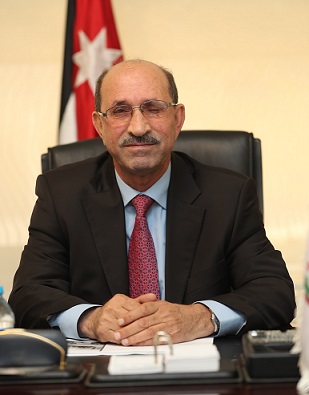
Dr. Hamad Kasasbeh
With the government's launch of the 'Two Years of Work... From Vision to Reality' campaign, which will present in the coming weeks the results of government action and their impact on citizens' lives across eight main pillars, a question emerges that goes beyond presenting achievements themselves: how do we know, consistently and accurately, that the impact of modernisation has actually reached Jordanian households? And if impact has become a central part of how performance is presented, then strengthening the tools used to measure it becomes a natural extension of the next phase. The question, then, is not simply how many projects have been completed, but what has actually changed within households and governorates as a result. The Vision was not designed merely to accumulate projects and indicators, but to improve quality of life, widen opportunities, and strengthen the economic capacity of people and places.
Jordan today has a relatively advanced system for tracking the movement of the economy. Growth, inflation, exports, investment, unemployment, and foreign reserves are measured and updated regularly, and the second Executive Programme of the Economic Modernisation Vision includes hundreds of projects and 126 key indicators to measure results and impact. Even so, some of the indicators most closely connected to household life do not move at the same speed. Poverty is perhaps the clearest example: the widely cited official national poverty rate of 15.7% among Jordanians still relies on the 2017-2018 Household Expenditure and Income Survey, while the results of the 2021-2022 survey have not yet been published in a form that updates the national indicator.
The issue here is not simply that one figure is old, but that the reality we are trying to measure has changed. Since the last survey, Jordan has passed through a global pandemic, waves of inflation, shifts in food and energy prices, and repeated regional disruptions, while the Economic Modernisation Vision itself has entered a broad implementation phase. Over these years, patterns of work, consumption, debt, housing, transport, and remittances have changed, and governorates and sectors have moved at different speeds. A national average, however important, is therefore not enough on its own to show who has benefited from improvement and who has remained further away from it.
The next phase, in my view, would benefit from what might be called an 'Economic and Social Impact Dashboard'. This would be a tool that complements the Vision's implementation dashboard, not a new institution or an additional layer of bureaucracy. It would periodically bring together a limited set of indicators that sit close to people's daily economic reality: real household disposable income, the burden of housing, transport, and food, vulnerability near the poverty line, job quality and wages, household debt, and gaps between governorates. Most importantly, it would track the movement of households themselves: how many households moved into a stronger economic position, and how many became more exposed to shocks?
The value of such a dashboard would lie not in description, but in improving the quality of decisions. If a governorate attracts new investment while unemployment remains high, the relevant question becomes one of the nature of that investment, skills, and transport - not investment volume alone. And if nominal household income rises while housing, transport, and food absorb a larger share of it, the improvement in living standards may be smaller than headline figures suggest. If exports expand without their gains extending to local suppliers and jobs outside the main economic centres, then supply chains and the spatial distribution of returns become issues that deserve closer attention.
This leads to a concept broader than poverty itself: 'economic vulnerability'. Some households sit above the poverty line but may fall below it after a job loss or a sudden increase in housing, food, or healthcare costs, while other households may see their incomes improve yet remain without enough savings or assets to absorb shocks. Understanding the size and movement of this middle zone may be more useful for economic policy than focusing only on the number of poor households, because it allows intervention before vulnerability becomes persistent poverty and helps shape social protection that is more precise and flexible.
This approach also gives governorate development a deeper meaning. Developmental fairness does not mean distributing an equal number of projects across governorates; rather, it means narrowing gaps in outcomes: employment opportunity, income, the quality of education and healthcare, access to services, and the ability to attract productive investment. The government’s field visits across the governorates provide an important source of insight into local needs, and their value can be strengthened by systematically linking what they reveal to indicators of income, employment, services, and regional disparities. Each governorate could therefore be assessed not only by the number of projects it receives, but by how far it moves towards national benchmarks and by how effectively it converts its comparative advantages into sustained economic activity and opportunity.
The greatest value of such a system would be its ability to become an early-warning tool for decision-makers. If household purchasing power begins to weaken in a particular area, if vulnerability rises among a specific group, or if investment fails to translate into local employment, the shift can be identified before it develops into a broader social problem. Policy adjustment would then be faster and less costly than waiting for the next comprehensive periodic survey or addressing the consequences after they become entrenched. This would also be consistent with the government's own shift from measuring implementation towards measuring results and impact.
The next step, therefore, is not to produce more numbers for their own sake, but to connect existing data more intelligently, update what has fallen behind, and turn it into a living map of income, poverty, vulnerability, and spatial inequality. And if the 'From Vision to Reality' campaign is placing the impact of government action on citizens' lives at the centre of the conversation, building a permanent institutional capacity to measure that impact would be a logical extension. Modernisation succeeds not only when national averages rise or projects are completed, but when we know that households and areas furthest from opportunity are beginning to move closer to it. In the next phase, it is not enough to know that the economy has moved; what matters more is knowing where the effects of that movement have reached, who has benefited, and where decision-making needs to intervene more quickly. At that point, measurement becomes part of economic policy itself, not merely a tool for documenting its results.



 comment replay











 الرجاء الانتظار ...