Abdulhamid Hamid Al-Kba
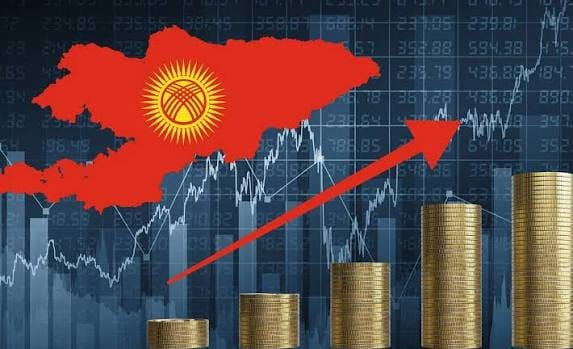
Kyrgyzstan’s economy is emerging as one of Central Asia’s most compelling growth stories, offering significant opportunities alongside important sustainability challenges.
In the first half of 2026, the country recorded strong economic performance, with GDP growth reaching approximately 11.9% year-on-year. This momentum is supported by rising investments and tangible government efforts to improve the investment climate through legal reforms, the establishment of special investment zones such as Tamchy, tax incentives, and strengthened international partnerships.
Fixed capital investments from January to June 2026 reached 204.4 billion soms, marking growth of about 1.64 times compared to the same period last year, according to preliminary data from the National Statistical Committee.
This increase was driven by both domestic sources (166.7 billion soms, a 1.5-fold increase) and external sources (37.6 billion soms, ×3.2). Notably, 55.8% of these investments went into housing construction. Remittances from Kyrgyz migrant workers abroad — particularly in Russia — are also likely playing a significant role in supporting this housing boom. These inflows, often recorded as domestic capital, help blur the line between purely local investment and external financial influence.
This heavy concentration on real estate requires careful scrutiny. While it reflects genuine demand driven by population growth and urbanization, it also raises legitimate concerns about a potential real estate bubble, particularly with the sharp rise in external financing. The central question is whether this inflow represents productive investments or carries risks of increasing external financial vulnerability.
In similar emerging economies, over-reliance on the real estate sector has sometimes led to financial imbalances. Therefore, this risk should be a priority consideration for policymakers.
The remaining investment distribution appears more balanced: transport 15.1%, mining 6.7%, energy 4.7%, and education and manufacturing 4.3% each, though investment remains geographically concentrated in Bishkek, Jalal-Abad, Issyk-Kul, and Chui.
This growth is further supported by the Guarantee Fund (OJSC), which over the past decade has helped mobilize more than 6.9 billion soms in loans for 232 exporting enterprises, with the majority directed toward manufacturing and agriculture.
In 2025, exporting companies received 177.2 million soms in guarantees, unlocking 478.7 million soms in financing. In the first quarter of 2026, women entrepreneurs received 32% of the guarantees, contributing to over 15.3 billion soms in total mobilized financing for women-led projects — a significant socio-economic achievement.
One of the most promising initiatives is the Green Guarantees Project worth $59 million, launched in partnership with the World Bank (agreement signed on June 11, 2026), which targets renewable energy, energy efficiency, and sustainable agriculture.
Overall, the figures are encouraging, and government efforts to enhance the investment environment are clear. Nevertheless, the current growth model carries the risk of “unbalanced growth.” Over-dependence on real estate and external financing could produce short-term gains at the expense of long-term stability.
Kyrgyzstan currently has genuine investment momentum. To transform this into sustainable and inclusive development, policymakers should:
Allocate at least 25% of public investments to green projects in rural and remote areas.
Reduce excessive reliance on external financing in the real estate sector and redirect more resources toward manufacturing and technology.
Expand support programs for women entrepreneurs to at least 40% within the next three years.
Develop a national strategy for more equitable geographical distribution of investments.
Growth is underway, and the window of opportunity is open. The coming years will determine whether Kyrgyzstan succeeds in converting this investment surge into genuine, sustainable development — or whether it leads to new economic imbalances. The risks are known, the potential is significant, and the choice rests with decision-makers.
*Abdulhamid Hamid Al-Kba Opinion Writer Specializing in Central Asia and Azerbaijan Affairs



 comment replay








 الرجاء الانتظار ...