Dr. Bety Al-Saqarat
The Blue Economy is no longer viewed simply as an economic model based on marine activities such as shipping, fisheries, and coastal tourism. It represents a broader vision that connects economic development with the protection of marine ecosystems, recognizing that healthy oceans and coastal environments are essential foundations for long-term prosperity, climate resilience, and sustainable growth.
When people think of the Blue Economy, they often imagine countries with vast coastlines and extensive marine resources. Jordan, with only 27 kilometers of coastline along the Gulf of Aqaba, may seem an unlikely contender. Yet these 27 kilometers hold global significance, serving as the country’s sole maritime gateway, a hub for international trade and tourism, and home to one of the world’s most scientifically valuable coral reef ecosystems.
Jordan may appear to have limited opportunities in the Blue Economy, with only 27 kilometers of coastline along the Gulf of Aqaba. Yet these 27 kilometers represent far more than a narrow coastal strip. They are Jordan’s only maritime gateway, a center for international trade, a destination for global tourism, and a unique natural laboratory for scientific research and climate adaptation.
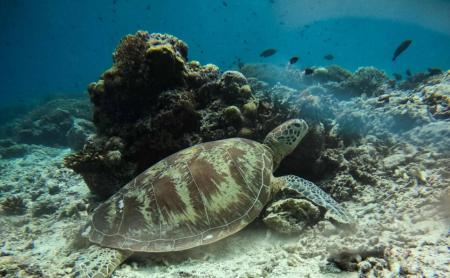
Aqaba’s significance lies in the exceptional relationship between its natural resources and economic potential. The Gulf of Aqaba hosts one of the most distinctive marine ecosystems in the northern Red Sea, with approximately 157 species of reef-building corals and around 500 fish species. The Aqaba Marine Reserve represents an important effort to protect this biodiversity and maintain the ecological value of this unique environment.
The coral reefs of Aqaba have attracted global scientific attention due to their remarkable thermal resilience. At a time when many coral ecosystems around the world are experiencing increasing stress from rising sea temperatures and repeated bleaching events, Aqaba’s coral communities have demonstrated an unusual capacity to tolerate thermal stress. This does not mean that they are immune to climate change, but it highlights their scientific importance as a natural laboratory for understanding coral adaptation and future conservation strategies.
The value of Aqaba extends beyond its living marine ecosystems. Its underwater landscapes and marine sediments provide valuable records of past environmental and climatic changes. Sediments act as natural archives, preserving information about environmental conditions, coastal evolution, and interactions between natural processes and human activities. Understanding these records is essential for improving predictions of future coastal changes and strengthening climate resilience.
This combination of biodiversity, geology, and scientific value provides Aqaba with a unique opportunity to develop sustainable and knowledge-based tourism. The attraction of Aqaba is not limited to its coral reefs and diving sites; its geological heritage and underwater landscapes provide additional opportunities for scientific tourism, environmental education, and responsible marine recreation.
Aqaba is also becoming increasingly important in Jordan’s broader sustainability and resilience strategies. The planned Aqaba–Amman Water Desalination and Conveyance Project represents one of the country’s major infrastructure initiatives, designed to provide approximately 300 million cubic meters of desalinated water annually, including 250 million cubic meters for Amman and 50 million cubic meters for Aqaba, through a pipeline extending approximately 438 kilometers. Such initiatives demonstrate the strategic role of Aqaba in supporting Jordan’s water security, climate resilience, and sustainable development goals.
However, the future of Aqaba’s Blue Economy depends on achieving a careful balance. Within only 27 kilometers of coastline, multiple activities must coexist: ports, tourism, urban development, conservation areas, scientific research, and major infrastructure projects. This requires integrated coastal management based on scientific evidence, environmental responsibility, and long-term planning.
One of Aqaba’s greatest assets is the availability of long-term environmental datasets and continuous monitoring efforts. Observations of coral reef health, seawater quality, marine sediments, biodiversity changes, and coastal dynamics provide essential information for understanding environmental trends and ecosystem responses to climate change. Transforming these data into practical management tools will be critical for ensuring that economic development strengthens rather than threatens the natural resources on which the Blue Economy depends.
Jordan’s Vision for a Future Blue Economy
Jordan’s Blue Economy vision reflects a broader commitment to sustainable development, innovation, and responsible investment. It is closely aligned with the national direction for economic modernization led by His Majesty King Abdullah II, which places sustainability, competitiveness, and high-value economic sectors at the center of Jordan’s future development pathway.
Within this vision, Aqaba represents a strategic platform where marine resources, tourism, logistics, scientific research, renewable energy, and environmental protection can be integrated to create new economic opportunities. Developing a resilient Blue Economy is not only about utilizing marine resources; it is about managing them wisely to ensure that future generations benefit from both economic growth and a healthy marine environment.
Universities and research institutions have a central role in transforming Aqaba into a regional model for climate-resilient Blue Economy development. Research on coral ecosystems, marine sediments, biodiversity, water quality, and coastal evolution provides the scientific foundation needed for informed decision-making. Collaboration between government institutions, academia, and the private sector can support innovation in marine conservation, sustainable tourism, geospatial technologies, and climate adaptation.
Jordan’s experience demonstrates that the success of a Blue Economy is not determined by the length of a nation’s coastline, but by how effectively it values, protects, and manages its marine resources. Through science-based governance, sustainable investment, and continued collaboration among government institutions, academia, and the private sector, Aqaba’s 27 kilometers can become a global model for climate-resilient coastal development and responsible Blue Economy growth.
With its climate-resilient coral ecosystems, unique marine geological heritage, strategic infrastructure, scientific capacity, and commitment to sustainability, Aqaba has the potential to transform a limited coastline into a resource of global significance. The message is clear: in the Blue Economy, success is measured not by the number of kilometers along the coast, but by the vision, knowledge, and responsibility with which those kilometers are managed.
*Dr. Bety Al-Saqarat- Professor of Sedimentology, Paleoclimatology and Environmental Change- The University of Jordan




 comment replay










 الرجاء الانتظار ...