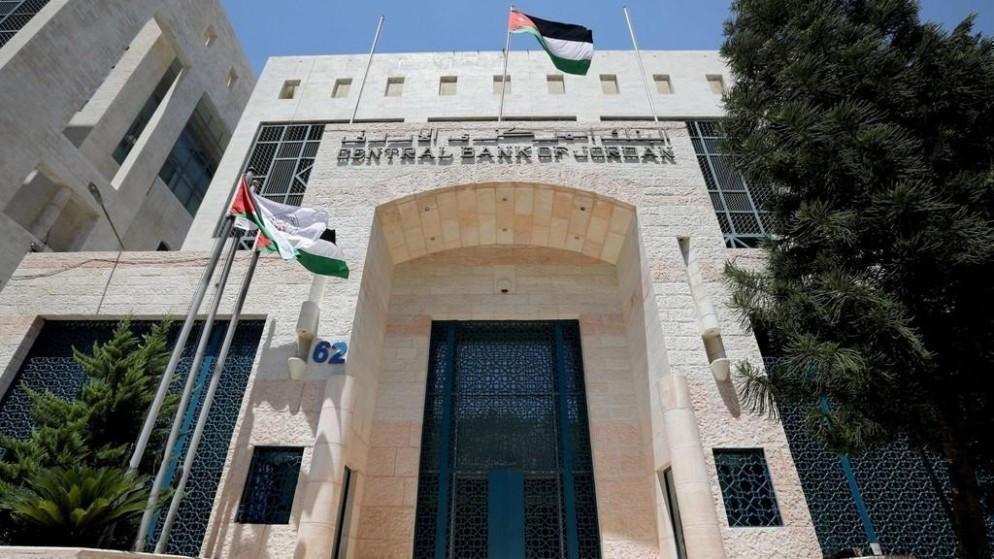
Ammon News - The Central Bank of Jordan (CBJ) maintained its benchmark policy rate at 5.75 percent on Thursday, leaving all other monetary policy rates unchanged following an assessment of domestic and global economic and financial conditions.
The decision, taken during the Open Market Operations Committee's fourth meeting of 2026, reflects the CBJ's continued focus on preserving monetary stability while maintaining alignment between domestic interest rates and prevailing regional and international market conditions.
The committee reaffirmed that it will continue to closely monitor regional and global economic and monetary developments and stands ready to adopt any measures necessary to safeguard monetary stability.
It also highlighted the JD760 million package of pre-emptive measures introduced by the Central Bank in April, noting that the interventions have enhanced the resilience of the Jordanian economy in the face of external challenges.
The committee said the latest data point to the continued strength of Jordan's monetary fundamentals, led by foreign exchange reserves, which reached $27.2 billion at the end of May 2026, an increase of $1.7 billion compared with the end of 2025.
The reserve position provides import cover equivalent to 9.5 months of the Kingdom's goods and services imports, reinforcing external sector stability.
Inflationary pressures also remained subdued, with the consumer price index rising by 1.88 percent during the first five months of 2026, compared with 1.97 percent during the corresponding period of 2025.
The committee further noted that the Jordanian banking sector continues to demonstrate solid liquidity buffers, strong profitability and comfortable capital adequacy ratios, underscoring the sector's financial soundness.
External sector indicators also showed positive momentum, with remittances from Jordanians working abroad increasing by 13.3 percent during the first four months of 2026 to reach $1.6 billion.
National exports expanded by 1.6 percent year-on-year to $3 billion during the first quarter of the year, reflecting continued resilience in external demand.
Tourism receipts, however, declined by 9.2 percent to approximately $2.8 billion during the first five months of 2026, primarily due to the impact of the U.S.-Iran conflict on regional travel activity.




 comment replay










 الرجاء الانتظار ...