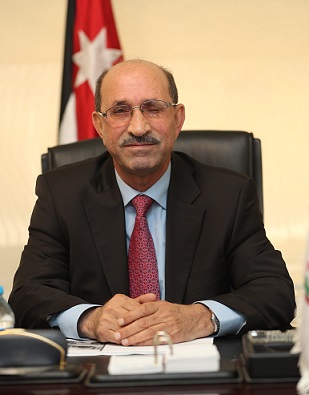
Dr. Hamad Kasasbeh
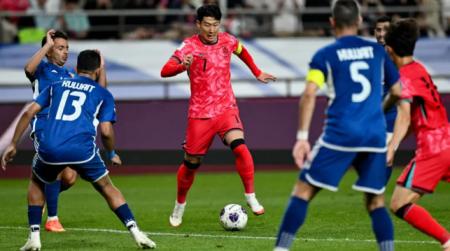
Jordan’s participation in the World Cup was not merely a sporting event, even if the result against Austria was not what Jordanians had hoped for. What matters most is that Jordan reached a global level that seemed distant only a few years ago. This achievement did not happen by chance; it was the result of a clear goal, organized training, accumulated progress, and confidence in local capabilities. This experience deserves to be read beyond the football field, because it shows that limited resources can be turned into real achievement when they are managed with a team mindset.
The economy is not very different from a successful team. It does not advance through wishes or scattered initiatives, but through a clear vision, defined roles, harmony among institutions and sectors, and continuous monitoring of results. Just as a team aiming for the global stage knows where it wants to go and how to measure its progress, the development path needs clear goals in employment, growth, exports, investment, and productivity, so that people can feel the impact in jobs, income, and prices.
The first lesson from Al-Nashama’s experience is that a clear goal changes behavior. When reaching a global level becomes a real objective, the approach to training, selection, preparation, and match management changes. In development as well, it is not enough to speak generally about growth. Growth must be translated into practical targets: How many jobs do we want to create? Which sectors can create them? How can productivity be raised? And how can exports, services, tourism, and agriculture contribute more to national income?
The second lesson is that self-reliance does not mean isolation or rejecting partnerships; it means that building must begin from within. Al-Nashama did not wait for ideal conditions in order to improve. They invested in what was available and raised the level of organization, confidence, and discipline. Jordan, too, has real sources of strength: its people, location, tourism, agriculture, education, services, experience, and ability to adapt. These strengths do not need to be rediscovered as much as they need to be connected, organized, and directed.
From a practical perspective, Jordan’s economy can be viewed as one integrated system rather than a group of separate sectors. Agriculture becomes stronger when linked to food manufacturing and exports. Tourism grows more when integrated with transport, services, and promotion. Education becomes more effective when connected to the labor market. Small enterprises expand when they have access to finance, markets, and technology. At that point, sectors move as one team, not as separate players on the same field.
Here, the idea of the productive gap becomes clear. Jordan does not lack potential, but it needs to increase the degree to which this potential is used and connected. The gap is not in the absence of capabilities, but in how much of those capabilities are transformed into production, employment, and added value. Reducing this gap begins with activating underutilized capacities, linking education to job opportunities, and turning agriculture, tourism, and services into productive and integrated sectors whose impact appears in growth and employment.
This highlights the importance of having a clear implementation mechanism that connects ministries, institutions, and the private sector around specific goals. The point is not to create a new body or add administrative complexity, but to strengthen coordination, follow-up, and the measurement of results. Just as a team needs a technical staff that reads the match and adjusts the plan, the development path needs continuous monitoring of implementation, identification of obstacles, and clarity on what has been achieved and what still needs improvement.
Trust is also a decisive factor in both sports and development. A player who believes he can compete performs differently, and the same applies to investors, young people, farmers, and manufacturers. Development requires trust in laws, trust that work and production are worthwhile, and trust that opportunity is possible. When citizens see plans reflected in jobs, income, and services, trust moves from being a general slogan to becoming real productive energy.
In conclusion, Al-Nashama’s experience offers a lesson that goes beyond football: achievement does not always require vast resources as much as it requires a clear goal, coordinated teamwork, confidence in local capabilities, and serious follow-up on results. Perhaps Jordan’s development path today needs the same spirit: a spirit that believes reducing the productive gap begins with making better use of what we already have, organizing it within one plan, and transforming it into better jobs and income for people. Then the question is no longer: What does Jordan lack? Rather, it becomes: How can we use what we have to build a stronger economy, wider opportunities, and a better life for people?



 comment replay










 الرجاء الانتظار ...