Ammon News - Abdulhamid Hamid Al-Kba- In recent years, digital transformation has become the real measure of a country’s strength. It is no longer enough to have natural resources or traditional industries; rather, the winning countries are those that produce knowledge, develop technology, and transform data into real economic value.
In Central Asia, Kazakhstan, Uzbekistan, and Kyrgyzstan have made clear progress in building digital innovation hubs, while Tajikistan is still in the early stages of laying the foundations.
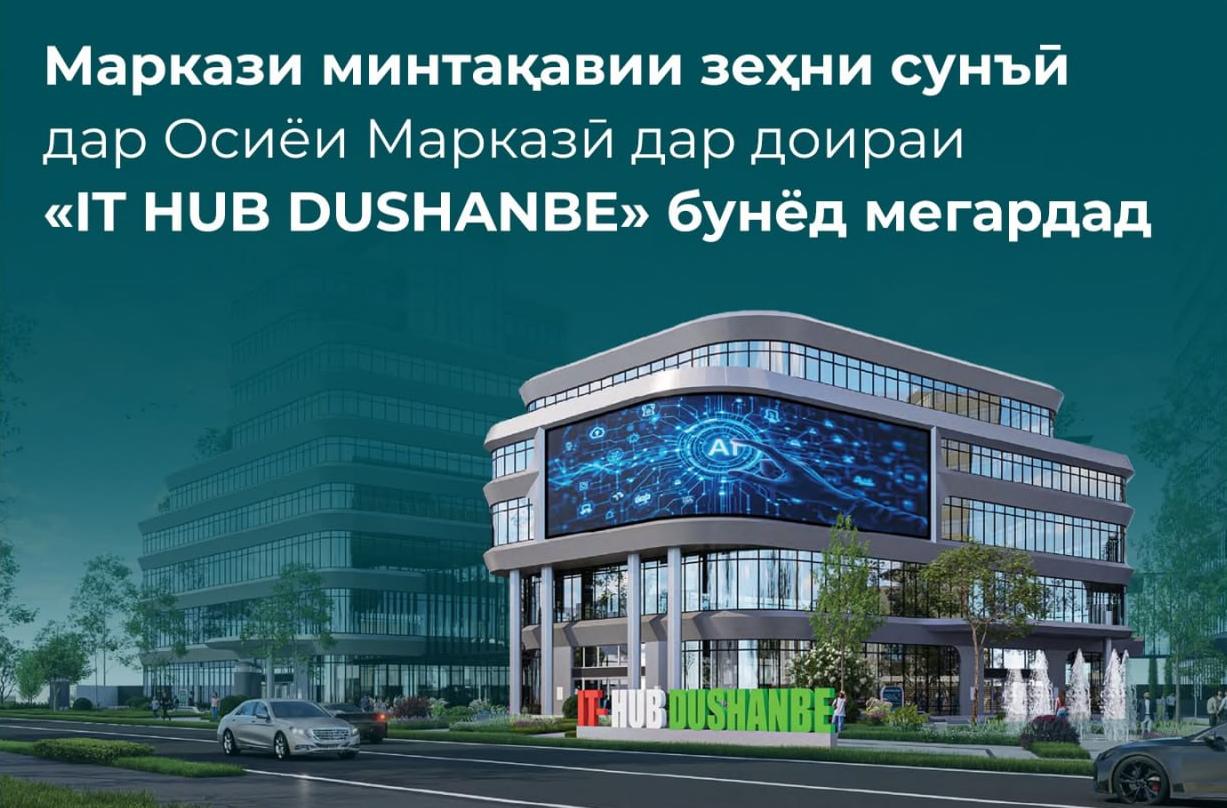
However, Dushanbe has begun to show increasing interest in artificial intelligence and tech entrepreneurship. Among these efforts, the “Information Technology Center in Dushanbe” stands out as one of the most ambitious attempts to reshape the Tajik economy and move it from reliance on traditional resources toward a knowledge- and innovation-based model.
However, the road is still long. Internet coverage in Tajikistan does not exceed about 41.6% of the population, a figure that reflects the scale of existing challenges.
Nevertheless, there are clear indicators of progress. The number of electronic payment tools increased from about 1.6 million in 2016 to more than 6 million in 2023, while the volume of transactions increased more than fivefold. The Electronic Commerce Law issued in 2022 also provided an important legal boost to digital activity.
Projections indicate that the digital payments market could grow by more than 25% annually until 2028, meaning that the initial foundations are already taking shape.
The “Information Technology Center in Dushanbe” project emerged as a result of extensive consultations with the Korea International Cooperation Agency (KOICA) in late 2025.
The complex will be built on an area exceeding 53,000 square meters in the Ismail Somoni district of Dushanbe. Construction officially began on June 9, 2026, with an investment estimated at around $100 million, combining government funding, foreign direct investment, and international technology companies.
The center is expected to accommodate more than 5,000 technology specialists upon completion, and it will include four main components: a specialized IT school for about 1,500 students, a startup incubator, a tech business center, and a regional artificial intelligence center supported by advanced computing infrastructure and a data center with a capacity of 75 megawatts.
What distinguishes this project is that it does not focus only on infrastructure, but also seeks to link education, research, and entrepreneurship within an integrated ecosystem. This could effectively help bridge the gap between university graduates and labor market requirements.
Tax exemptions and administrative facilitations may also make the center attractive to foreign companies and entrepreneurs.
It is also important to note that a technology city was already operating in Dushanbe since 2024, hosting companies in fintech and artificial intelligence, meaning that the new project represents a natural extension of an existing path rather than a completely new beginning.
The momentum of the project is reinforced by strong political support at the highest levels, as the state views digital transformation as a strategic choice rather than merely a development project. Tajikistan is also betting on its advantage of cheap and clean hydroelectric energy, which makes it suitable for operating data centers.
But the truth must be stated as it is.
The challenges are deep and structural. Tajikistan recorded an almost complete absence of patent registrations during 2023 and 2024, and the education system suffers from clear weaknesses, particularly in basic reading skills among children.
These gaps could turn major ambitions into mere slogans if they are not seriously addressed.
Some official statements about achieving a global position in artificial intelligence or semiconductor manufacturing still appear far removed from the current reality.
The gap between rhetoric and implementation capacity remains wide.
Nevertheless, there are important ongoing efforts, such as the “Soro” project, which aims to integrate artificial intelligence into education, in addition to the national artificial intelligence strategy extending until 2040, which targets raising the sector’s contribution to 5% of GDP. These are positive steps, but their success depends on first reforming education and building a genuinely qualified workforce.
In conclusion,
the “Information Technology Center in Dushanbe” represents a bold and important step. It may not achieve an immediate radical transformation, but it can be a real beginning. The true value of this project will not be measured by the size of investment or the scale of buildings, but by the ability of Tajik youth to turn this opportunity into successful companies and sustainable innovation.
The big question remains: Does Tajikistan have the will and capacity to turn this ambition into a tangible reality on the ground? The coming years alone will provide the answer.
**Abdulhamid Hamid Al-Kba/ Opinion writer specializing in Central Asia and Azerbaijan affairs



 comment replay










 الرجاء الانتظار ...