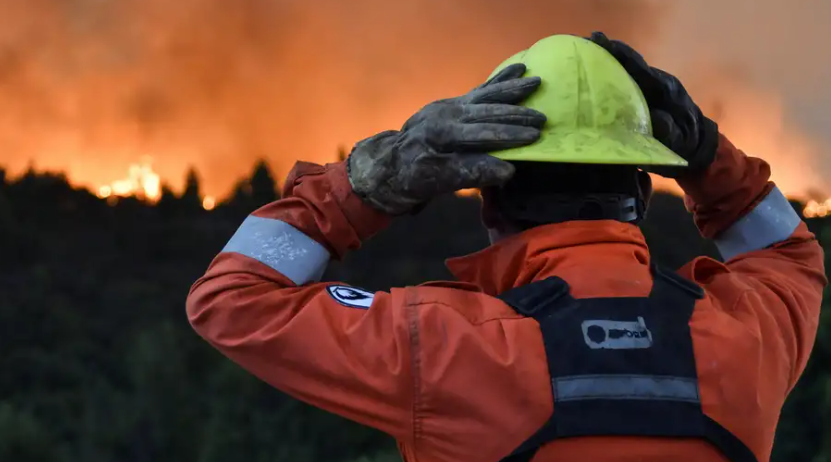
Ammon News - The world could see a "particularly severe year" of wildfires fueled by climate change and a potentially strong El Nino weather phenomenon after a record-breaking first few months of 2026, researchers warned Tuesday.
"This year the global fire season has got off to a very fast start," said Theodore Keeping, an extreme weather researcher at Imperial College London, who is part of World Weather Attribution (WWA), a network of climate scientists.
Wildfires have scorched 50% more than the average for this time of year, and the current area burnt by wildfires globally is more than 20% higher than the previous record set since tracking began in 2012, he said.
Record-breaking burn areas have been observed in almost all countries in West Africa and the Sahel region.
"Overall, 85 million hectares [around 328,000 square miles] have burned in Africa this year, compared to the previous record of 69 million hectares," Keeping said.
Heavy rain provides more fuel for wildfires later on
During the last growing season, these areas received unusually high seasonal rainfall, fueling grass growth that then served as kindling for fires.
"In addition, the severe droughts and heat waves we've seen over the last few months have meant that fires are more likely to occur in lusher, generally less fire-prone areas," Keeping added.
This swing from wet to dry, called "hydroclimate whiplash," is increasing in West Africa, he said.
The other major contributor to the global fire season has been Asia, with massive wildfire outbreaks in India, Southeast Asia and northeastern China. Asian wildfires have so far burned nearly 40% more than the previous record year.
The US and Australia have also experienced unseasonably high burnt areas so far in 2026.
Scientists predict a 'super' El Nino for 2026
This all comes before a potential "super" El Nino that's expected to hit later this year. The El Nino weather phenomenon is the warm phase of a natural climate pattern in the Pacific Ocean and trade winds that affects global weather.
Forecasts say that there is a 61% chance that El Nino will emerge during the May-July period and stay at least until the end of the year, if not longer.
DW



 comment replay









 الرجاء الانتظار ...