Ammon News - By Abdulhamid Hamid Al-Kba- Opinion writer specializing in Central Asia and Azerbaijan
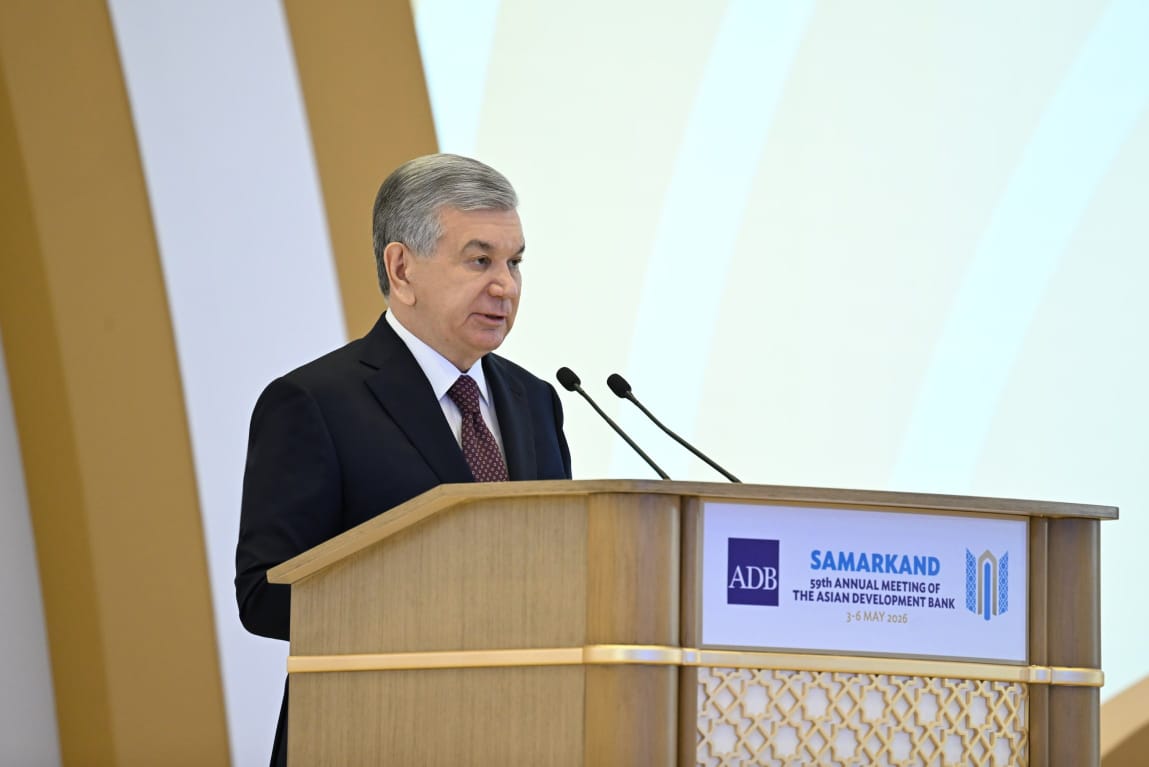
Uzbekistan is quietly redefining its role in Eurasia — and Samarkand is where it is making that statement. In a regional and international moment marked by the reshaping of economic balances and supply chains, the city’s hosting of the 59th Annual Meeting of the Board of Governors of the Asian Development Bank (ADB) reflects more than diplomatic visibility; it signals a deliberate attempt by Tashkent to position itself as a credible economic actor at the crossroads of regional transformation.
The event itself goes beyond a traditional financial gathering. It serves as a politico-economic platform that captures the depth of Uzbekistan’s strategic shift since 2016, when, under the leadership of Shavkat Mirziyoyev, the country launched a series of structural reforms aimed at reopening the economy and embedding it more firmly within global markets. These reforms were not merely technical adjustments, but part of a broader effort to redefine the state’s economic identity and external engagement.
What stands out most in the official Uzbek discourse is the emphasis on the social outcomes of the reforms, foremost among them the reduction of the poverty rate from around 35% to 5.8% in less than a decade. This figure — regardless of the potential debate surrounding its methodology — reflects a clear shift in the state’s priorities: moving beyond merely achieving growth to attempting to distribute its fruits more equitably. This is a relatively rare transformation in emerging economies, which are often accused of prioritizing macroeconomic indicators at the expense of the social dimension.
Yet what is more important than the numbers is what lies behind them. The rise in the size of the economy to $147 billion, the doubling of exports, and the inflow of approximately $150 billion in foreign investments are not merely growth indicators. They are evidence of Uzbekistan’s success in rebuilding confidence — the rarest currency in transitional economies.
The new partnership agreement with the Asian Development Bank, worth $12.5 billion until 2030, clearly reveals the next phase of this transformation. Priorities are no longer limited to traditional infrastructure, but now extend to more complex and impactful sectors such as the mortgage market, empowering the private sector, promoting youth and women’s entrepreneurship, and investing in education and human capital. These shifts indicate an advanced awareness that sustainable growth is not built by spending alone, but by building people and institutions.
Strategically, Uzbekistan is seeking to capitalize on its geographic location as a vital link in what is known as the New Silk Road. This comes at a time when global supply chains are facing unprecedented pressures. With rising logistics costs worldwide, Central Asia is transforming from a marginal transit zone into a competitive hub among major economic powers. It is here specifically that Tashkent seeks to present itself as a stable and reliable center, capable of attracting investments and securing trade flows.
Nevertheless, the path is not without challenges. Regional competition to attract investments and trade corridors is intensifying. Accelerating institutional reforms — particularly regarding transparency and market governance — will remain a decisive factor in determining the sustainability of this momentum. Added to this is the challenge of climate change, which imposes increasing pressure on natural resources, especially in a region already suffering from environmental fragility.
In my view, Samarkand today represents more than just a historic city hosting an international event. It reflects a transitional phase in Uzbekistan’s own identity — a shift from a relatively closed economy to an ambitious one seeking to seize an advanced position in the regional and international economic system.
If Tashkent succeeds in maintaining its balance between accelerating growth and strengthening social justice, and between economic openness and protecting internal stability, then it is poised to become, in the coming few years, one of the most prominent success stories in Central Asia — not only as a model of growth, but as a model for managing transformation.
In conclusion, the Samarkand meeting cannot be read in isolation from this broader context. It is not a passing station, but a clear signal that Uzbekistan has decided to become an active participant in shaping the features of the regional economy, rather than merely a recipient of its repercussions.



 comment replay










 الرجاء الانتظار ...