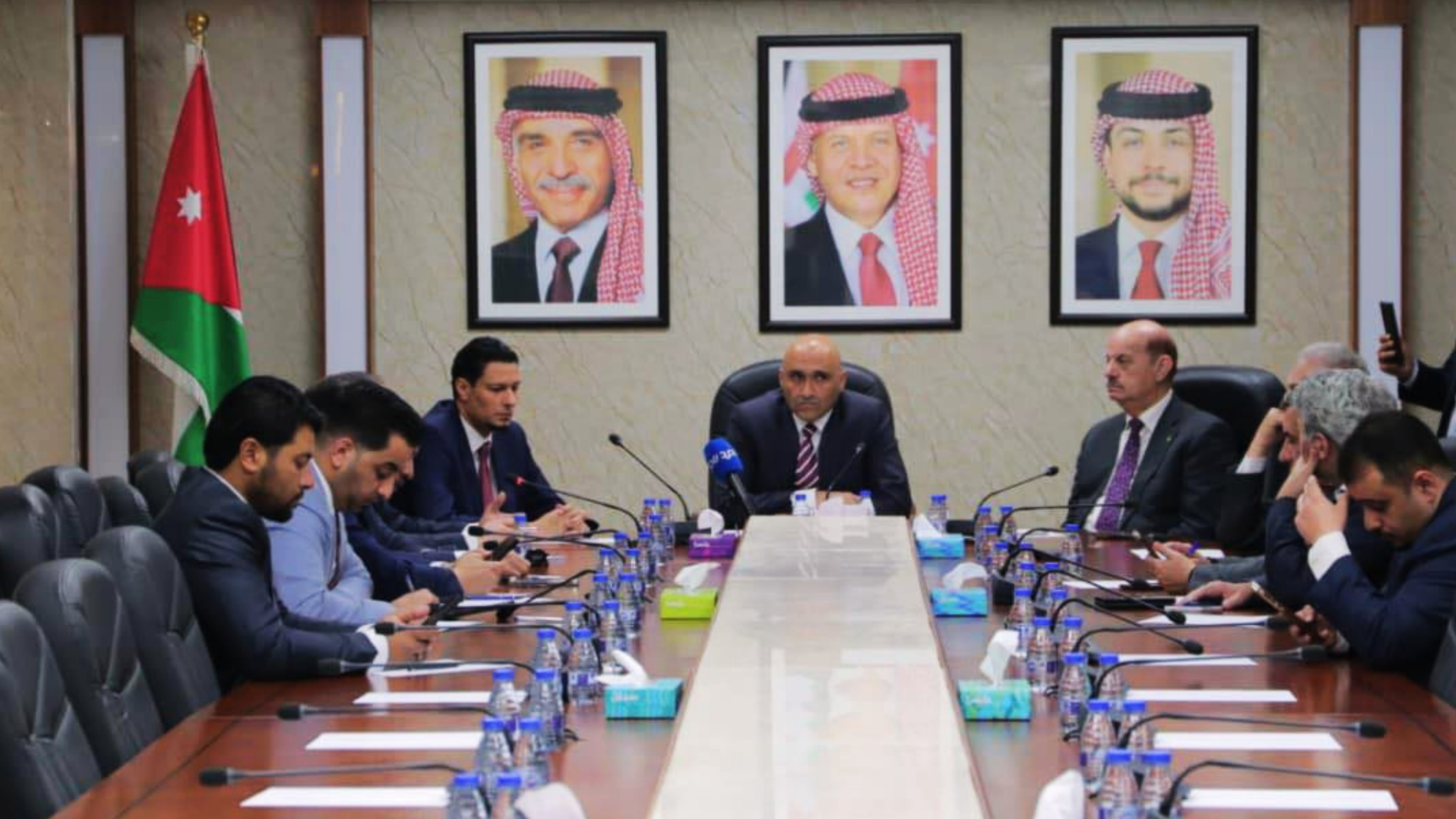
Ammon News - The Lower House Health and Food Committee on Wednesday discussed with Libyan officials ways to expand cooperation in the health sector and enhance joint coordination.
During a meeting chaired by MP Ahmad Sarahneh with Libyan Chargé d’Affaires Mohammad Abu Khazam, Health Attaché Abdulhamid Bin Haj, and embassy attaché Adel Al-Aqabi, the committee reviewed mechanisms to improve joint work and address challenges facing Libyan patients currently treated in Jordan.
Sarahneh stressed the "deep-rooted and brotherly" Jordanian-Libyan ties, underscoring the Kingdom’s commitment, under His Majesty King Abdullah II's directives, to advance cooperation across sectors and streamline procedures to serve Libyan nationals and overcome any obstacles.
He also called for strengthening cooperation in the health sector, including attracting medical professionals and providing treatment services to Libyan patients in Jordanian hospitals, while addressing possible challenges during treatment in coordination with relevant authorities.
Sarahneh called for expanding cooperation to include the tourism sector to further bolster mutual economic and social ties.
Meanwhile, committee members noted the need to "broaden" health cooperation, mainly in medical education, clinical training, and staff exchange, to improve the two countries' healthcare services.
Abu Khazam, in turn, said medical services provided to Libyan patients in Jordan are "well-organized," stressing the importance of regulating patient arrivals amid the Kingdom’s "advanced" healthcare services.
He stated direct flights operate between Libyan cities and Jordan at a rate of around 10 flights per week, with plans to increase the figure to enhance mobility and cooperation.
Valuing Jordan’s efforts in supporting Libyan nationals, he praised the "strong" bilateral relations, particularly in the health sector, amid growing numbers of Libyan patients seeking treatment in the Kingdom and rising confidence in its medical services.
Bin Haj stressed the importance of facilitating procedures for Libyan patients, while Al-Aqabi underlined the need to regulate relevant processes to improve coordination and enhance joint performance. Petra



 comment replay












 الرجاء الانتظار ...