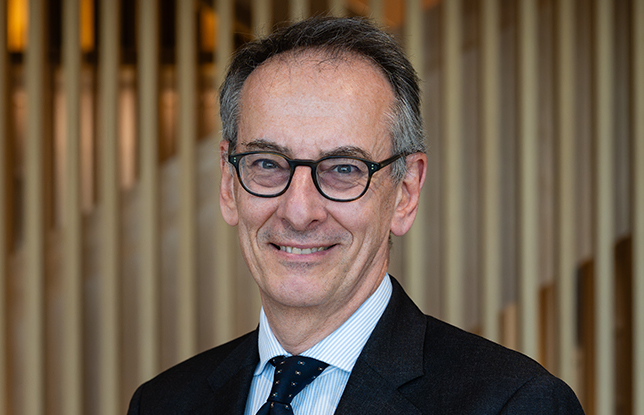
Ammon News - The European Bank for Reconstruction and Development's Vice President for Banking, Matteo Patrone, is visiting Jordan on Tuesday to meet senior government officials and clients from the public and private sectors, reiterating the Bank’s unwavering commitment to supporting the Jordanian economy during this highly challenging period for the Middle East.
President Patrone will meet with Prime Minister, Dr. Jafar Hassan, Minister of Planning and International Cooperation and EBRD Governor, Zeina Toukan, Minister of Water, Raed Abu Soud, Minister of Energy and Mineral Resources, Saleh Al-Kharabsheh, and Managing Director of NEPCO Sofian Al-Bataineh,
During his visit, he will sign two memoranda of understanding aimed at strengthening energy and water security in Jordan.
He will also hold roundtable discussions with representatives of the business community to obtain first-hand information about their immediate priorities and how the Bank can provide targeted support.
Ahead of his visit, Vice President Patrone said: “This visit underscores the strategic importance of Jordan and our steadfast commitment to backing its economy and key sectors amid growing instability in the region. Our thoughts are with all communities affected by the conflict in the region. We sincerely hope for a lasting ceasefire that can pave the way for diplomacy, stability and recovery.”
Earlier this month, the EBRD launched a regional conflict response package. The Bank is aiming to deploy €5 billion in 2026 to support economies that are directly affected by the war in the Middle East, including Iraq, Jordan, Lebanon and the West Bank and Gaza, as well as a group of neighbouring countries including Egypt, Türkiye, Armenia and Azerbaijan.
Since it began operating in Jordan in 2012, the EBRD has provided more than €2.2 billion of financing through 84 projects, supporting the energy sector, critical infrastructure, the banking sector and companies of all sizes, with 73 per cent of those funds going to the private sector. In 2025, the Bank more than doubled the number of new projects in the country relative to 2024 and delivered over €200 million (largely to the private sector) while also mobilising close to €110 million of funding from other parties.



 comment replay









 الرجاء الانتظار ...