Khalid Dalal
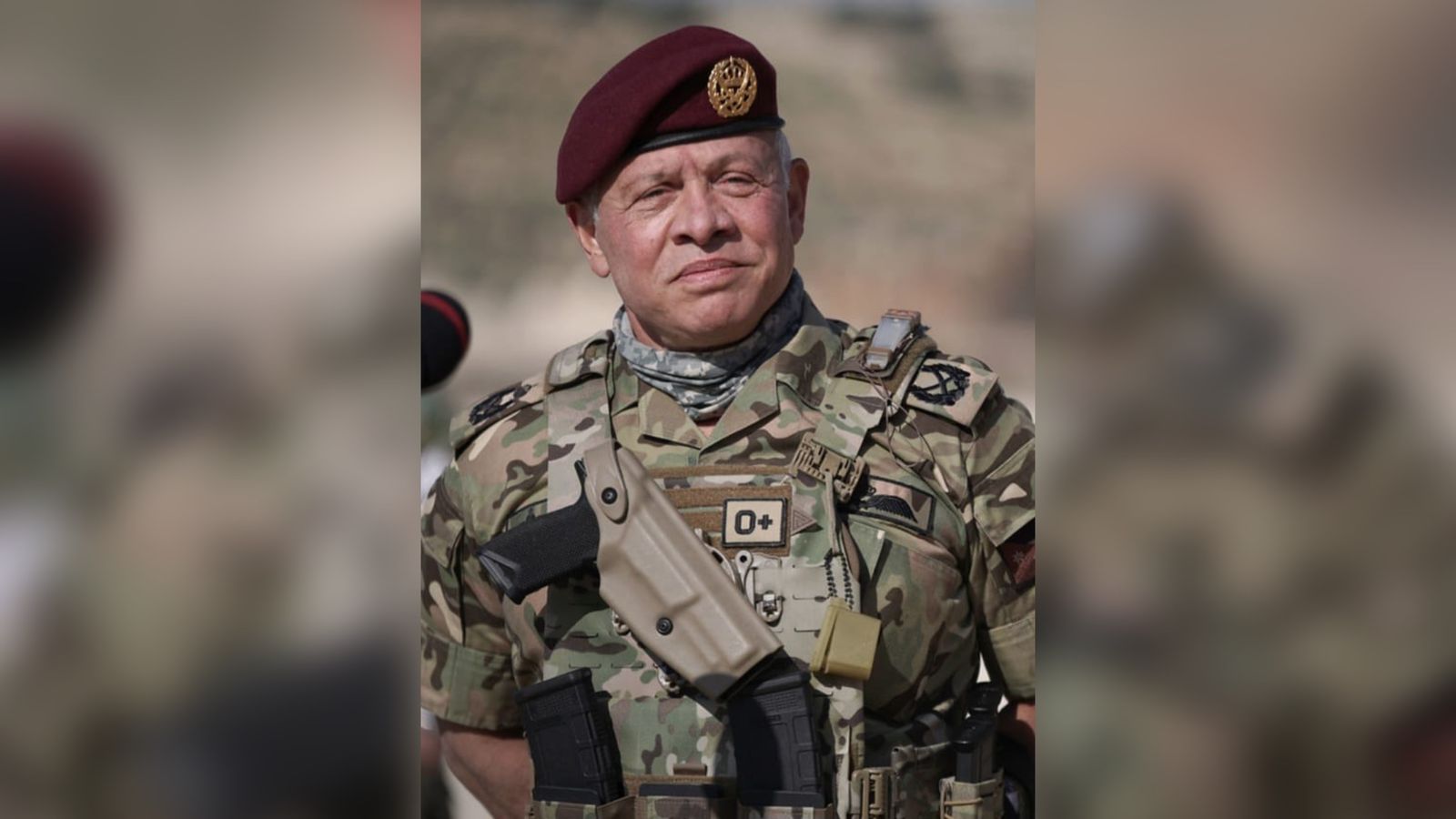
In times of danger, a true leader puts his stamp on the moment—not by measuring courage in words, but through precisely calibrated acts of solidarity. He shows that duty is not found in the safety of distance, but in presence when it matters most. That leader is His Majesty King Abdullah II, who has demonstrated what it truly means to stand with his fellow leaders in the Arab Gulf capitals during a period of severe regional escalation, following more than three weeks of Iranian missiles and drones breaching the sovereignty of Arab states.
In mid-March, King Abdullah visited three Gulf capitals—Abu Dhabi, Manama, and Doha—at a time when Iranian threats and cross‑border attacks had made the skies over the region contested and tense. He did so while the safer course would have been to remain in Amman and let ambassadors carry the message. Instead, he carried it himself. He sat with his fellow leaders in the very capitals facing the brunt of the crisis, broke bread with them during the holy month of Ramadan, and demonstrated a solidarity that reflects the spirit of a truly courageous leader.
In Abu Dhabi, he met with President Sheikh Mohamed bin Zayed Al Nahyan. In Manama, he conferred with King Hamad bin Isa Al Khalifa. Later that same day, he was in Doha with Emir Sheikh Tamim bin Hamad Al Thani. In each meeting, the same theme emerged: the security of the Arab Gulf is indivisible from the security of Jordan. But the theme was not the message; the message was the man.
During the same period, Jordan itself faced security pressures, including drone and missile attacks by Iranian forces. His journey was thus an act of unity—a recognition that the threats facing the Gulf are threats facing the entire region, and that the response must be collective, embodied, and unequivocal.
This is the essence of a leader who acts in deeds. Since early March, the King has conducted dozens of diplomatic engagements, speaking with regional and world leaders. In each conversation, he delivered the same insistent message: de‑escalation, diplomacy, and respect for sovereignty.
Yet the King’s vision extends beyond the immediate crisis. In every meeting and every call, he returned to a set of deeper concerns that reveal the strategic mind beneath the statesman’s bearing. He warned repeatedly that the current escalation must not be exploited to restrict worshippers’ access to Al Aqsa Mosque, nor to create new facts on the ground in the West Bank and Gaza. He spoke of Jerusalem with the gravity of one who holds its custodianship as a sacred trust. He emphasized the need to support Lebanon’s stability, linking the security of one Arab state to the security of all. These were not secondary considerations; they were the framework within which he situated the immediate conflict. For a leader whose lineage traces directly to the Prophet Muhammad (peace be upon him), and who himself carries the title of Custodian of Jerusalem’s Islamic and Christian Holy Sites, such concerns are not merely political. They are matters of inherited responsibility, woven into the very fabric of his noble values.
It is this inheritance that gives the King’s actions their unique resonance. The Hashemite lineage is a living tradition of leadership that has, for centuries, placed duty above convenience and service above self. When King Abdullah travels to the Gulf in a moment of peril, he does so as the heir to a legacy that has always understood that the honor of the crown is measured not by the deference it receives but by the responsibility it willingly assumes.
The King’s presence in the Arab Gulf capitals during Ramadan—when family and faith call one inward—declares bravery more eloquently than any speech could.
This courage is not new to Jordanians. On March 21, Jordan marked the anniversary of the Battle of Karameh—a historic moment when the nation, led by the late His Majesty King Hussein bin Talal, may God bless his soul, stood firm against overwhelming odds and proved that dignity and resolve could turn the tide. Today, that same spirit lives in King Abdullah II, who, like his father before him, does not wait for the storm to pass but walks into it to stand with his people and his Arab and Muslim nation.
The weeks ahead will bring new challenges. The path to de‑escalation remains uncertain, and the forces that unleashed regional violence are still active. Yet for those who seek an example of what leadership ought to look like when tested by fire, the image of a king traveling to support his brothers—fasting, present, unflinching—will endure. He was the first to answer the call of duty. And in doing so, he reminded us that the measure of a leader is not only the oratory of his words but, more meaningfully, the courage of his deeds.
Khalid Dalal is an expert in strategic communication and international politics.



 comment replay




 الرجاء الانتظار ...