Abdulhamid Hamid Al-Kba
Astana – Kazakhstan has adopted a new constitution following a nationwiعde referendum held on March 15, 2026, with 87.15% of participating voters approving the changes, according to official results announced by the Central Referendum Commission on March 16.Out of approximately 12.48 million eligible voters, 9.127 million cast ballots, resulting in a turnout of 73.12%—one of the highest in recent national votes. Of the valid votes, 7,954,667 supported the new constitution, while 898,099 opposed it. An additionalغ 146,558 ballots were declared invalid. The commission confirmed the referendum's validity, noting that it met the required threshold of participation by more than half of eligible voters and secured majority approval in over two-thirds of regions, major cities, and the capital, Astana.
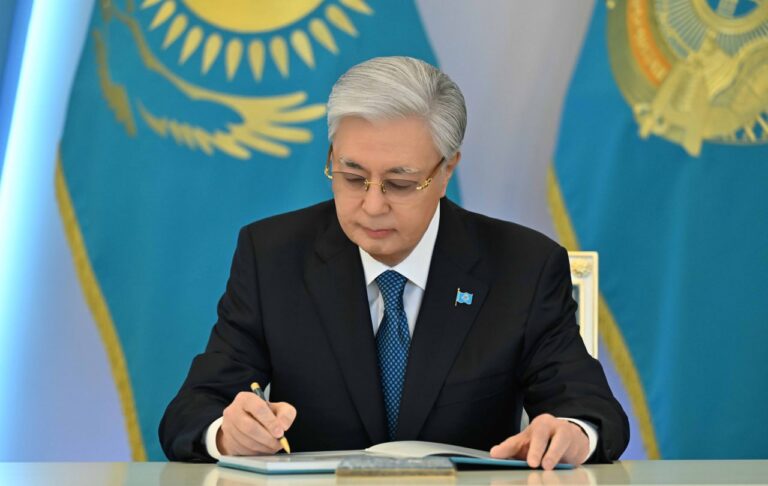
President Kassym-Jomart Tokayev signed the new constitution and a decree for its implementation, stating that it will take effect on July 1, 2026. He also designated March 15 as a national Constitution Day. In his remarks, Tokayev described the document as a "people's constitution," developed through broad public discussion and expert input, marking a historic step toward a "new Kazakhstan.
"The new constitution overhauls more than 80% of the existing 1995 framework (last significantly amended in 2022). Key changes include transitioning to a unicameral parliament (to be renamed the "Kurultai" or People's Congress), reinstating the vice-presidential post (abolished in 1996), and granting the president authority to appoint key officials—such as the central bank governor, intelligence chief, and Constitutional Court head—with parliamentary approval. It also establishes a new People's Council (Khalyk Kenesi), fully appointed by the president, with powers to initiate legislation and referendums. The reforms aim to enhance checks and balances, protect human rights, promote education, science, innovation, culture, andن environmental protection, while strengthening national sovereignty and the rule of law.
Tokayev emphasized the overwhelming public support, particularly from youth, and called the outcome a "strategic mandate based on trust" and the foundation for a new social contract amid global uncertainties. He announced extensive legislative follow-up, including submission of five constitutional laws to parliament on the presidency, the Kurultai, the People's Council, the capital's status, and regional administration. Over 60 existing laws will also be amended. The full legal and political transformation is expected to continue through this year and possibly into next, coinciding with upcoming parliamentary elections.
The president further declared a broad administrative amnesty—the first of its kind in Kazakhstan—with potential for additional criminal pardons covering minor offenses.
In his statement, Tokayev reaffirmed his commitment: "As President and guarantor of the constitution, I will do my utmost to ensure its full implementation and pledge to act faithfully in accordance with the new constitution. "The referendum follows political reforms initiated by Tokayev since 2022, following widespread protests, aimed at modernizing governance in Central Asia's largest country. While supporters hail it as a move toward greater stability and development, some observers and analysts express concerns that the changes could consolidate presidential authority, potentially allowing extended influence beyond the current term limit ending in 2029, despite official assurances that elections will proceed as scheduled.
The high approval and turnout underscore significant public backing for Tokayev's agenda, positioning the new constitution as a long-term framework for Kazakhstan's political evolution amid a complex regional and international landscape.



 comment replay










 الرجاء الانتظار ...