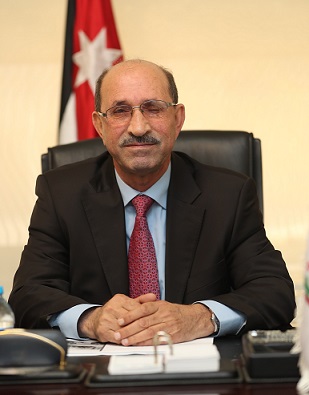
Dr. Hamad Kasasbeh
Stability in Jordan is often presented as a self-evident gain and a necessary condition for protecting the country in a turbulent regional environment. Yet the economic question that is rarely asked is this: who actually pays the cost of this stability? Is it the economy, through policies that constrain growth? Or the citizen, through declining purchasing power and limited opportunities? Or is the cost distributed in an unbalanced way between the two?
In the Jordanian case, stability has been a rational strategic choice. However, it has never been an economically cost-free one. The way stability has been managed and financed has played a decisive role in determining who bears its burden. When stability is funded through repeated fiscal tightening, expanded taxation, or the postponement of meaningful structural reforms, the cost does not remain within public finances. It gradually shifts to the real economy and ultimately settles on the citizen.
This impact is clearly reflected in household incomes. Economic estimates indicate that real income growth for Jordanian households in recent years has remained below 1 percent annually, a rate insufficient to offset rising living costs. This means that part of the cost of maintaining fiscal stability has effectively been transferred to citizens’ incomes, without being explicitly acknowledged as a deliberate economic policy.
From an economic perspective, stability cannot be separated from growth. Yet in Jordan, stability has often been treated as an end in itself rather than as a tool to enable economic activity. Over time, excessive caution in policymaking has slowed decision-making, reduced investment appetite, and weakened the economy’s ability to generate quality jobs. In this context, the economy is not paying the price of instability, but rather the price of excessive risk aversion.
This can be seen clearly in the prolonged delay in resolving key economic files, such as urban public transportation. Despite the well-known benefits of efficient public transport in reducing living costs and raising worker productivity, progress has remained slow and hesitant. As a result, high commuting costs continue to burden citizens on a daily basis, while the economy absorbs an indirect but persistent efficiency loss.
For citizens, the cost is immediate and tangible. Stagnant wage growth, rising living expenses, and limited access to quality employment are the practical outcomes of policies aimed at protecting financial stability without sufficiently stimulating growth. Over time, stability becomes an abstract concept, while daily economic pressures become a constant reality, widening the gap between economic discourse and lived experience.
At the same time, citizens are not the only ones paying this price. The Jordanian economy itself bears a significant share of the cost. Private investment hesitates, projects are postponed, and productive sectors operate below potential—not due to a lack of opportunities, but because of an economic environment that favors waiting over initiative. Thus, the economy pays through slower growth, while citizens pay through weaker incomes and fewer opportunities.
The real challenge in Jordan, therefore, is not choosing between stability and growth, but redesigning policies so that stability is not financed at the expense of citizens or economic dynamism. Instead, stability should be supported through reforms that raise efficiency and distribute costs fairly and transparently.
In conclusion, stability in Jordan is not an end in itself, but a means. When treated as a standalone objective, both citizens and the economy bear its cost. When managed as a foundation for growth and productivity, however, its cost becomes a long-term investment that delivers genuine economic and social stability. Stability that does not translate into economic momentum or tangible benefits for citizens remains incomplete, no matter how solid it appears on paper.



 comment replay











 الرجاء الانتظار ...