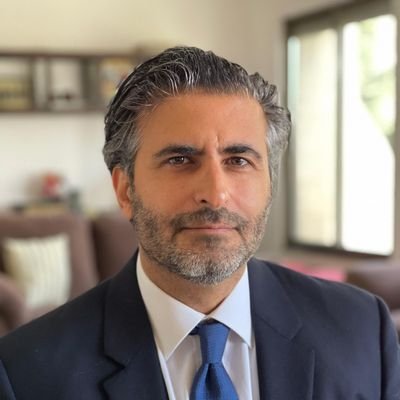
Dr. Amer Al Sabaileh
A new year begins while the region remains trapped in a cycle of open fronts, fronts that have neither fully erupted nor truly closed. These are theaters of escalation managed under carefully calibrated ceilings: not allowed to explode into all-out war yet prevented from returning to stable containment. If the current phase is to be defined with precision, it can best be described as the second stage of escalation, one that, according to most indicators from the West Bank, Lebanon, and Syria to Iran, is approaching its peak without reaching a decisive point of resolution.
Against this backdrop of gradual regional escalation, Washington is simultaneously redrawing the contours of the global landscape. The intensifying pressure on Iran, coupled with President Donald Trump’s explicit posture alongside the Israeli Prime Minister—widely interpreted as a renewed green light for re-targeting Iran—was not a passing moment. More significant was Trump’s return to direct language warning against the use of live fire on Iranian protesters, framing such actions as a potential trigger for direct American intervention. This rhetoric clearly reflects a growing U.S. determination to conclude the situation with Iran rather than merely manage it.
The American strategy—closely aligned in substance with the Israeli vision regarding Iran, its regional arms, and transnational networks—was built on the assumption that the twelve-day war was sufficient to push Tehran inward. That confrontation delivered serious blows to Iran’s regional influence, weakened its capacity for external maneuvering, and forced the regime to focus on reinforcing internal security, economic, and social pressures. As a result, Iran’s attempt to export the crisis into Israel and threaten the Gulf gradually backfired, transforming the country into a state increasingly preoccupied with defensive recalibration, while its leadership struggles to preserve political cohesion.
Within this framework, Washington relied on a combination of sanctions with deep socio-economic impact, sustained intelligence penetration, and the expansion of undeclared operations. These measures unfolded alongside rising public anger driven by deteriorating services, water scarcity, currency collapse, and economic hardship. This convergence coincided with the emergence of a more hostile international environment toward the Iranian regime, triggering internal protests at a moment of heightened strategic vulnerability. Consequently, Iran’s long-standing strategy of exporting crises outward has largely reversed, culminating in a complex internal crisis from which exit appears unlikely without genuine structural change.
At a broader level, the United States has pursued a gradual strategy of dismantling the Iranian axis internationally. This began with the recalibration of understandings with Russia, reflected in Washington’s approach to the war in Ukraine and the opening of broader economic cooperation in new global arenas. This trajectory has also created space for potential pragmatic understandings with China, granting Washington greater latitude to impose its strategic vision across multiple regions, particularly in Africa—Nigeria being one example—and Latin America.
Within this context, Venezuela has re-emerged as a key issue. The Trump administration applied pressure from the outset toward a fundamental shift in Caracas, as part of a wider approach to reshaping political trajectories in South America—an approach with which many states in the region have increasingly aligned. The issue here is not oil per se. Chevron has for years secured the largest share of Venezuelan crude exports, leading the Venezuelan leadership to believe that expanding this share and deepening U.S. economic influence could provide a pathway toward accommodation with Washington during moments of maximum escalation. The culmination of this has been the capture of President Maduro of Venezuela and his wife, who are now in US custody.
The persistence of the region in this prolonged second phase of escalation has begun to shape the nature of ongoing transformations. Protracted crises, increasingly taking fragmented and separatist forms—from Somaliland to southern Yemen, and from Sudan and Libya to Syria—indicate that escalation is no longer a temporary pressure tool, but an active factor in producing a new regional reality.
In this sense, the next phase—what may be termed the third stage of escalation—appears less about comprehensive solutions and more about political recognition of an imposed reality. The absence of credible containment efforts, combined with the inability of opposing forces to present viable alternatives, renders continued attrition and the expansion of interconnected crises the most likely scenario in the foreseeable future.



 comment replay









 الرجاء الانتظار ...