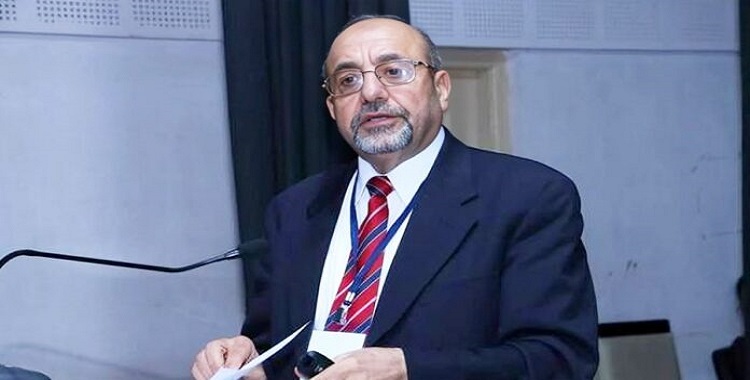
Prof. Dr. Faisal Odeh Al-Rfouh
As the Hashemite Kingdom of Jordan prepares to receive the Honorable Prime Minister of India, Shri Narendra Modi, on 15 December 2025, on a landmark state visit at the invitation of His Majesty King Abdullah II Ibn Al-Hussein, both nations stand at a decisive moment in their long and distinguished relationship. This visit is more than a ceremonial exchange between two governments. It is a meeting between two ancient civilizations—each bearing deep cultural memory, moral authority, and geopolitical significance—whose partnership today carries the potential to shape regional stability and global cooperation. Jordan, under His Majesty's wise leadership, has long embraced a foreign policy grounded in moderation, intercultural dialogue, and principled diplomacy. India, the world's largest democracy and an ascending economic and technological powerhouse, approaches the international order with a pragmatic, pluralistic, and peace-oriented vision. Together, their convergence represents a powerful foundation for constructive engagement in West Asia and beyond.
Jordan–India relations have evolved steadily and thoughtfully over the decades, shaped by historic exchanges, economic complementarity, shared heritage routes linking the Arab world with the Indian subcontinent, and mutual commitments to peace and development. In anticipation of Prime Minister Modi's visit, it is essential to revisit the historical depth of this partnership, examine the trajectory of economic and political cooperation, and reflect on the broader strategic questions shaping Jordan's expectations. These include India's potential role in mediating the Palestinian conflict, Jordan's ability to influence stability in the Indo-Pak context, India's regional responsibilities as a medical and technological leader, the enduring cultural affinities between both nations, and the economic parameters through which effective long-term partnerships can be built. The following analysis offers a comprehensive narrative that both honors the past and illuminates a forward-looking vision for Jordan–India relations.
Relations between Jordan and India formally began in 1950, yet the spiritual, cultural, and economic exchanges connecting the Levant and the Indian subcontinent reach much further back. From the early spice caravans and Silk Road routes that linked India's ports with Arabia's trade hubs, to the shared philosophical traditions of coexistence and tolerance, the two civilizations cultivated mutual awareness long before the modern state system emerged. In the post-independence era, diplomatic ties quickly expanded. Jordan admired India's anti-colonial struggle and its moral leadership in the Non-Aligned Movement under Nehru, while India respected Jordan's stability, moderation, and custodianship of religious heritage under the Hashemite monarchy. Early cooperation at the United Nations strengthened political dialogue. Over time, both nations incorporated their shared values—respect for sovereignty, peaceful resolution of disputes, and commitment to multilateralism—into a durable diplomatic framework.
High-level visits played a decisive role in shaping relations. His Majesty King Abdullah II's historic visits to India, especially in 2006 and 2018, elevated the partnership to new heights. His Majesty's influential address in New Delhi on moderation and coexistence resonated deeply within Indian society and reaffirmed Jordan's global role as a moral voice against extremism. Likewise, visits by Indian ministers deepened cooperation in mining, fertilizers, defense, digital technologies, and energy. These engagements laid the foundation for the strong and rapidly expanding relationship that Prime Minister Modi's visit now seeks to consolidate.
Jordan and India share profound political convergence grounded in moderation, international law, and multilateral diplomacy. Jordan's role as a stabilizing force in West Asia, combined with India's status as a global actor with balanced relations across the region, has created a unique diplomatic synergy. Both nations confront similar challenges: extremism, regional instability, economic transformation, and the need to build inclusive, knowledge-based societies. Political cooperation has grown steadily. Both capitals maintain frequent consultations on regional developments, particularly on issues concerning Jerusalem, the peace process, and regional security dynamics. India values Jordan's principled stance on conflict resolution and its consistent efforts to maintain regional stability, while Jordan respects India's balanced diplomacy and its tradition of strategic autonomy. Defense cooperation has expanded into intelligence sharing, counterterrorism training, and military education, reflecting shared concerns over transnational threats.
In an era of global power shifts, where new alliances are emerging, Jordan and India have an opportunity to articulate a joint voice for moderation, justice, and responsible global governance. As India's global stature rises—reflected in its G20 leadership, growing role in BRICS, and influence in the Global South—Jordan finds a natural partner whose values align with its own strategic approach to diplomacy and security.
The economic partnership between Jordan and India has grown remarkably in recent years, driven by mutual interests and deep structural complementarities. Bilateral trade exceeded USD 4.4 billion in FY 2022–2023, a dramatic rise from approximately USD 1.5 billion in 2017–2018. Jordan exports phosphates, potash, fertilizers, phosphoric acid, and chemicals, while India exports pharmaceuticals, machinery, textiles, automotive parts, food products, and petroleum derivatives. Joint ventures in the fertilizer and mining sectors remain central to the relationship, as Jordan’s natural resources are essential to India’s agricultural economy. Multibillion-dollar agreements between the Jordan Phosphate Mines Company, Arab Potash Company, and Indian firms highlight the strategic importance of these sectors.
Yet the potential extends far beyond minerals. Jordan seeks Indian investment in renewable energy, green hydrogen, ICT, AI, pharmaceuticals, logistics, and the Aqaba Special Economic Zone. India views Jordan as a stable gateway to the Levant, the Gulf, and North Africa. The Port of Aqaba, combined with Jordan’s improving investment climate, positions the country as a natural hub for Indian businesses looking to expand westward. As both nations pursue economic modernization—Jordan through Vision 2033 and India through rapid technological transformation—a shared economic future appears increasingly promising, with the USD 5 billion trade milestone well within reach.
Cultural, educational, and social relations form a vibrant foundation of the Jordan–India relationship. Indians are beloved in Jordanian society through cuisine, cinema, and cultural exchange, while Jordanians increasingly explore Indian literature, yoga, dance, and arts. Educational exchange has grown significantly through scholarships, ITEC training programs, and academic partnerships. People-to-people interactions—cultural festivals, tourism, university collaborations—continue to expand, building bridges of understanding and long-term affinity.
India is uniquely positioned to play a constructive role in the Palestinian issue, central to Jordan’s national security and identity. India’s historical support for Palestinian rights, combined with its balanced diplomacy and relations with Israel, gives it credibility as a potential mediator. Jordan sees India as a “bridge nation” capable of contributing to humanitarian, political, and development-oriented mediation. India’s global standing in the G20, UN, and BRICS offers platforms to advocate for international law and humanitarian protection, complementing Jordan’s custodianship over Jerusalem and its longstanding diplomatic efforts.
Jordan, while not seeking to mediate between India and Pakistan, can contribute through moral influence, diplomatic messaging, and advocacy for dialogue. Its balanced relations with both countries and its reputation for moderation allow it to serve as a voice of stability, drawing on its experience in conflict resolution and trust-building.
India’s emergence as a global medical and technological power brings responsibilities that align closely with Jordan’s needs. Affordable pharmaceuticals, vaccines, digital health solutions, AI technologies, cybersecurity systems, and water innovations represent areas where India can play a transformative regional role. Jordan, facing acute water scarcity and hosting large refugee populations, stands to gain from Indian expertise in desalination, irrigation, digital governance, and health innovation.
Cultural affinity and historical memory further enrich the relationship. Ancient maritime routes shared spiritual ideas, and centuries of trade have created a deep sense of civilizational connection. Strengthening this cultural dimension through academic partnerships, archaeological cooperation, joint exhibitions, and artistic collaboration can enhance soft power and reinforce political and economic ties.
Looking ahead, the economic future of the relationship rests on diversification, innovation, and sustainable cooperation. Fertilizers and minerals will remain essential, but sectors such as green energy, IT, biotechnology, agri-tech, digital services, and logistics represent new horizons. Jordan's stable environment and strategic location make it attractive for Indian investment, while India’s expertise supports Jordan’s development strategies. Improved connectivity and stronger private-sector engagement will inevitably push trade volumes beyond current aspirations.
Prime Minister Modi’s visit comes at a moment of global uncertainty but also immense possibilities. Guided by His Majesty King Abdullah II’s vision of coexistence and regional stability, Jordan stands ready to deepen its partnership with India—an emerging global power whose diplomatic, economic, and cultural values resonate strongly with Jordan’s own. This is a partnership rooted in history, animated by shared principles, and motivated by the desire for a peaceful and prosperous future. It is a partnership capable of shaping not only bilateral relations but also contributing significantly to regional and global stability.



 comment replay












 الرجاء الانتظار ...