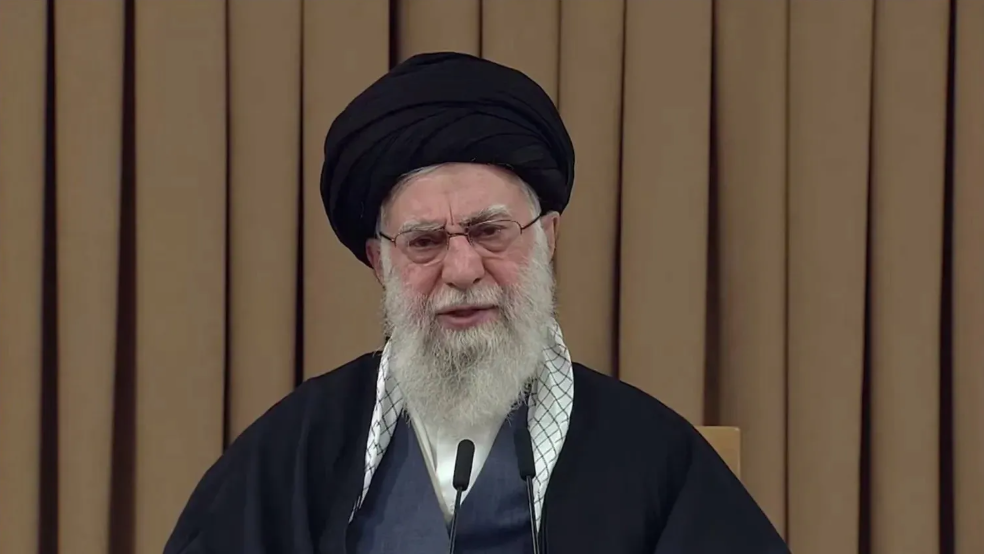
Ammon News - Iran’s Supreme Leader Ali Khamenei warned against internal divisions, calling on Iranians to stand together “against the enemies.”
In a televised address, he said the United States and Israel had “failed” to achieve their objectives in the 12-day war in June.
Khamenei, 86, has made only minimal public appearances since the war, after Israeli officials threatened to target him, sparking speculation in Iranian media about efforts to designate a potential successor. Khamenei assumed the post in 1989, succeeding Khomeini, and ultimately holds the country’s final say on all major decisions.
Speaking to the nation for the third time since the conflict erupted five months ago, Khamenei claimed Iran had “thwarted the goals of the United States and Israel,” arguing that both parties “returned empty-handed and achieved none of their aims.”
In his account of the war, Khamenei said the enemy’s losses “were far greater than those suffered by Iran,” despite Israel’s use of “the most advanced offensive and defensive weaponry, including submarines, fighter jets, and sophisticated defense systems.” Nevertheless, he said, Israel “was unable to achieve what it sought.”
“They attempted to deceive the Iranian people and drag them into following their lead, but the outcome was the opposite,” he continued. “The Iranian people became more united in confronting America and succeeded in frustrating the adversary.”
“They came to commit crimes, only to be struck back and return empty-handed... This is the true meaning of defeat,” Khamenei said.
He linked the war’s outcome to what he described as “the failure of decades-long plans,” citing reports of “20 years of Israeli preparations” aimed at provoking a confrontation inside Iran.
Instead, he argued, the conflict “produced internal cohesion, even among groups that previously had disagreements with the system,” describing the result as “a general unity in the country that must be valued and preserved.”
Khamenei acknowledged that Iran suffered casualties, saying: “This is the nature of war. People fight, and people are killed; but the Islamic Republic has proven itself a center of willpower and strength, capable of making decisions and standing firm without fear.”
He rejected media reports claiming that Iran had sent indirect messages to the United States, calling them “pure lies,” and accused Washington of “betraying even its own allies” and “sparking wars around the world.”
Khamenei also conceded the existence of political divisions within Iran, but stressed the need to avoid deepening them. “Differences among factions and groups are natural,” he said, “but what matters is that everyone stands together in the face of the enemy.”
He urged Iranians to repeat what he described as the “national alignment” that accompanied the recent conflict. He called on citizens and political forces to “strengthen national unity,” describing it as “a decisive factor in the country’s strength and its ability to confront threats.”



 comment replay








 الرجاء الانتظار ...