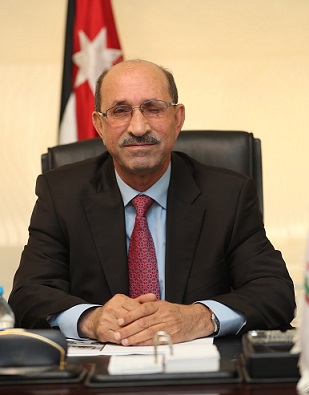
Dr. Hamed Kasasbeh
Foreign direct investment is one of the most effective drivers of economic growth in Jordan. It generates new jobs, supports productive sectors, reduces dependence on loans and external aid, and helps improve the balance of payments. Yet these benefits remain theoretical unless investors are able to turn an idea into a real operating project without lengthy procedures or uncertainty. This leads to the core question of this paper: Can Jordan realistically become a more attractive investment destination in the region?
Jordan has made noticeable progress in improving investment laws and establishing a single reference entity to deal with investors, which helped reduce procedural fragmentation. However, regulatory development alone is not sufficient unless accompanied by long-term tax and legislative stability that allows investors to plan with confidence and without sudden changes in costs or regulations after projects begin.
Digital transformation represents an important opportunity to accelerate business establishment and reduce time wasted in administrative processing. If registration and licensing were completed electronically and with fewer in-person procedures, capital would enter the economy faster, productivity would begin earlier, and job creation would follow more quickly.
Energy and water costs remain among the main challenges facing industrial expansion in Jordan. The country has strong potential in solar power and, in the future, green hydrogen — but what matters most is reflecting these resources in lower and more stable operational costs for factories. Similarly, providing affordable industrial water remains essential for scaling up production, especially for water-intensive industries.
Infrastructure stands as another pillar in investment competitiveness. Aqaba Port plays a critical role in export movement, and its ongoing expansion is likely to reduce handling time and facilitate smoother cargo flow to regional and global markets. The planned national railway network, intended to link production hubs with Aqaba and border outlets, could reduce transportation costs and enhance the competitiveness of Jordanian products abroad.
In terms of finance, diversifying funding instruments — such as green bonds and Sukuk — can create more flexible financing options for energy, logistics, and infrastructure projects, rather than relying solely on traditional lending. Investor confidence also grows through reliable commercial courts and faster dispute resolution, supported by the country’s political and monetary stability, a strong banking sector, and a stable currency. Together, these elements form a safer financial environment for investors planning medium- and long-term expansion.
Jordan also possesses a young and capable labor force. However, turning demographic strength into economic output requires stronger alignment between education and labor market needs, and more opportunities for on-site training within factories and companies. The digital economy presents a real chance for growth at a lower capital cost, allowing Jordan to build a competitive position if incubation programs expand and innovative financing becomes accessible to technology-based startups.
Investment success depends equally on cooperation between the public and private sectors. Government provides the legislative framework, infrastructure, and stability, while the private sector leads operation, innovation, and market expansion. When roles are balanced — a government that enables and a private sector that executes — investment flows transform into factories, exports, and real employment rather than plans on paper.
Jordan’s attractiveness can rise further by prioritizing competitive sectors such as pharmaceuticals, green energy, technology, food industries, and financial services, while preparing ready-to-launch investment projects instead of waiting passively. Active investment representation in regional and global financial hubs — Dubai, Doha, Riyadh, Shanghai, and Singapore — shortens the distance between opportunity and capital. The recent Royal tour in East Asia opened new channels for industrial and technological partnerships that can translate into real investment on the ground.
In summary — and with calm confidence — Jordan can improve its regional investment standing if implementation accelerates, costs are reduced, infrastructure continues to develop, and the partnership between government and the private sector deepens. When new factories open, exports expand, and employment grows, investment will no longer be a projection or aspiration — but a measurable economic reality that Jordan can build on with confidence.



 comment replay











 الرجاء الانتظار ...