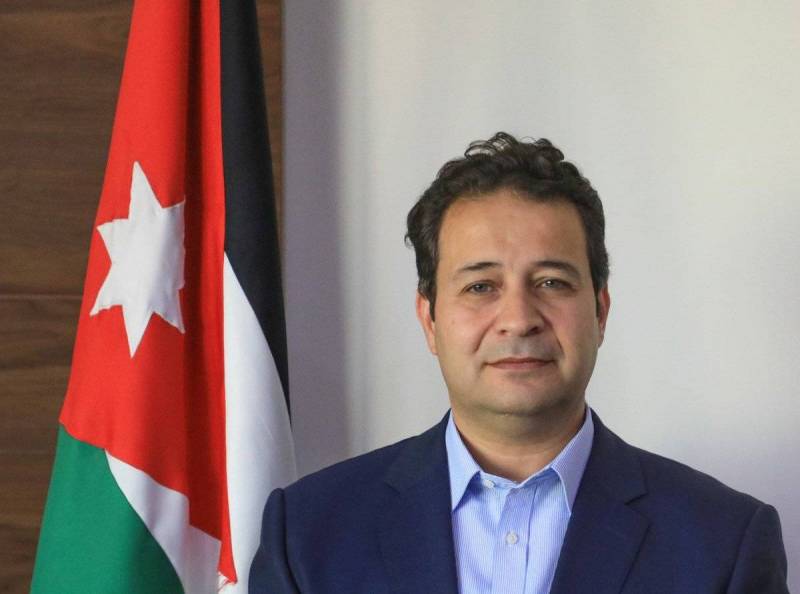
Mohammad Abu-Rumman
Despite the statements made by U.S. President Donald Trump opposing Israel’s annexation of the West Bank (as he told TIME magazine), and despite the “rebuke” delivered by his Vice President, JD Vance, at the airport before his departure, criticizing the Knesset’s decision to annex the West Bank, and despite the similar reaffirmation by U.S. Secretary of State Mike Rubio during his visit to Israel, the level of confidence that Washington is taking a firm and decisive stance against annexation should remain at the lowest possible threshold.
Why? Trump himself routinely offers contradictory remarks on major strategic and political issues. His positions can shift from one moment to the next, and high-profile politicians and global experts no longer take his repeated statements at face value. He either deploys rhetoric for short-term tactical goals, such as manipulating emotions or sending specific messages at a particular moment, or he simply has no final or coherent vision on many of these issues. His inner circle appears to operate within the same dynamic: saying what pleases him and feeds his narcissistic belief that he is smarter and better than everyone else. It is no longer surprising that people deal with him psychologically, telling him what he wants to hear without relying on any of it in practice.
Viewed from another angle, Trump and Vance’s opposition to annexation appears more related to timing and tactics rather than any strategic commitment to establishing a Palestinian state. Since returning to the White House, Trump has dropped any mention of the “Deal of the Century.” In his 20-point plan to end the Gaza war, he made no reference to a Palestinian state. When he speaks of peace, he refers to “regional peace” and the Abraham Accords for Arab-Israeli normalization, which were built from the outset on the premise of the “non-centrality” of the Palestinian issue.
Furthermore, Trump was irritated by the wave of international recognitions of the State of Palestine, which pushed him to try rescuing Netanyahu and Israel from diplomatic isolation, as he himself later admitted. He pressured the Israeli government to accept a ceasefire agreement because he believes that such a move better serves Israel’s interests. Anyone examining his rhetoric will notice—perhaps for the first time in American political discourse—a U.S. president speaking in terms of “I” and “we” when referring to Israeli policies. Psychologically as well, he makes no distinction between the United States and Israel, and sees himself as the leader of both.
Meanwhile, when asked by TIME about President Mahmoud Abbas, Trump stated that Abbas would not govern Gaza, proposing instead a peace council under U.S. leadership to manage the matter. At the same time, references continue to appear regarding a Palestinian “technocratic committee” to handle basic services. Trump’s envoy to the region, Steve Witkoff, has floated a different proposal dubbed “Rafah First,” meaning reconstruction of areas still under Israeli control as a model to confront Hamas. In sum, none of these American proposals require invoking the concept of a “Palestinian state,” not even rhetorically. The policies outlined for Gaza are based on complete separation from the West Bank, the Palestinian Authority, and the very notion of statehood.
All of this points toward the actual U.S. position: Washington does not object to the future annexation of the West Bank, or parts of it, so long as it does not embarrass Arab governments or harm U.S. regional interests. The administration’s behavior certainly does not prevent de facto annexation. From the very first days of the current Trump administration, there has been a clear decision not to use the term “West Bank” in official documents, replacing it with “Judea and Samaria.” This reflects Trump’s genuine strategic vision, while talk of rebukes or opposition to annexation reflects little more than political and media maneuvering.
Here lies the heart of the matter: It would be a grave mistake to base Arab, Palestinian, or Jordanian policies on the assumption that Trump’s statements signify support for a Palestinian state or a categorical rejection of West Bank annexation. Building policies on such assumptions is like standing on shifting sands, far from the solid ground that truly defines the current U.S. administration’s policy and intentions.



 comment replay












 الرجاء الانتظار ...