Montaser R. AlTawil
If the past decade has proven anything, it is that Jordan’s position in the region is far too significant to be sidelined. While challenges continue to mount- whether in the form of economic hardship, rising unemployment, government inefficiencies, or external pressures from shifting regional power dynamics- there is an undeniable opportunity for Jordan to redefine itself in this turbulent era.
The war in Gaza has once again placed Jordan at the center of the Palestinian issue, not just in rhetoric but in real strategic positioning. Jordan has long been the closest entity to the Palestinian cause—by geography, by blood, by history, and by sheer necessity. However, Jordanian diplomacy today faces a severe weakness: it is almost entirely reliant on King Abdullah and the acting Minister of Foreign Affairs. Jordan’s diplomatic network lacks presence, its embassies are functionally invisible in key world capitals, and its ability to maneuver on the global stage has been reduced to reactionary stances rather than proactive strategies. This must change. Jordan must identify and capitalize on its strengths—its historical credibility on the Palestinian issue, its geographical position, and its role as a regional stabilizer—and build strategic alliances that enhance its leverage rather than simply reaffirm its moral position.
This Trump administration is unlike any previous U.S. administration. It is transactional, unapologetically business-oriented, and indifferent to traditional diplomatic norms. This means Jordan’s diplomatic approach cannot be confined to routine meetings and summits; it must be rooted in deal-making, economic strategy, and hard-nosed negotiation. Jordan does not have oil or gas, but there is plenty of potash, phosphate, silica sand, and other untapped resources. Jordan has unmatched human capital and technological expertise. Jordan possesses a strategic geographic proximity to Israel, Palestine, and Syria—all of whom need Jordan, but sometimes require a gentle reminder. Most importantly, Jordan has the potential to play a pivotal role in the reconstruction of Syria—economically, administratively, and even militarily. Not by military intervention, but by being the starting point, by being the consultant for restructuring the country’s civil and military institutions. However, none of this will materialize unless Jordan’s foreign policy institutions shift from passive diplomacy to aggressive, calculated engagement. Jordan needs attachés, diplomats, and economic envoys embedded in key regional capitals- London, Washington, Doha, Riyadh, Abu Dhabi, Cairo- developing strategic alliances that serve Jordan’s interests in the long run.
On the Palestinian front, King Abdullah has already achieved something remarkable: aligning Arab states in opposition to the ongoing ethnic cleansing in Gaza. The majority of the Arab world, from Egypt to Saudi Arabia, has taken a unified stance that has put the Trump administration on the defensive. King Abdullah’s allies within American political institutions played an integral role in forcing President Trump to deal with Jordan using a slightly different approach than with other countries.
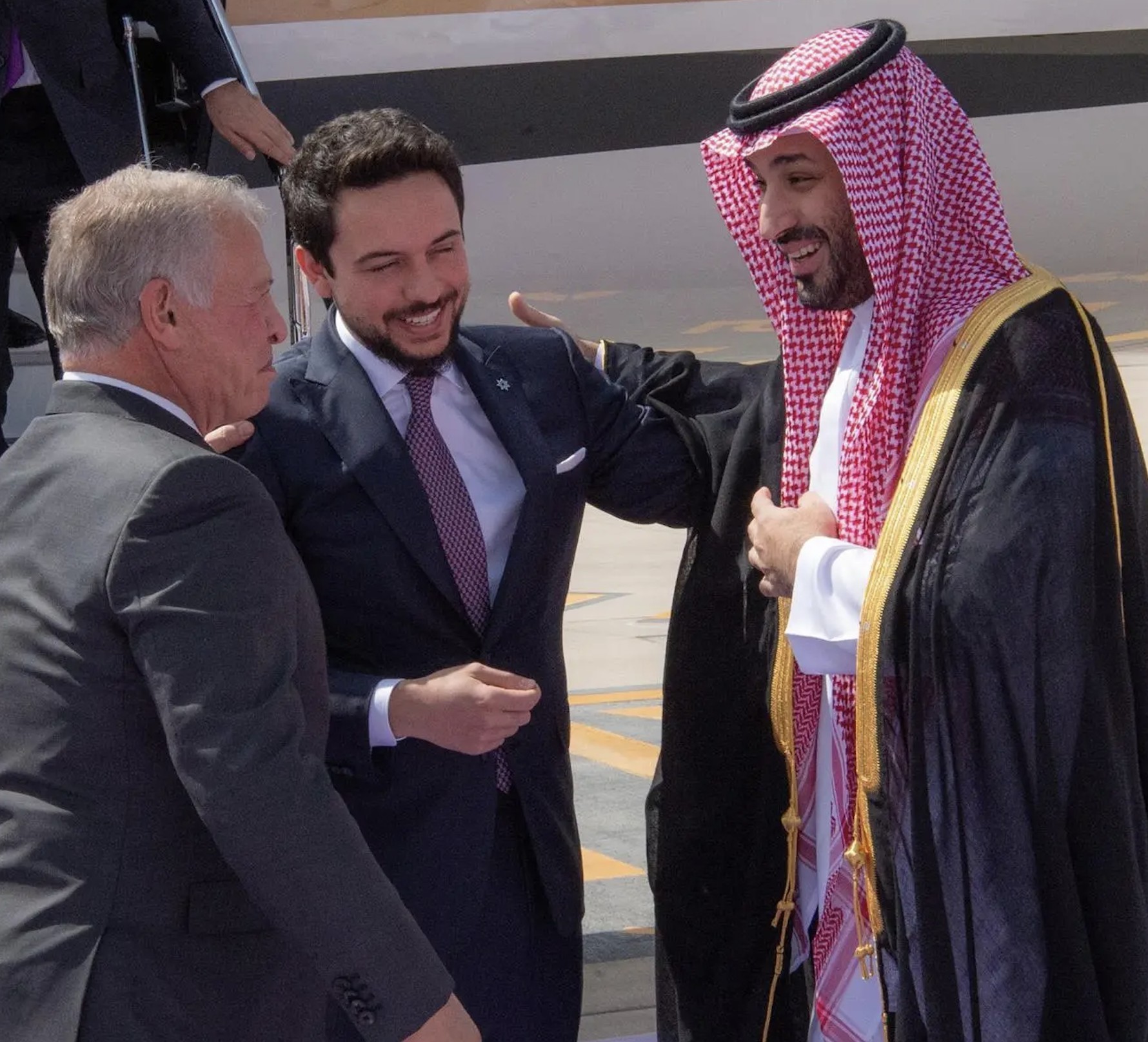
The next step is to translate this political capital into tangible diplomatic and economic gains. Saudi Arabia, for all of its ambitions, still lacks a coherent regional strategy beyond economic diversification and oil diplomacy. Jordan can and must make itself indispensable to MBS by demonstrating why Jordan’s stability, expertise and strategic position serve his long-term interests. The same applies to Egypt. Even if personal political dynamics between leaders remain complicated, Jordan must make itself an asset- not just a historical ally, but a strategic partner that cannot be ignored.
With the right strategy and execution, Jordan’s ministers of energy, industry and trade for example should be sitting down with their counterparts in Riyadh, Abu Dhabi, and Cairo before the month’s end. These discussions must focus on profitable projects that solve critical problems for both countries- whether it’s energy security, water shortages, or cross-border trade expansion. Beyond official meetings, their staffers and close associates should be establishing a steady presence- appearing in inboxes, setting up coffee meetings, and laying the groundwork for future collaborations. The Saudis face a water crisis much like
Jordan’s, while Egypt’s strategic interests in Gaza and the West Bank make Jordan an indispensable partner. These are but a few shared challenges that create opportunities that must be leveraged and aligned to serve Jordan’s long-term interests.
At the core of this effort is a broader strategy: forging strong politicoeconomic alliances with our neighbors that will, in turn, solidify Jordan’s position in Washington. A stronger regional footing translates into greater leverage on the global stage—all of which will have a direct and positive impact on the Jordanian economy. But this is not just about forming alliances- it is about creating smart, strategic win-win situations. Right now, the win for Saudi Arabia must be greater than the win for Egypt, at least in the immediate term. Eliminating the elephant in the room requires careful diplomacy. Strengthening Jordan’s ties with Riyadh ensures that Jordan remains indispensable in the regional equation, rather than a competitor in Saudi Arabia’s long-term vision.
Jordan stands at a critical juncture. The challenges are immense- political, economic, diplomatic- but so are the opportunities. The path forward requires a level of pragmatism, vision, and strategic execution that has been lacking for far too long. King Abdullah has done more than any leader in the region to keep Jordan stable and relevant. But stability alone is no longer enough. It is time for Jordan to assert itself—not as a passive observer, but as an indispensable force in the region’s future.
Montaser AlTawil: Attorney and entrepreneur working in Jordan and the United States with a background in Law, Political Science and Islamic Studies.



 comment replay











 الرجاء الانتظار ...