Ammon News - After years of never-ending developments, ATV has gone from being a Jordanian emblem of media independence to an icon of failure. A recent announcement that the channel would be sold to the Jordanian government took the local media industry by surprise. It also signaled a serious setback in media independence for the Kingdom. Jordan Business investigates the troubled history of the channel.
To say that Jordan’s first independent satellite channel, ATV, has been a long-awaited project may be the understatement of the decade. Once destined to transform the local and regional media landscape, ATV has, in just a few short years, joined the ranks of abandoned initiatives and broken government promises.
Created through the recommendations of the National Agenda in 2005, and headed by local media mogul Mohammad Alayyan, ATV was set to become the Kingdom’s first independent satellite channel, representing a bold step away from the historic grips of state media. The half decade pursuit of this endeavor, however, has been mired by rumors, bureaucracy, worker strikes and over a dozen supposed launch dates. Its history is ambiguous at best and its legacy is shrouded in backroom deals and negotiations geared at masking its dubious reality.
Sorting fact from fiction is a difficult task when it comes to most issues in Jordan and this is no less true when it comes to ATV, a project that has involved myriad parties, including the Royal Hashemite Court (RHC), the government, security bodies and some of the biggest names in media. Public conversations regarding ATV are engulfed in rumors that are difficult to decipher. This is especially true in a country where those who are truly “in-the-know” have made careers from treading carefully around public statements and are in no particular hurry to demonstrate their knowledge publicly.
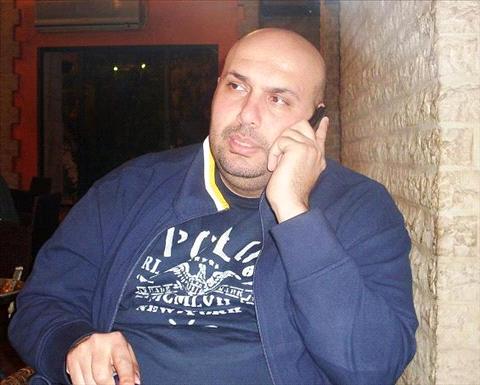
Enter Talal Awamleh, a young yet towering figure in the region’s media production industry, who is known just as much for his risk-taking attitude as he is for his candor. In fact, candor may be an understatement when it comes to Awamleh, whose no-holds-barred bluntness has quickly garnered him a local reputation as a gutsy businessman.
There is no doubt that when it comes to ATV, a degree of fearlessness is at the top of requirements for any man daring to venture into this rough sea, and Awamleh happens to be that man. He is the current owner of ATV – that his renowned production company, the Arab Telemedia Productions (ATP), renamed AT Group upon purchase – and seems well on his way to possibly becoming the channel’s former owner. In a candid and exclusive interview with Jordan Business, Awamleh revealed the true story behind ATV, a tale that proves truth can be stranger than fiction.
In The Beginning
Following the project’s approval, ATV started on a two-year journey that saw the congregation of some of Jordan’s topnotch media professionals under one roof. Housed in a large glass building right next to Mohammad Alayyan’s Al Ghad newspaper, ATV carried the bold-red brand of Al Ghad and promised to be just as “independent” and “alternative” as the paper is perceived by some to be. For two years, studios were built, news departments were created, content was developed and for months prior to its mid-2007 demise, ATV film crews could widely be seen filming across the Kingdom, especially during the municipal elections of 2007.
Posters and billboards featuring the ATV all-star team of journalists, newscasters and media professionals engulfed the public landscapes of Amman, setting the stage for a much-anticipated launch. After several announced dates, ATV management came together to announce the official launch on August 1, 2007, with the channel broadcasting on NileSat. Then, unexpectedly, the press conference was cut short as the Audio Visual Commission (AVC) halted the transmission, and later informed the channel’s management that they had failed to complete the necessary licensing paperwork.
What ensued was a series of deadlock negotiations between the government – supposedly represented by the AVC – and the channel’s “public” management, which included Mohammad Alayyan and managing director Mohanned Khatib. As was initially reported, ATV’s agreement with Jordan Television’ Channel Two (JTV2) was at the core of the problem, with the AVC demanding that ATV pay the state-owned station fees for the use of its terrestrial broadcast, despite the fact that ATV had yet to use it.
In the weeks that followed, ATV management attempted to negotiate with an assortment of government entities that included the AVC, Jordan Media Center, the Higher Media Council and the Telecoms Regulatory Commission but to no avail. Several weeks after the government pulled the plug on ATV’s press conference, Mohanned Khatib resigned in protest. In his letter of resignation, Khatib stated: “What happened to our dear TV station is a shameful moment in the history of Jordanian media, and its repercussions will last for a long time.”
Soon after, Mohammad Alayyan sold his shares for JD15 million, and thus transferred all ownership of ATV to an unknown company, Al Ajayyeb, headed by Mohammad Khaled Asfour and Mohammad Saleh Abdel-Ati. The real event, according to sources familiar with the situation, was that the government attempted to initially set up ATV with Alayyan as the “official owner.” As the company progressed, Alayyan’s vision clashed with that of the government and other state bodies and he was requested to sell the company back to the government. According to several industry insiders who spoke to Jordan Business, clashes had also erupted within the state, manifesting in power struggles, primarily between the reform-driven RHC and the security-minded General Intelligence Department.
Nevertheless, the request to sell was a demand Alayyan refused in mid-2007. Deciding instead to move up the channel’s launch date to August 1, Alayyan was determined to take control of the emerging conflict only to find his moves blocked during that fateful press conference. Nearly a year later, ATV was no closer to launching under new management. All signs of progress were halted, transmission was continuously “denied” and the employees had grown restless. In July 2008, ATV employees launched a sit-in outside the channel’s building protesting the fact that they had not been paid for four months. By the end of the year, ATV was sold once again, this time to Awamleh and his AT Group.
Different Directions
Buying a mismanaged and debt-ridden company whose reputation in the industry had been tarnished due to very public government interference is no simple task. To make matters worse, anyone who dared make the leap would have to be prepared, if not willing, to tangle with the government once again. Talal Awamleh, who had purchased the company from his father Adnan Awamleh a few years back, was such a person.
AT Group had already worked closely with ATV during the Alayyan years, producing content for the yet-to-be launched channel. For Talal Awamleh, ATV was an opportunity to bring content, programming and a media platform together for the AT Group. “I saw the channel as a great platform to build something great in the region,” said Awamleh, who, upon purchase, set about radically reforming the channel’s management, content and infrastructure.
“At the time, the government was pursuing buyers from around the region and I only offered to buy it after everyone else had refused,” Awamleh explained. The deal saw Awamleh buying ATV for a relatively small amount of money and agreeing to assume its staggering debt, which he put at JD62 million.
Awamleh’s goal was to optimize the use of existing company assets and his own investment and expertise to launch two channels simultaneously, which he believed would also help the company emerge from the shadow of disappointment that tarnished its image over the years. Yet, despite promises from the government for a more easy-going process this time around, Awamleh ended up facing similar obstacles,the first of which was changing the broadcasting license from “ATV” to its newly rebranded name “AT” while attempting to simultaneously approve a second license for a news channel – a feat that proved more difficult than initially believed.
“When we purchased the company, the [government] owned 13%,” said Awamleh, who believed at the time that partnering with the government would be an asset to the company’s development. “I could have put whatever conditions I wanted during the buyout simply because the government was desperate to sell, but I insisted on their presence in order to help [facilitate] the process,” he explained. Soon after the purchase, Awamleh claims the company fell into a labyrinth of government bureaucracies bent on stalling his launch, the most significant of which was the government’s insistence that he buy their 13% share at “unreasonable figures” before allowing him to launch.
“After months of negotiations to try and reduce their proposed price, we managed to come to an acceptable number only to face a change in government and a change in mind, with the [new] government wanting to buy back the whole company,” said Awamleh.
“I agreed to sell it back to them to avoid any more hassles, but they would only accept it at yet another unreasonable price,” explained Awamleh. The government’s decision, he asserted, was driven by its desire to take over a company that he had completely reformed, specifically with regards to building and purchasing new state-of the-art studios, equipment and workspaces.
“When we signed the initial agreement with them [the government], there were certain conditions required that they did not fulfill,” said Awamleh. “On the contrary, they [the government] actually demanded we pay the JD10 million that was owed to JTV2 during Alayyan’s era, which was something that was not part of our deal.” Awamleh claims that such moves were attempts to corner him into selling.
“These are all attempts to sabotage investment in Jordan’s media sector, some- thing that His Majesty King Abdullah II would not agree to,” stated Awamleh. Maintaining that government changes resulted in the sudden demands to sell the company, Awamleh explained: “We wanted to serve this country and His Majesty’s vision by providing a platform that could elevate Jordanian issues. Instead, we got governments who tried to censure the work of their predecessors, with each one over-ruling the next.”
“Some officials even made claims that I had cheated the government because of the low purchase price, but they did not seem to realize that I was also buying a company carrying a large amount of debt,” Awamleh asserted. “After they saw that the debt began to decrease, they felt I had tricked them. Once again, they failed to realize that this was simply due to better financial management.”
As of today, Awamleh claims that he is waiting for the sale to materialize.
“I have lost hope that this channel can ever be launched unless there is direct intervention by His Majesty King Abdullah, who has the necessary vision to see this project through,” Awamleh told Jordan Business.
An Untelevised Future
In early February 2010, announcements emerged that the government was in the process of purchasing ATV. According to Awamleh, the government continued to pressure the company to sell, and with no end in sight, Awamleh asserts he is now forced to let go of the channel’s employees whom he cannot afford to pay under current circumstances, where overhead costs continue to amass in the absense of operational revenue. In a wave of déjà vu, ATV employees staged a series of sit-ins during February in protest of the ongoing deadlock.
While negotiations continue, one can safely assume that Awamleh will not give up easily. He may insist on selling it, but to what extent he can recoup his investment from a government that is drowning in its own debt seems uncertain.
In the meantime, the sale of ATV to the government, or in this case “back” to the government, is without doubt an ironic end to a masquerade that has been unfolding on the Kingdom’s media sphere for half a decade.
Initially designed to embody His Majesty’s desire for a free and responsible media, ATV has gone from the symbol of this royal vision to the emblem of a media landscape that is withering against the backof growing state intervention. Above all, ATV has perhaps come to best represent the reality of Jordan’s media sector and its relationship with the state: one where promises of free speech have all too often been broken in the name of control.
(From Jordan Business)



 comment replay