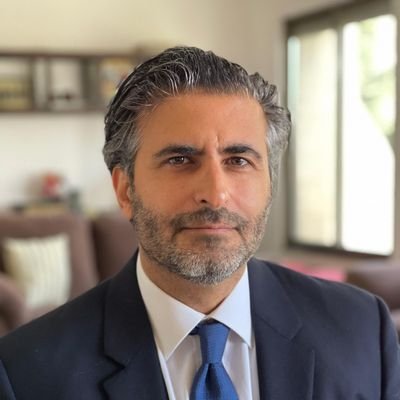
Dr. Amer Al Sabaileh
The Democrats' victory in securing majorities in both the House of Representatives and the Senate in the November midterm elections places President Donald Trump in a different political environment, one in which his ability to advance his domestic agenda will be increasingly constrained and congressional oversight of his administration will expand. However, the implications extend beyond Washington, raising questions about how the administration will manage its foreign policy priorities as the confrontation with Iran enters a highly sensitive phase, while other issues, including Cuba, remain open to different scenarios.
Until the new Congress convenes on January 3, Trump retains a limited political window to work with the current congressional configuration. He may seek to consolidate certain decisions or accelerate executive measures before Democrats assume control of both chambers. Nevertheless, losing congressional majorities does not automatically give him greater freedom in foreign policy. Instead, it introduces additional constraints related to funding, oversight and investigations, potentially limiting his ability to translate priorities into sustainable policies.
The more important question is how Trump will respond to this reality. Rather than focusing exclusively on containing domestic political losses, he may move towards reshaping his team, redistributing responsibilities and seeking foreign policy outcomes that can be presented as achievements during the final two years of his presidency. This does not mean escalation is inevitable, but it explains why changes within the administration and the positions of key figures deserve particular attention.
A significant distinction is emerging between Vice President JD Vance and Secretary of State and National Security Adviser Marco Rubio. Vance has been involved in leading the diplomatic track concerning Iran but has expressed reservations about the costs of war, linking them to the Republicans' electoral losses. Rubio, meanwhile, has emerged as one of the administration's strongest advocates of maintaining pressure on Tehran.
Trump's direct instruction to Vance to step away from the Iranian negotiations and focus instead on domestic issues involving Democratic-controlled states and cities reflects a clear redistribution of responsibilities. It also signals the President's conviction that the Iranian situation requires a different approach, potentially strengthening Rubio's position as the central figure coordinating American policy. Rubio has defended the confrontation as necessary to prevent Iran from acquiring a nuclear weapon, with his approach more closely associated with maintaining pressure to achieve American objectives. This is not simply a difference between two personalities, it reflects competing assessments of the costs of confrontation, the limits of negotiations and the outcomes Washington can ultimately accept.
The Iranian situation is no longer simply a matter of stalled negotiations or the possibility of confrontation. It has become a test of how an ongoing war is managed and whether military superiority and economic pressure can be translated into a sustainable political settlement. Continued pressure on Iran's economy, alongside the naval blockade of its ports and the challenges surrounding maritime security in the Strait of Hormuz, provides Washington with significant leverage. At the same time, however, it increases the costs of confrontation for energy markets, American allies and regional stability. The objective may not necessarily be an open-ended war, but rather the imposition of new negotiating conditions from a position of strength.
Coordination with Israel remains essential, particularly in intelligence sharing, risk assessment and military preparedness. However, coordination does not automatically mean identical priorities or a joint decision to expand military operations. Each side maintains its own calculations regarding security, deterrence and the costs of escalation.
Cuba, meanwhile, may return to the forefront of American foreign policy as part of a broader approach aimed at increasing pressure on Washington's adversaries. However, the instruments available for dealing with Cuba differ considerably from those involved in the Iranian confrontation. The two issues should not be treated as part of the same strategic trajectory simply because they feature among the administration's priorities.
The coming period may therefore be defined by repositioning rather than simply escalation. Trump faces an opposition-controlled Congress, growing domestic pressures and an Iranian situation carrying significant regional and international costs. The question is not whether he will inevitably choose escalation, but how he will balance military power, the preservation of negotiating channels and the pursuit of political outcomes before the end of his presidency.
The challenge is no longer simply moving from diplomacy to confrontation, but determining how American power can be employed to impose new political conditions, and what consequences this approach may have for regional security and stability.




 comment replay









 الرجاء الانتظار ...