Abdulhamid Hamid Al-Kba
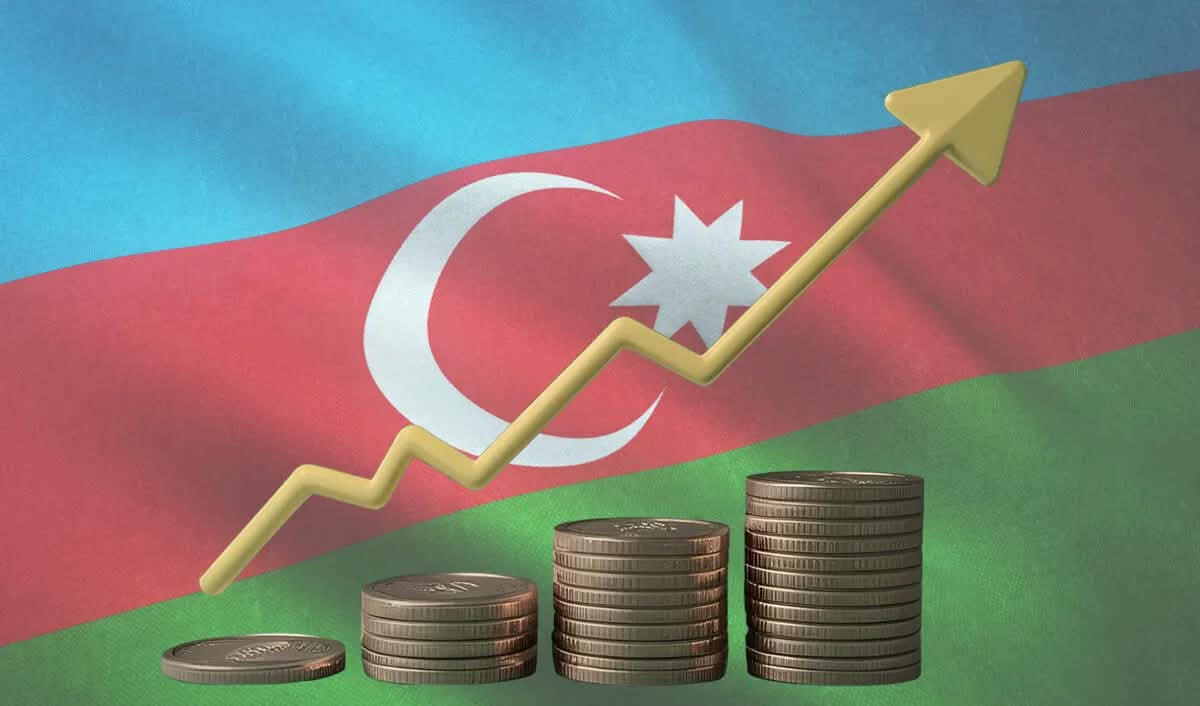
The latest economic indicators for Azerbaijan point to a transitional phase marked by a clear contrast: limited growth in non-oil sectors alongside a contraction in the energy sector, set against a strong external financial position that gives policymakers room to manoeuvre. The figures published for the first nine months of 2026 do not signal a radical shift, yet they raise a fundamental question about the economy’s ability to build more sustainable growth engines outside the oil and gas circle.
Gross domestic product reached $60.03 billion between January and September 2026, up 1.5 percent compared with the same period a year earlier. This growth followed a weaker first-half performance, when GDP rose by only 0.8 percent. The relative acceleration in the subsequent months did not alter the overall picture. The oil and gas sector contracted by 1.2 percent to $17.84 billion, while the non-oil, non-gas sector expanded by 2.6 percent to $42.19 billion. The European Bank for Reconstruction and Development left its forecasts unchanged at 2 percent for 2026 and 2.5 percent for 2027, suggesting that international institutions see continuity of stability rather than any marked acceleration.
On the investment front, spending on fixed assets rose by roughly 10.7 to 10.9 percent year-on-year, driven primarily by the oil and gas sector. By contrast, growth in investment outside oil and gas remained around 3.1 percent. This gap matters. An increase in total investment alone is not enough to judge progress on diversification. The difference between overall investment growth and growth outside the energy sector raises questions about the nature of the assets Azerbaijan is expanding and about their capacity to generate productivity, jobs and new exports. Successful diversification is measured not merely by the volume of investment spending, but by how far the productive base expands beyond energy.
The financial position remains one of the clearest strengths. The budget recorded a surplus equivalent to about 4.5 percent of GDP in the first seven months, according to EBRD estimates. The current-account surplus stood at 5.3 percent of GDP on a rolling quarterly basis in the first quarter. Strategic reserves reached approximately $89.38 billion on 1 October, up 9.7 percent year-on-year, after earlier in the year standing at 114 percent of 2025 GDP. External public debt fell 7.8 percent to $4.509 billion. These indicators paint a picture of a comfortable external financial position that gives the government clear room to manage slower growth.
Average inflation ran at 5.7 percent over the nine months, close to the upper end of the central bank’s target range. The central bank kept the key policy rate at 6.5 percent after a 25-basis-point cut in February. Official projections point to a possible gradual decline in inflation in the years ahead, assuming continued exchange-rate stability. Those projections, however, remain dependent on global price developments and import dynamics.
When these data points are linked, a coherent picture emerges of an economy undergoing rebalancing. High reserves, limited external debt and a fiscal surplus give Azerbaijan the capacity to contain the effects of slower growth, yet they do not mean the economy has become less dependent on energy. Non-oil growth, though relatively positive, remains modest, and investment outside oil and gas is expanding far more slowly than total investment. The sectors that supported the recovery after the first-quarter contraction—information and communications, transport and storage, and certain branches of industry—remain promising, but they have not yet reached a scale sufficient to offset the declining contribution of energy.
The logical near-term expectation is continued moderate growth close to the EBRD’s forecasts. Genuine acceleration will depend on the ability of policy to channel a larger share of investment toward sectors capable of raising productivity and expanding non-oil exports. Financial stability buys time; it does not by itself create new economic dynamism.
In the end, the core issue facing Azerbaijan is not its capacity to preserve financial stability during a period of slower growth, but how it uses that stability to broaden its productive base. High reserves and limited external debt provide room for manoeuvre, yet they cannot substitute for more effective investment in non-oil sectors. The real test in the years ahead will be whether those sectors can generate sustainable growth, higher productivity, and wider employment and export opportunities. Only then will financial stability become the foundation for deeper economic diversification rather than merely a means of cushioning the effects of slowdown.
*Abdulhamid Hamid Al-Kba / Opinion writer specializing in Central Asia and Azerbaijan affairs



 comment replay










 الرجاء الانتظار ...