Ammon News - Israeli strikes in southern Lebanese towns and villages are intensifying at an unprecedented pace, signaling a shift in the established ‘rules of engagement’.
After previously focusing on open areas, Israeli air raids have now moved deep into residential zones in Lebanon, reviving scenes of evacuation warnings and mass displacement.
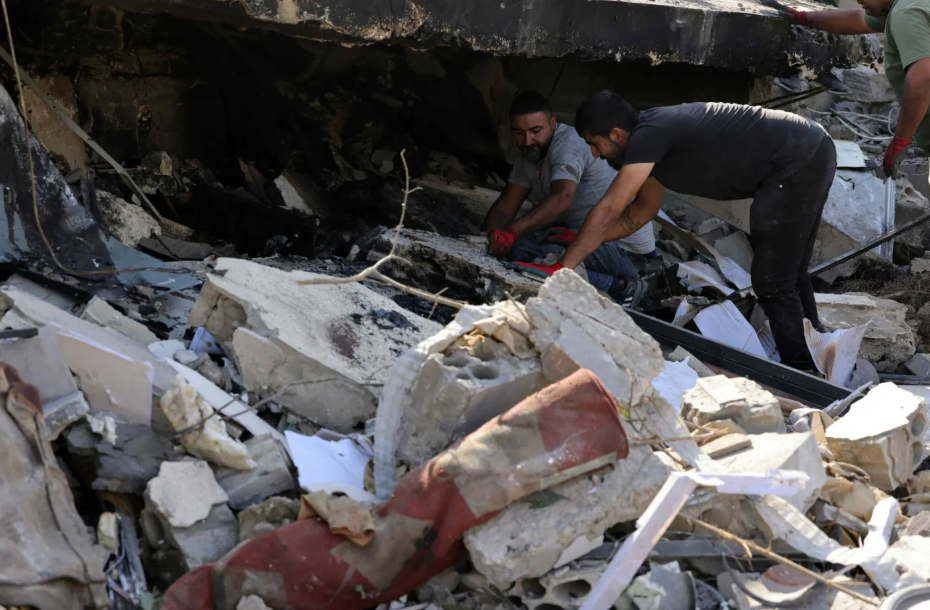
On Thursday, thousands of residents fled their homes following evacuation orders, soon followed by airstrikes that hit populated neighborhoods, vehicles and residential areas in Lebanon’s south.
On Friday, tense calm was witnessed in but the Israeli strikes resumed midday on Saturday, killing two brothers, from the town of Shebaa, in a strike that targeted their vehicle in Rachaya al-Wadi.
Seven other people were wounded when two guided missiles struck a car near Salah Ghandour Hospital in the city of Bint Jbeil, followed by a third airstrike that hit another vehicle in the town of Baraashit in the Nabatieh region.
These incidents mark Israel’s escalating pattern of attacks, which in recent months have increasingly penetrated populated areas.
A Shift in the Rules of Engagement
In the past, Israel tended to target military locations only when they were clearly separated from civilian areas, to minimize collateral damage.
Today, that principle appears to be collapsing with strikes hitting cars inside neighborhoods, homes being destroyed at dawn, and civilian gatherings coming under fire. This shift reflects a strategic decision by Tel Aviv aimed at increasing the social and human cost of popular support for Hezbollah and undermining the social cohesion of communities along the front lines.
Objectives Behind the Escalation
In remarks to Asharq Al-Awsat, retired Brigadier General Saeed Qazzah said Israel’s overall strategy has not changed, stressing that its constant goal remains “to subdue Hezbollah and the Axis of Resistance - from Iran to Iraq, Yemen, Palestine, and finally Lebanon.”
He said that Israel’s foremost priority is to ensure the security of its settlers in northern Israel, relying on a tactic of concentrated strikes against what it deems military targets - including fighters, combat equipment, and weapons depots -“even if these are located in populated areas, and regardless of civilian presence or casualties, which it considers collateral damage.”
Qazzah added that “this behavior is nothing new; we saw it clearly in Gaza, where Israel showed little regard for civilian lives.”
He affirmed that Israel is working to intensify its strikes in the coming two months, predicting “an increase in assassinations and targeted attacks against Hezbollah members and facilities - even within civilian gatherings.”
He added that Israel’s goal is “to weaken support for Hezbollah and prompt segments of its base to question the value of continuing down this path.”
“Israel does not concern itself with civilian casualties, and no one holds it accountable,” underscored Qazzah, noting that it will continue striking what it considers military targets anywhere in Lebanon as long as Hezbollah has not clearly committed to the government decision issued on August 5 regarding the state’s monopoly on arms.
Escalatory Israeli Rhetoric and Intelligence Warnings
This military development is accompanied by a hardline discourse in Israel. Hebrew media have reported growing concern over Hezbollah’s expanding capabilities in northern Lebanon, noting that “the Israeli army’s restraint so far from striking Beirut may not last if reinforcement operations continue.”
Israeli Haaretz newspaper cited intelligence reports warning that “Hezbollah is working to restore its capabilities, which could prompt the Israeli army to expand its operations to prevent future risks.”
Other reports indicated that “Western assessments observe a partial recovery of Hezbollah’s supply networks via Syria and Iraq, while the Lebanese army faces challenges in preventing the group from rebuilding its combat infrastructure.”



 comment replay












 الرجاء الانتظار ...