Ammon News - By Hana Namrouqa/ The Jordan Times
AMMAN - Ecologists have recently discovered two kinds of butterflies in the Dibbeen Forest Reserve, home to more than a quarter of all butterfly species that exist in the Kingdom, an ecologist said on Sunday.
A study carried out by the Royal Society for the Conservation of Nature (RSCN) on the macro-invertebrates at the Dibbeen Forest Reserve, located in Ajloun Governorate, discovered the Lattice Brown (Kirinia roxelana) and Dusky Meadow Brown (Hyponephele lycaon libanotica) butterflies for the first time in the country.
The Lattice Brown is a butterfly of the Nymphalidae family that is found in south-eastern Europe and the Near East and is on wing from April to September. The Dusky Meadow Brown is a butterfly species belonging to the family Nymphalidae that can be found in Europe, primarily the south and east. It flies from June to August depending on the location, according to web sources.
RSCN field studies coordinator Ehab Eid said that the study also recorded for the first time a type of grasshopper called Acinipe davisi, which is usually found in Turkey, Syria and Palestine.
In addition, the RSCN registered six new types of beetles in the Dibbeen Forest Reserve, along with two new species of crustacean: the Clam Shrimp (Cyzicus tetracerus) and the Fairy Shrimp (Chirocephalus bairdi).
“The two [shrimp] species are characterised by the ability to lay eggs in soil that can tolerate severe drought, but when it rains, the eggs hatch. This is an indicator of a healthy biological system," Eid underscored.
The study, conducted in 2006 and released recently by the RSCN, registered 188 types of invertebrates belonging to five classes and indicated that there are 122 types of insects in the Kingdom belonging to 42 families.
Eid noted that the newly found species are all rare in Jordan, but their international conservation status has not yet been assessed.
The ecologist underscored that the discovery of new species in the Dibbeen Forest Reserve illustrates the need to safeguard the site from threats such as illegal logging, unregulated tourism and littering.
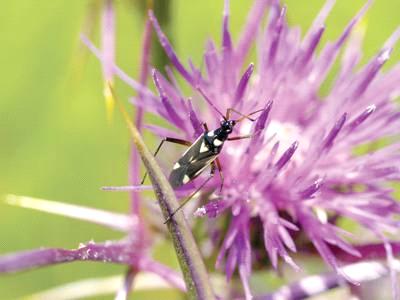
* Photo: Continued studies of Jordan’s wild life conducted by the Royal Society for the Conservation of Nature have rendered new discoveries of insects never known to have existed before in the Kingdom (Photo courtesy of RSCN)



 comment replay












 الرجاء الانتظار ...